

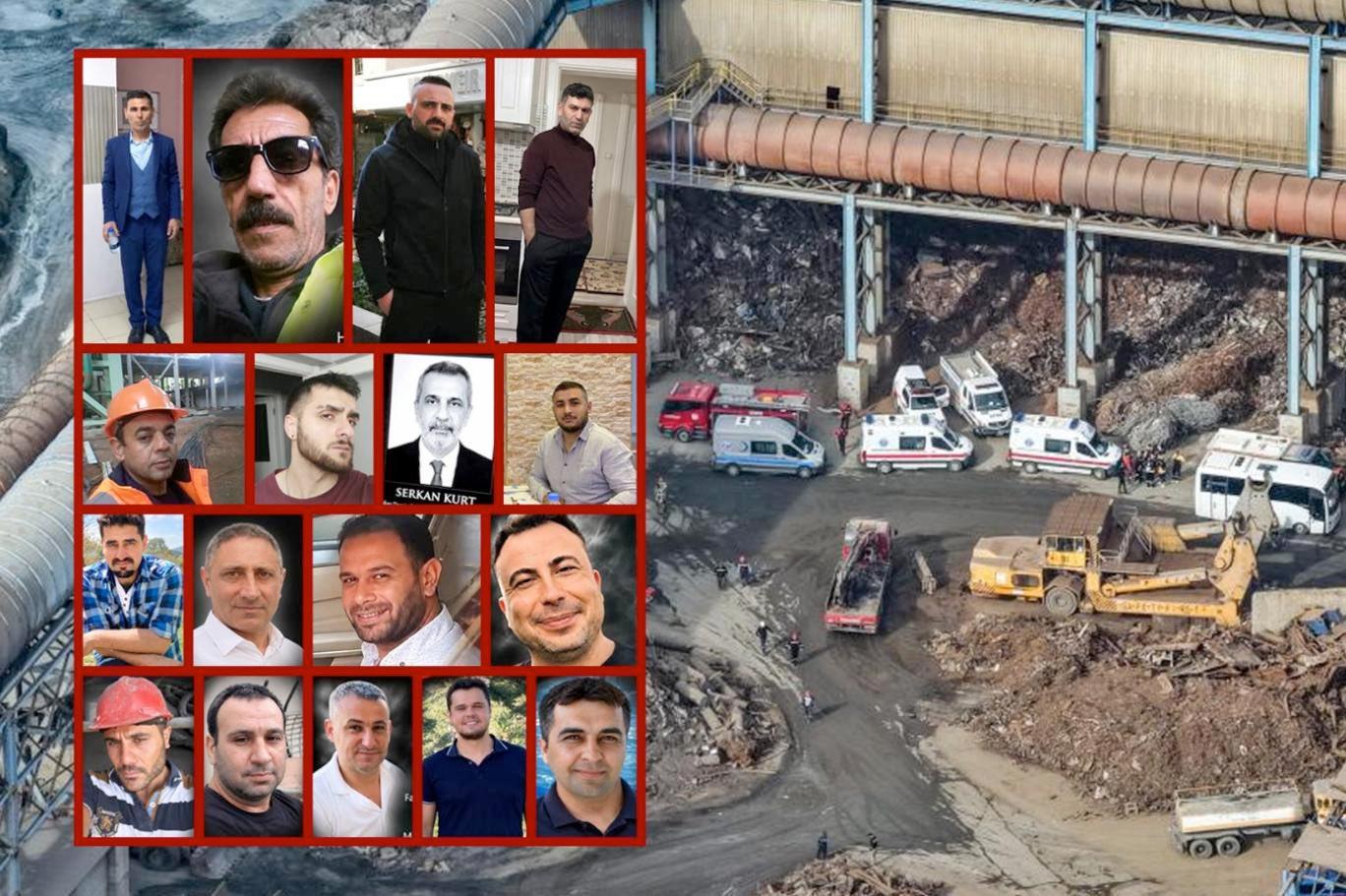
Nineteen workers have died after an explosion tore through a steelworks in western Türkiye, with prosecutors saying 14 others were injured.
Eleven people, including the company’s chairman, Mehmet Rüştü Başaran, were detained as investigators examined what went wrong at the HABAŞ steel plant in İzmir’s Aliağa district.
The blast struck the steelmaking section of the plant in Bozköy at around midday on Monday, 9 November, and sparked a fire. Firefighters put out the blaze as emergency teams searched the site.
The death toll rose on Tuesday after rescuers found the body of Güner Gökçe, the remaining worker reported missing following the blast. Abdullah Kılınç, who was critically injured in the explosion, has also died according to a statement from the Health and Safety Labour Watch (İSİG Meclisi) on Wednesday, bringing the total number of casualties to 19.
Deputy Justice Minister Can Tuncay said the explosion occurred while part of an electric arc furnace was being moved. He said connections to the supporting columns gave way and the equipment fell.
Four prosecutors were assigned to the case, and the Menemen Chief Public Prosecutor’s Office said production at the plant had been suspended while experts continued examining the scene. Those detained include the factory manager and staff responsible for maintenance and inspections.
Images of the HABAŞ steel plant following the explosion and relatives gather at nearby hospital waiting for news
Two other workers died at the plant in recent weeks
The blast followed two separate fatalities at the steelworks. Hakan Doğan died after falling from a height on 21 October. On 5 November, four days before the blast, 20-year-old Eyüp Eğinli was killed when a tyre on a piece of heavy machinery burst.
HABAŞ’s own sustainability report recorded an increase in accidents that caused workers to miss time at work in 2025. The company said it had made tackling that rise a priority.
Labour Minister Vedat Işıkhan said previous inspections had identified ‘no serious problems’ and that further details would be released once the current inspections were complete.
Yet Türkiye’s worker rights groups challenge the Labour Minister’s view of HABAŞ, whilst pointing to the country’s damning workplace safety record and the lack of consequences for corporations.
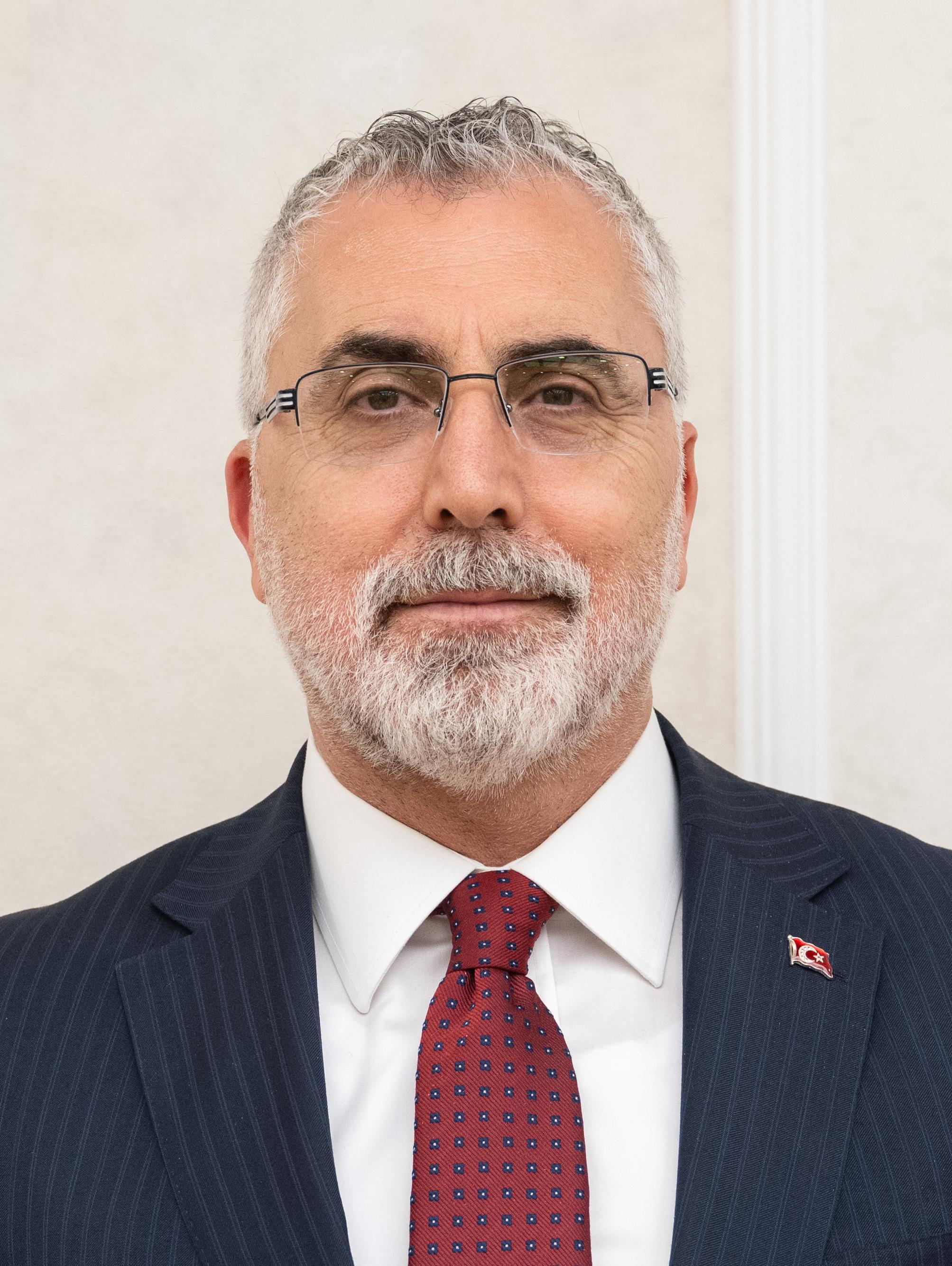
Labour Minister Vedat Işıkhan, 2023. Photo © Ramazan Furkan Türkan via Wikimedia, CC BY-SA 4.0
İSİG Meclisi, the independent workplace safety monitor group, has compiled data on worker deaths that have occurred over the years at HABAŞ-owned factories, ports, and other facilities, most notably in the Aliağa district of İzmir. According to its findings, at least 45 workers have lost their lives at HABAŞ facilities since 1995, with 38 of these deaths occurring after 2013.
More than six work-related deaths a day
At least 1,930 people died in work-related incidents across Türkiye in the first ten months of 2026, according to İSİG Meclisi. That is more than six deaths a day, even before the HABAŞ blast.
The group recorded 193 deaths in October 2026 alone, including nine children. Crushing incidents, road crashes and falls from height were among the most commonly recorded causes of death in October.
The group’s full-year tally for 2025 was at least 2,105, whilst official government figures for the same period is 1,944 work related fatalities.
İSİG Meclisi compiles its figures from media reports and information from workers, families, unions and occupational health professionals. It counts employees and people who work for themselves.
Safety concerns extend to Aliağa’s shipbreaking yards. In November 2025, shipbreaker Hasan Aktepe (pictured below) was killed while dismantling an oil rig when a steel slab fell on him. A former labour inspector who spoke to Turkey recap described his death as preventable. Workers interviewed by the outlet said they faced pressure to finish jobs quickly and that employers sometimes knew in advance when government inspectors would visit.
How Türkiye's workplace death toll compares with Europe
Türkiye's poor workplace safety record becomes even more apparent when compared with other major European economies.
Official figures from Türkiye's Social Security Institution (SGK) show that 1,944 people died in work-related accidents during 2025, while independent monitoring group İSİG Meclisi recorded at least 2,105 deaths.
By comparison, Germany recorded 328 fatal workplace accidents in 2025, according to German Social Accident Insurance (DGUV). Italy reported 792 fatal accidents occurring during work, while Spain recorded 613 among salaried workers.
In Britain, the Health and Safety Executive (HSE) reported 126 workplace fatalities during the 12 months to March 2026, including 18 in manufacturing and 25 in construction.
Comparing Türkiye’s workplace deaths record vs other industrialised European nations
Country | Reported | Period and source |
Türkiye | 1,944 | 2025, official SGK figures, including 13 self-employed workers. |
Great Britain | 126 | April 2025–March 2026 (HSE GOV.UK) |
Germany | 328 | Calendar 2025 (DGUV, dguv.de) |
Italy | 792 | Calendar 2025, fatal accidents reported as occurring during work (INAIL, Inail.it) |
Spain | 613 | Calendar 2025, fatal workplace accidents among salaried employees (INSST) |
Türkiye's official SGK figures indicate approximately 9.95 deaths per 100,000 insured employees in 2025, whereas Spain's latest published rolling-year figure is 2.8 per 100,000 covered workers. These measures are not identical, but they reinforce the substantial difference in recorded workplace risk.
A September 2026 academic study by Volkan Isik of fatal occupational injuries across 46 countries also found Türkiye's average fatal injury rate over 2008–2024 was 3.66 times that of the 25 EU countries in its comparison group. This suggests the problem is not explained simply by the size of Türkiye's workforce or the industries in which people work.
Although differences in national reporting methods mean the figures are not directly comparable, the scale of workplace deaths in Türkiye stands in stark contrast to these other industrialised European nations.
Questions also persist over corporate accountability and whether victims and their families receive justice following major workplace disasters in Türkiye.
Following the 2014 Soma mining disaster, which claimed 301 lives, Soma Holding chairman Alp Gürkan was acquitted. In another case, involving Kadir Özdemir, who fell to his death at HABAŞ in 2020, the company was found to be 70% at fault in compensation proceedings, yet no company official received a prison sentence.
March in İzmir’s Aliağa district demanding justice for workers killed at the HABAŞ steel plant
Such cases raise wider concerns that, despite arrests and investigations following deadly industrial accidents, senior corporate figures can evade criminal responsibility, leaving victims' families struggling to secure meaningful justice.
In its October 2026 report, published the day after the HABAŞ blast, İSİG Meclisi called for plant’s owner to face prosecution and for the Labour Minister to resign. Prosecutors say their investigation is ongoing.
Main photo, top, from Sendika.org