

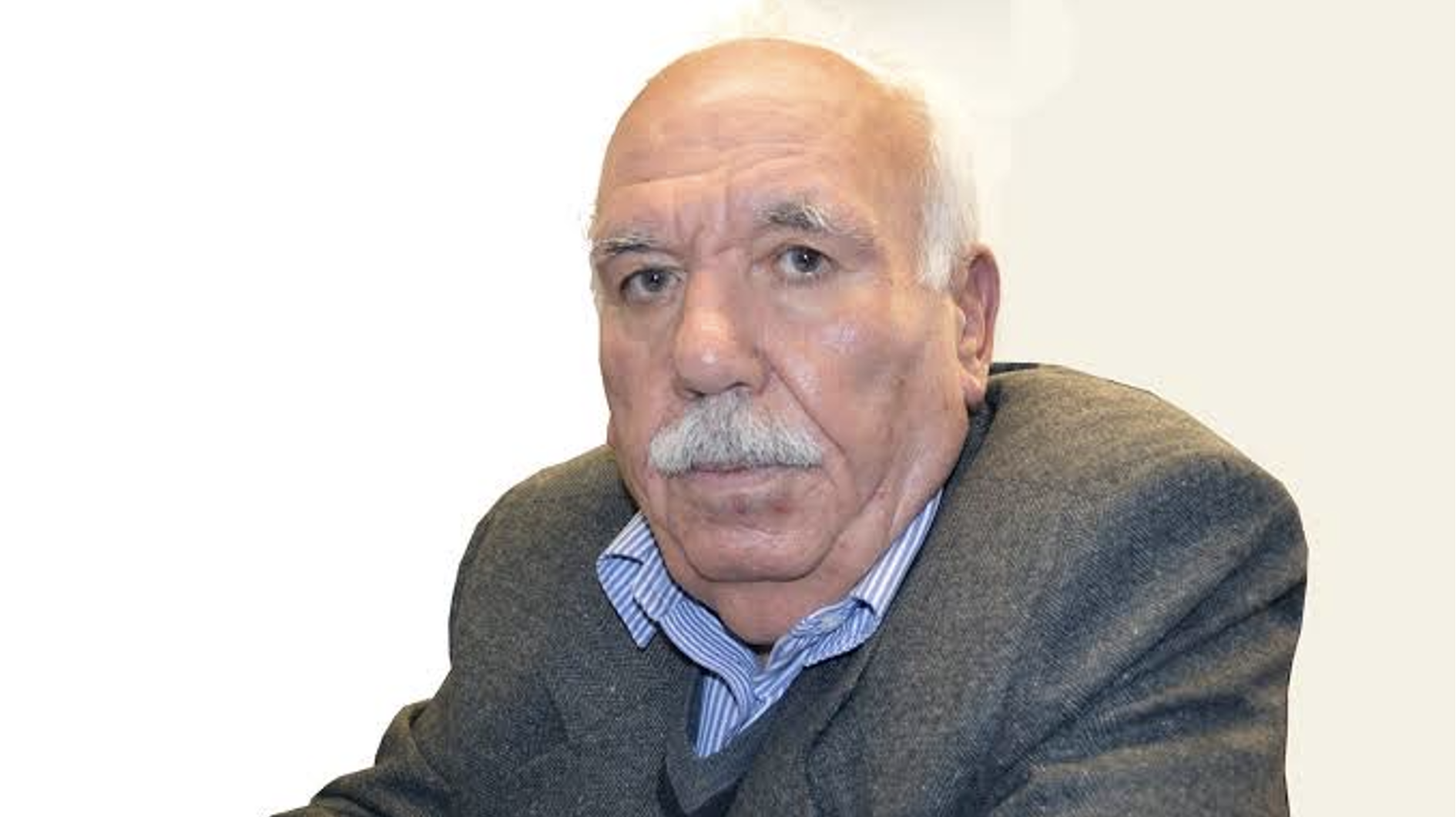
Ali Gül Güneş, the pioneering British Turkish businessman affectionately known across London’s Turkish community as “Topal Ali”, has died aged 85.
Güneş, who died on 14 August, was one of the best-known figures among the first generation of migrants from Turkiye to settle in Britain and played an important role in the emergence of the Turkish grocery and supermarket sector in London.
His name became particularly associated with Ridley Road in Dalston, where an early Turkish grocery venture he ran with Hüseyin Uçar during the 1980s developed into a much larger supermarket operation. The business at Ridley Road would become closely connected with the story of Turkish Food Centre (TFC), which grew into one of Britain’s best-known ethnic supermarket chains.

Güneş was not the first Turkish grocer in London. Turkish Cypriots had established a number of smaller food shops and grocery businesses in North London in the 1950s, 60s and 70s, serving the community that had settled in Britain after the Second World War.
Yet “Topal Ali” belonged to the generation of entrepreneurs who took Turkish food retail to another level, helping transform the traditional neighbourhood bakkal into larger supermarkets offering an increasingly wide range of Turkish, Cypriot and Mediterranean produce.
From an Elbistan tailor to London businessman
According to a tribute by veteran London Turkish journalist Faruk Eskioğlu, Güneş was born in 1941 in Malap village, Elbistan, the eldest of seven children.
After primary school he trained as a tailor, opening his own shop in Elbistan when he was just 20. He married his wife Gülistan in 1963, and the couple had four children: Zeynep, Müslüme, Aziz and Hüseyin.
Güneş moved to London in 1971 after receiving a work permit to work as a tailor. He initially found employment in Kentish Town at a time when Britain’s textile industry was still an important source of work for newly arrived migrants.
He later recalled being possibly the first worker from Elbistan to settle in London and said he subsequently helped many others from his home region make their own move to Britain.
His wife joined him three years after his arrival, followed by their children two years later.
The rise of ‘Topal Ali Market’
In the early 1980s, Güneş established Herb Tree Ltd and went into partnership with Hüseyin Uçar to operate a Turkish grocery shop in Ridley Road Market, in the heart of Dalston.
Güneş himself acknowledged that Turkish Cypriot-run grocery stores had existed before theirs. What distinguished the new venture was its timing and scale: migration from Turkiye was growing rapidly, and so too was demand for familiar fruit, vegetables and specialist foods from Turkiye and Cyprus.
Speaking about those early years, Güneş said competitive prices, the range of produce and the ability of customers to speak Turkish with staff all helped the shop quickly establish itself.
By 1985 the original premises had become too small. The business moved into a larger property at 89 Ridley Road, where it developed into a supermarket. Although the shop formally traded as Herb Tree Market, to customers it was simply “Topal Ali Market”.
The business expanded its imports and product range and began supplying other Turkish grocery stores. A second outlet was opened in Elephant and Castle in 1989.
The partnership later ended, with Güneş saying in an earlier interview that Hüseyin Uçar retained the Dalston operation while he took control of the Elephant and Castle business. Güneş subsequently handed his own shop to his son and retired.
TFC continued under the Uçar family and expanded across London.
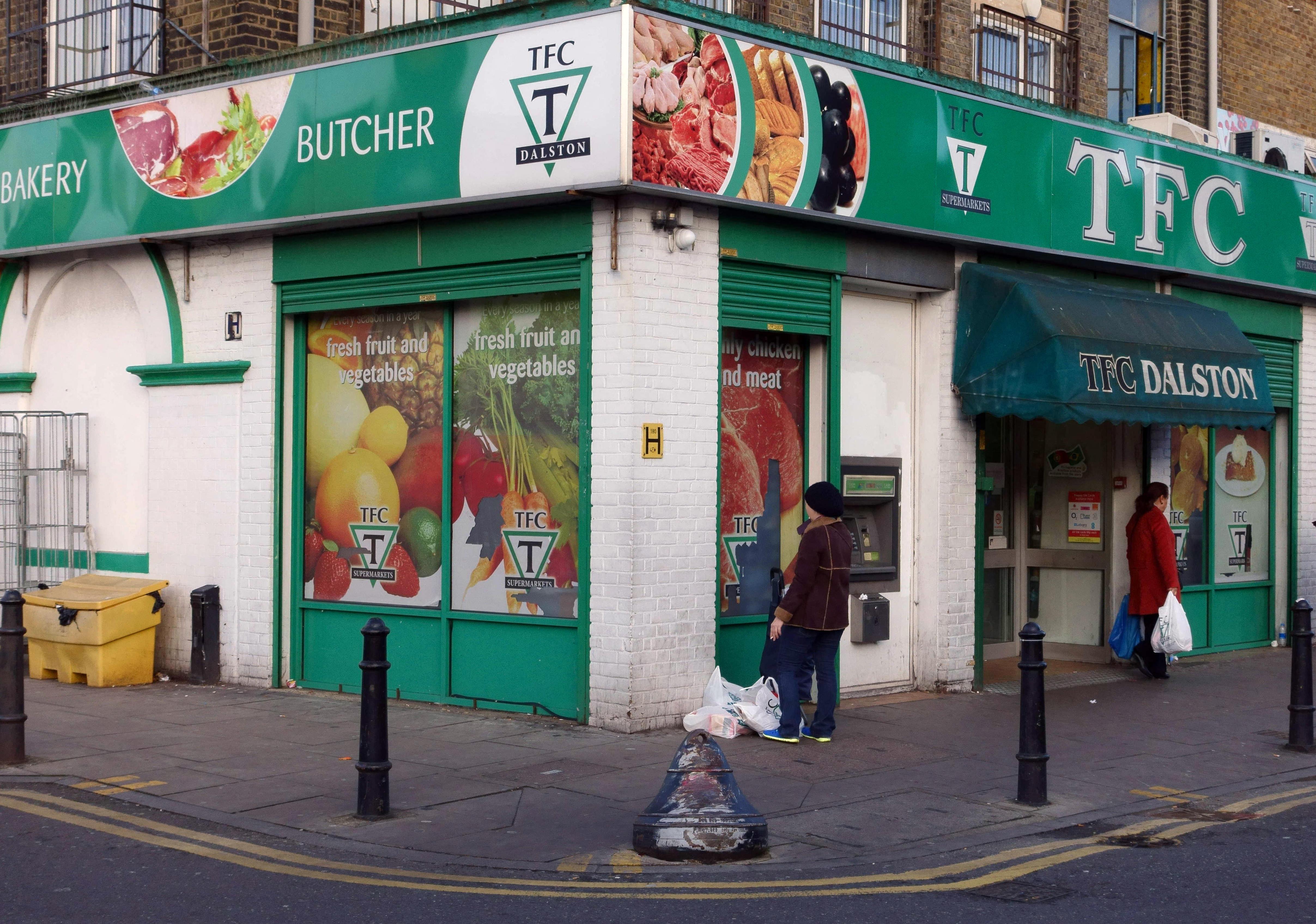
TFC Dalston, 16 Dec, 2014. Photo © Jeffrey Blackler / Alamy
The precise early corporate history of Turkish Food Centre has been described differently over the years. At TFC's 40th anniversary celebrations in 2019, Hüseyin Uçar was formally described as the company's founder and chairman, with the business tracing its origins to a single Dalston grocery store in 1979.
Earlier accounts, including a 2016 T-VINE feature, described the Ridley Road business as emerging from a joint venture involving Güneş and the Uçar family. Given the differing accounts, it is perhaps more accurate to regard Güneş as one of the key pioneers associated with TFC's formative Ridley Road years and, more broadly, with the transformation of Turkish grocery retail in Britain.
The supermarket chain that emerged from those early years became a multi-million-pound operation. By its 40th anniversary in 2019, TFC said its wider business employed around 600 people and had annual turnover of £150 million, distributing some of Turkiye's biggest food brands in Britain as well as serving customers through its supermarkets.
More than just a shopkeeper
Yet Güneş's importance to the emerging British Turkish community went considerably beyond selling groceries.
Eurovizyon, reporting his death, highlighted academic research into the experiences of Turkish women migrants in London which described “Topal Ali” as one of the most trusted and recognisable figures within Hackney's Turkish community.
At a time when many newly arrived migrants faced language barriers and struggled to access Britain's banking system, his supermarket also became an informal centre of trust and mutual assistance.
Some migrants who could not open bank accounts reportedly entrusted their savings to Güneş, who kept their money secure in the shop's safe until they needed it.
Güneş himself later recalled how, particularly as asylum migration increased during the late 1980s, people without bank accounts or the means to transfer money officially would turn to him for help.
He and his business would sometimes arrange transfers in their own name, send money through trusted individuals travelling to Turkiye, or arrange for business contacts there to pay relatives on their behalf.
It was an era before smartphones, internet banking and the extensive network of Turkish community organisations and businesses that exists in London today. Turkish grocery stores were therefore far more than commercial spaces: they were meeting points, information exchanges and informal support centres for people trying to establish new lives in Britain.
Eurovizyon notes that academic research even recorded Güneş as one of the relatively few men outside their families whom some first-generation Turkish migrant women felt they could completely trust.
A familiar name across the community
The nickname “Topal Ali”, referring to the limp Güneş had lived with since childhood, became so closely associated with him that it effectively became a community brand.
Far from resenting it in later life, Güneş said he had come to appreciate the affection with which the name was used.
More importantly, he was proud of the qualities people came to associate with it: honesty, generosity, tolerance and good humour. Eskioğlu, who had previously profiled him in his writings about London's Turkish community, summed up Güneş's lasting reputation simply as that of “a very honest and good man”.
For many of today's British Turks, walking into a large Turkish supermarket and finding everything from fresh simit and baklava to sucuk, white cheese, olives, salça and countless brands imported directly from Turkiye is an unremarkable part of everyday life.
When Ali Gül Güneş and his contemporaries started out, such businesses barely existed.
His death therefore marks the passing of another important figure from the generation that helped create the commercial and social infrastructure London's Turkish communities now take for granted.
As Eurovizyon observed in announcing his passing, “Topal Ali” was not merely the nickname of a successful shopkeeper, but a name representing an era of migration in which shopping, friendship, trust and community solidarity were often inseparable.
T-VINE extends its condolences to the family and friends of Ali Gül Güneş and to all those in Britain's Turkish community who knew him.