

Despite the global setback, there were positive developments for nations as the UK backed a £5 billion clean energy finance drive, and Türkiye and Azerbaijan signed a regional power deal, while separate UN decisions advanced work on climate finance, adaptation and a fair transition.
The UN climate summit in Antalya ended on Sunday 22 November without an agreement on its main political text after two days of overtime failed to bridge a dispute over fossil fuels. The European Union, the Marshall Islands and other countries objected to a final draft that made no mention of coal, oil or gas, while the UK told the closing session that there was no consensus.
The proposed Antalya Pact was meant to set the political direction for the summit. An early negotiating paper included language on moving away from fossil fuels, but that language disappeared from the 19 November draft and never returned.
Delegates told Reuters that Saudi Arabia led resistance to including it. The Turkish COP presidency said it had given no country or group preferential treatment. The final draft still promoted carbon capture, while leaving out a proposed $120 billion annual target for helping developing countries adapt to climate impacts.
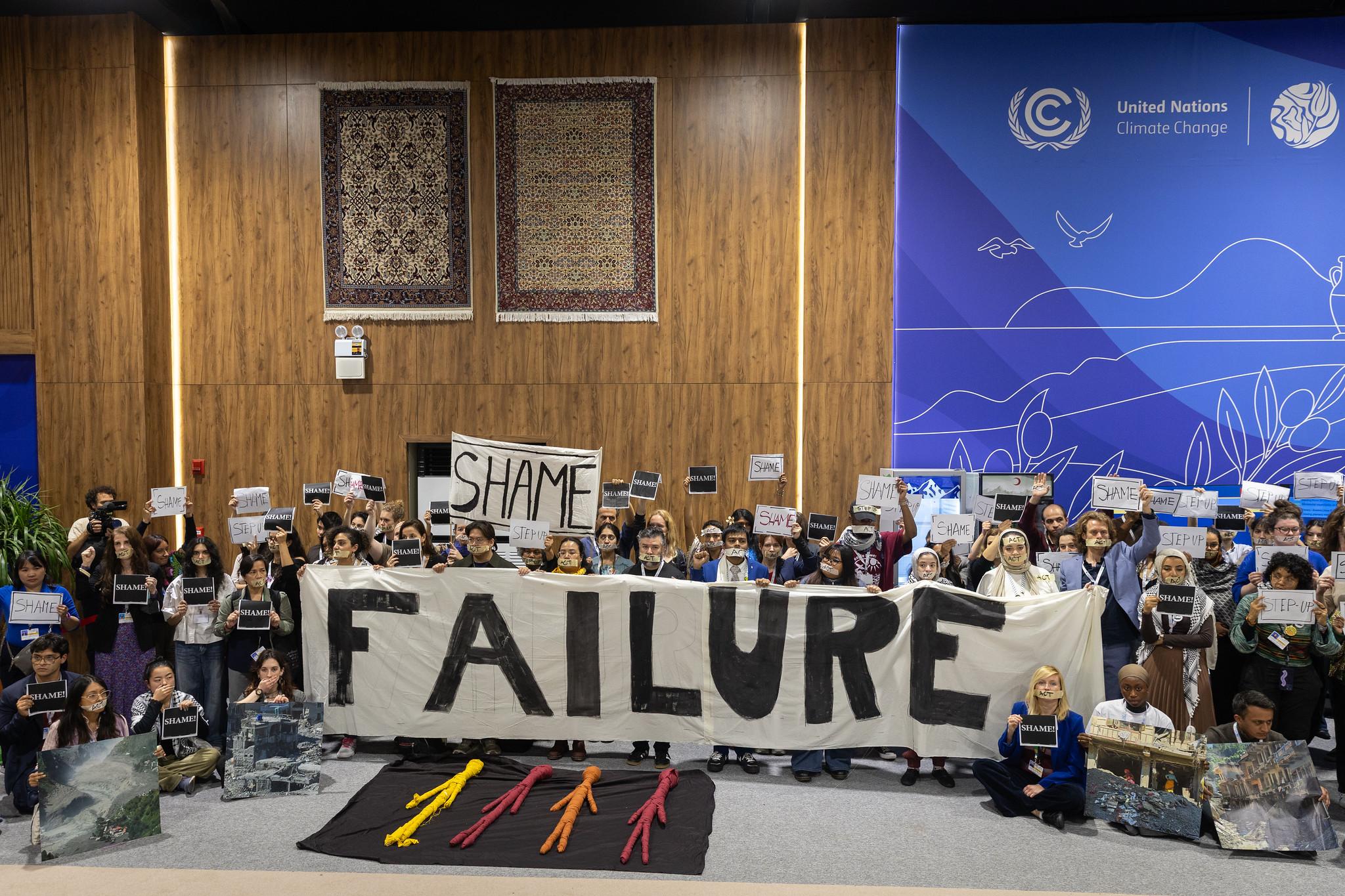
Members of civil society demonstrate before the start of the closing plenary, 20 Nov. 2026. Photo © UN Climate Change - Kiara Worth. CC BY-NC-SA 4.0
COP31 President Murat Kurum ruled out another draft after it became clear there was no consensus. UN Secretary-General António Guterres said he was “deeply disappointed” and urged governments to accelerate and finance the shift away from fossil fuels in energy systems that they had already agreed to at COP28 in Dubai in 2023.
What COP31 did achieve
Delegates extended the UN’s just transition work programme by three years and agreed on steps to put a new mechanism into operation. It is intended to offer technical help and share expertise so that workers and communities are supported as economies shift towards cleaner energy. Governments also advanced work on widening access to climate finance and tracking how well countries are preparing for climate impacts. They launched the second global stocktake, the Paris Agreement’s collective progress review, which is due to conclude in 2028.
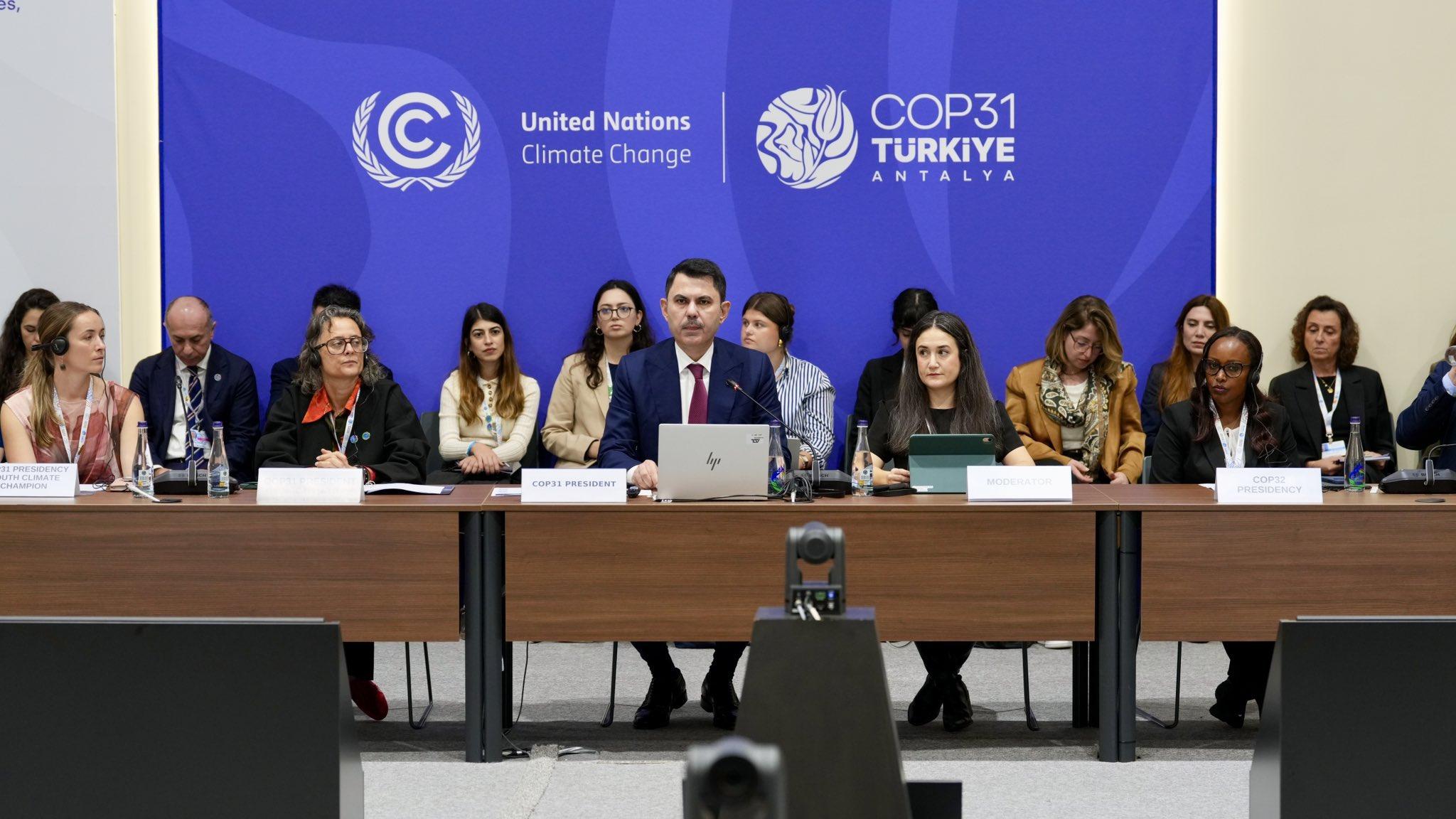
COP31 President Murat Kurum marks Children, Youth, Education and Skills Day at #COP31 by meeting with young people at the Antalya High-Level Dialogue on Children, Youth and Climate Resilience. Photo © COP31Turkiye/X
Outside the formal negotiations, countries representing around half the global economy backed Türkiye’s voluntary drive to raise electricity’s share of final energy use worldwide to 35% by 2035, or said they intended to reach that level sooner. The push covers areas such as transport, buildings and industry, where cleaner electricity can replace fossil fuels. The UN also reported more than $30 million in new funding to protect coral reefs across 22 countries.
What the UK, Türkiye, Azerbaijan and the TRNC committed to
United Kingdom
Prime Minister Andy Burnham announced UK backing for Amplify, a programme that aims to raise £5 billion in private finance for clean energy projects around the world. The UK endorsed the voluntary 35% electrification goal and announced a low-methane partnership with Nigeria. Burnham reaffirmed the UK’s legally binding 2050 net zero target. Its existing Paris pledge is to cut greenhouse gas emissions by at least 81% by 2035 against 1990 levels.
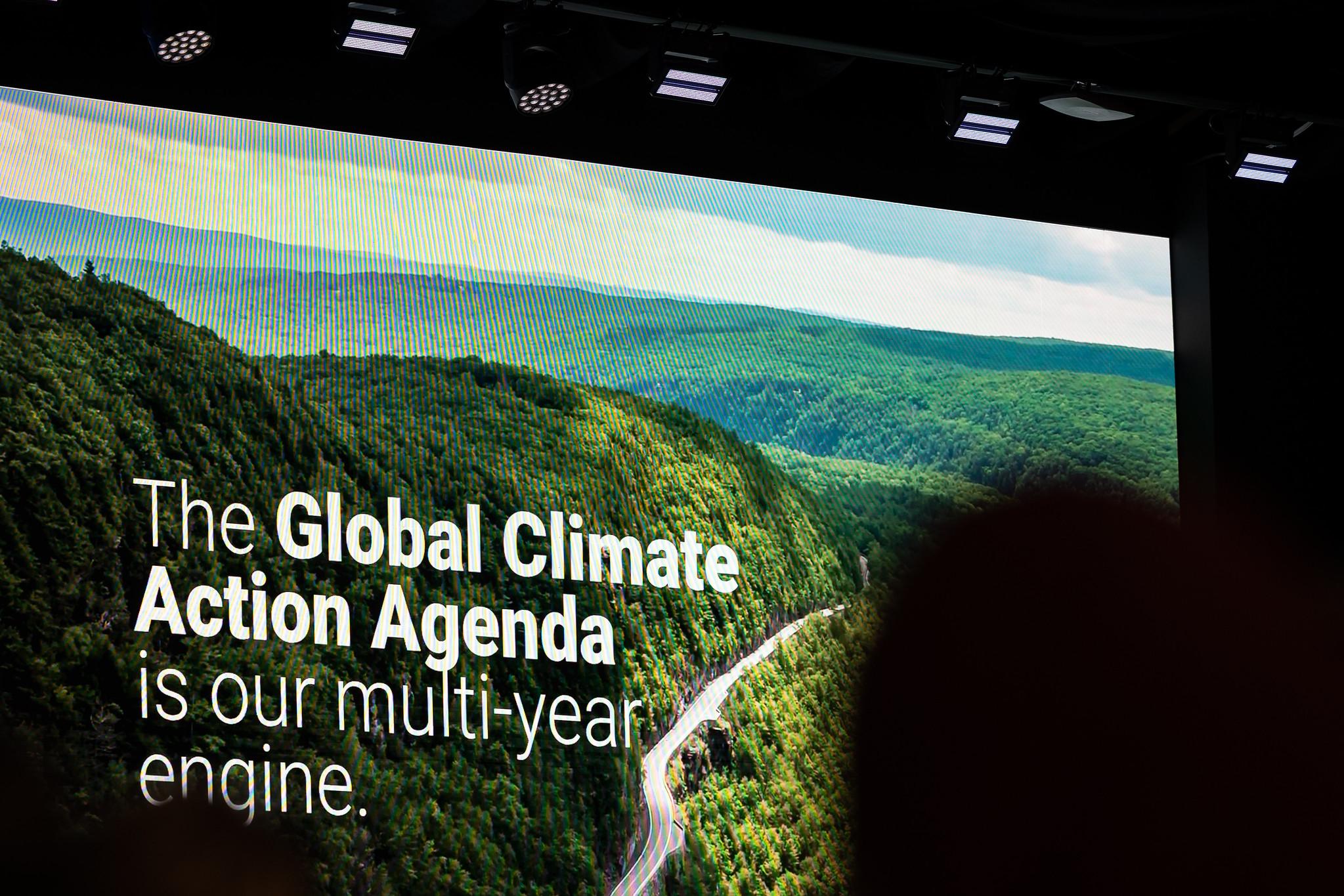
Global Climate Action High Level Event, 19 Nov. 2026. Photo © UN Climate Change - Kiara Worth. CC BY-NC-SA 4.0
Burnham also highlighted the Vanguard East and Vanguard West offshore wind farms. The UK’s publicly owned National Wealth Fund is investing £1 billion as part of the £12 billion financing for the two projects, which are expected to be operational by 2030.
Türkiye
Alongside its global electrification push, the host signed a $1.6 billion financing package with the Asian Infrastructure Investment Bank to bring its emissions trading system into operation, cut emissions across sectors and help local authorities plan for climate risks. The package supports Türkiye’s existing target of net zero by 2053 and its 2035 pledge to limit greenhouse gas emissions to 643 million tonnes of CO₂ equivalent. That is 466 million tonnes below the level Türkiye projects for 2035 under its business-as-usual scenario.
Azerbaijan
Azerbaijan and Türkiye signed a clean energy partnership with Georgia and Bulgaria in Antalya on 10 November. The four governments aim to develop a route for renewable electricity generated in Azerbaijan to reach Türkiye and European markets. Deputy Prime Minister Teymur Musayev also said Azerbaijan plans to bring about 6 gigawatts of additional wind and solar capacity online by 2030 under agreements already signed. He reiterated Baku’s existing pledge to cut net greenhouse gas emissions by 40% by 2035 against 1990 levels, conditional on additional finance, access to technology and other support.
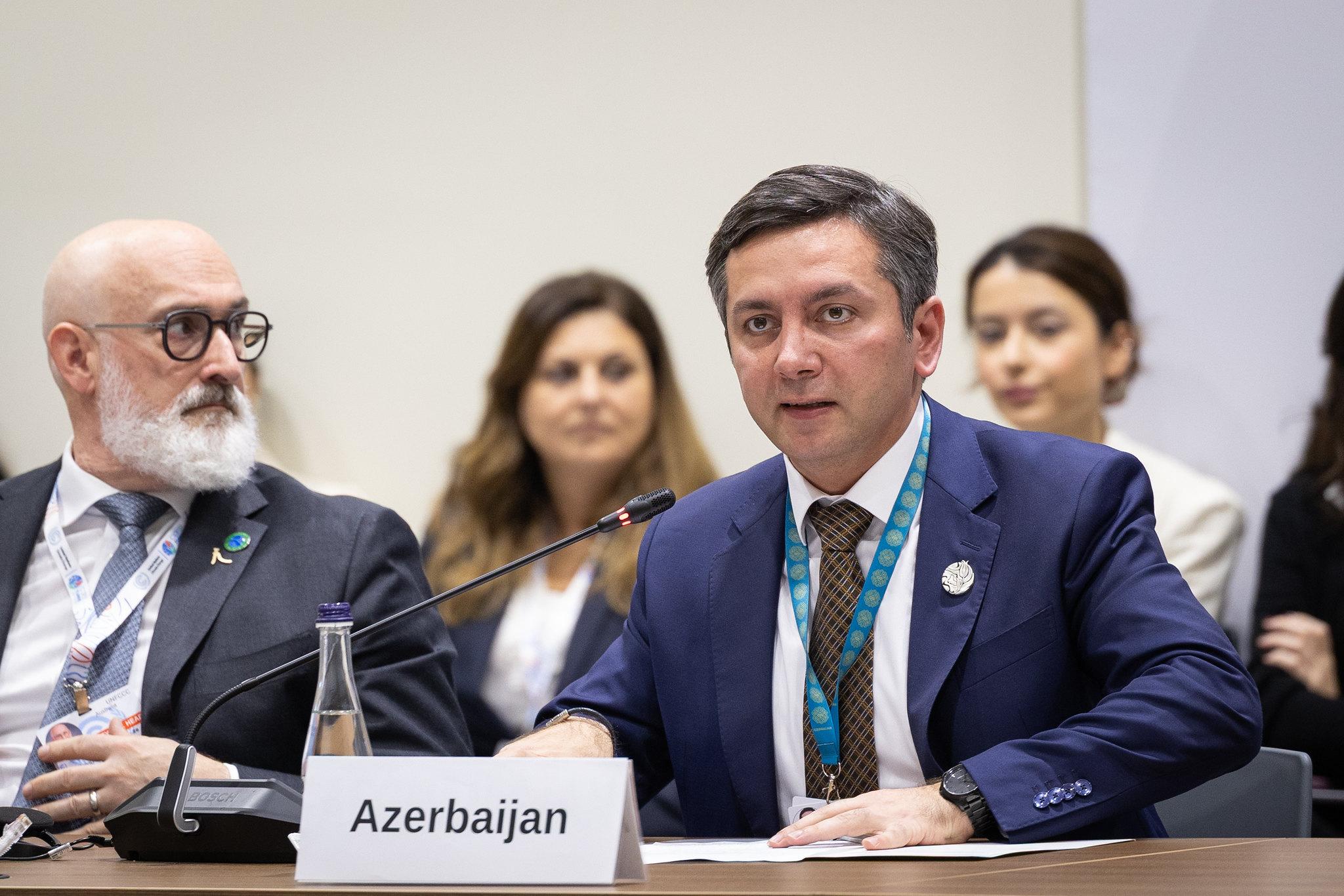
Azerbaijan delegate addresses the High-Level Green Digital Action Roundtable on Climate and AI, 16 Nov. 2026. Photo © UN Climate Change - Kiara Worth. CC BY-NC-SA 4.0
Musayev also pointed to Azerbaijan’s 2060 net zero goal, set out in the long-term strategy it submitted to the UN shortly before COP31. In Antalya, presidential climate adviser Mukhtar Babayev said Baku was prepared to back stronger climate finance commitments and called for a gradual transition away from fossil fuels that took national interests into account.
Turkish Republic of Northern Cyprus
TRNC President Tufan Erhürman attended the leaders’ summit at President Recep Tayyip Erdoğan’s invitation and held brief talks with Guterres and Azerbaijan’s President İlham Aliyev, while Turkish Cypriot civil society groups also participated at the summit.
Due to its political status, the TRNC has no separate seat in the UN climate negotiations. The TRNC presidency’s public account of the visit recorded no new emissions target, renewable energy pledge or adaptation commitment.
One recent project predates the summit: an EU-funded solar installation at the bicommunal wastewater treatment plant in Haspolat was connected to the electricity network in August.
The next UN climate summit, COP32, is due to take place in Addis Ababa, Ethiopia, in November 2027. Governments will face unresolved questions about how quickly to move away from fossil fuels and how to pay for stronger protection against climate impacts.
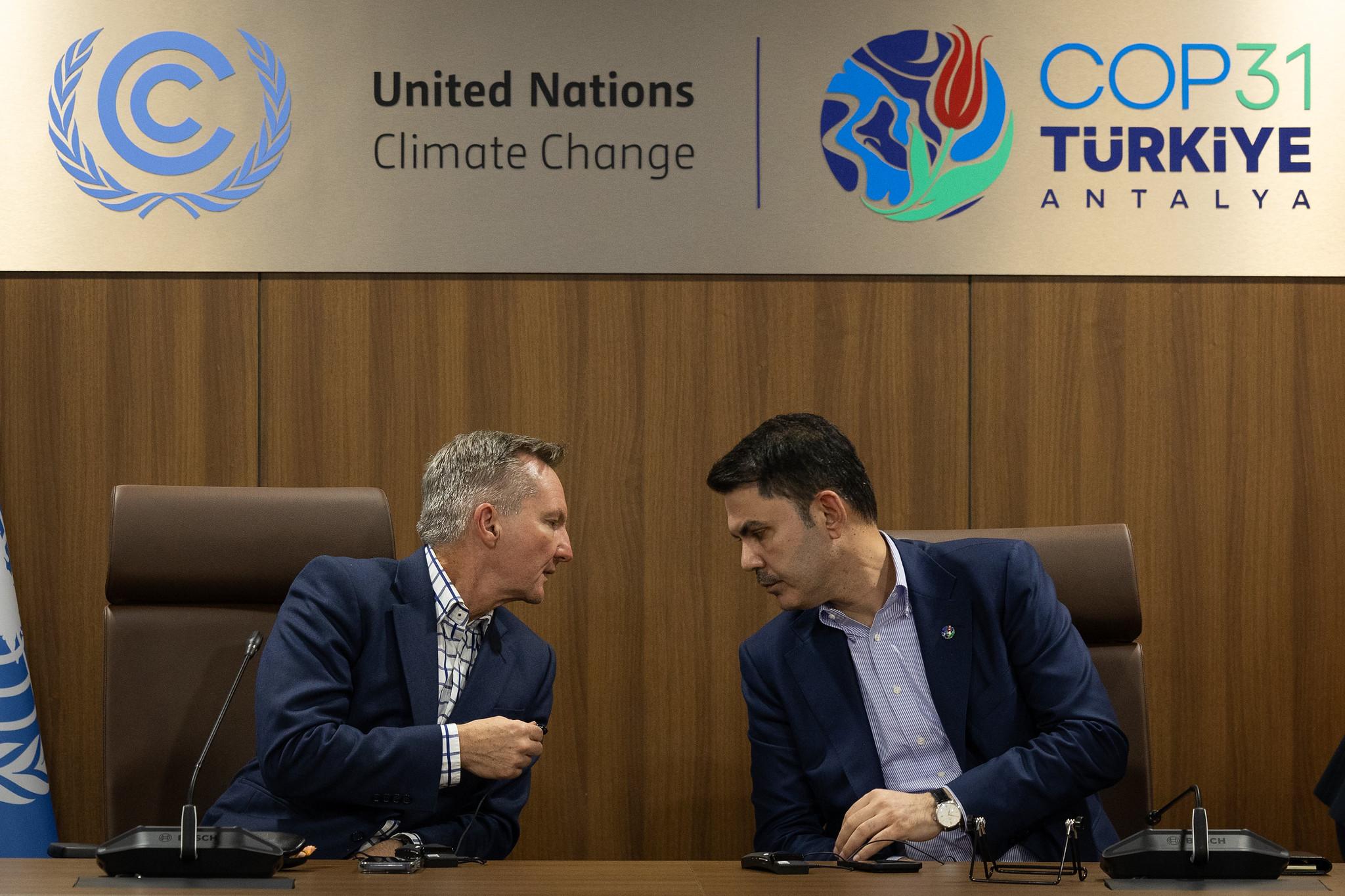
Main image, top, of Chris Bowen (left), COP 31 President of Negotiations, and Murat Kurum, COP 31 President, 21 Nov. 26. Photo: © UN Climate Change - Kiara Worth. CC BY-NC-SA 4.0