


The sounds of Turkish Sufi music and the measured turns of Konya’s whirling dervishes brought a centuries-old spiritual tradition to London and Cambridge this week, with performances at Sadler’s Wells Theatre and West Road Concert Hall.
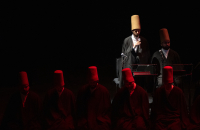
The 22-member Konya Metropolitan Municipality Turkish Sufi Music and Sema Ensemble presented Rhythms of the Divine: Mevlevi Sema Ceremony and Turkish Sufi Music Concert at Sadler’s Wells on Monday 23 November, before travelling to Cambridge for a second performance on Tuesday 24 November.
Organised by Yunus Emre Institute London in collaboration with Konya Metropolitan Municipality, with support from Turkish Airlines, the events introduced audiences from different cultural backgrounds to the musical and devotional traditions associated with the 13th-century poet and Sufi mystic Mevlânâ Celâleddîn-i Rûmî, widely known as Rumi.
The Cambridge performance formed part of the Cambridge Festival of Islamic Arts, extending the ensemble’s UK visit beyond the capital.
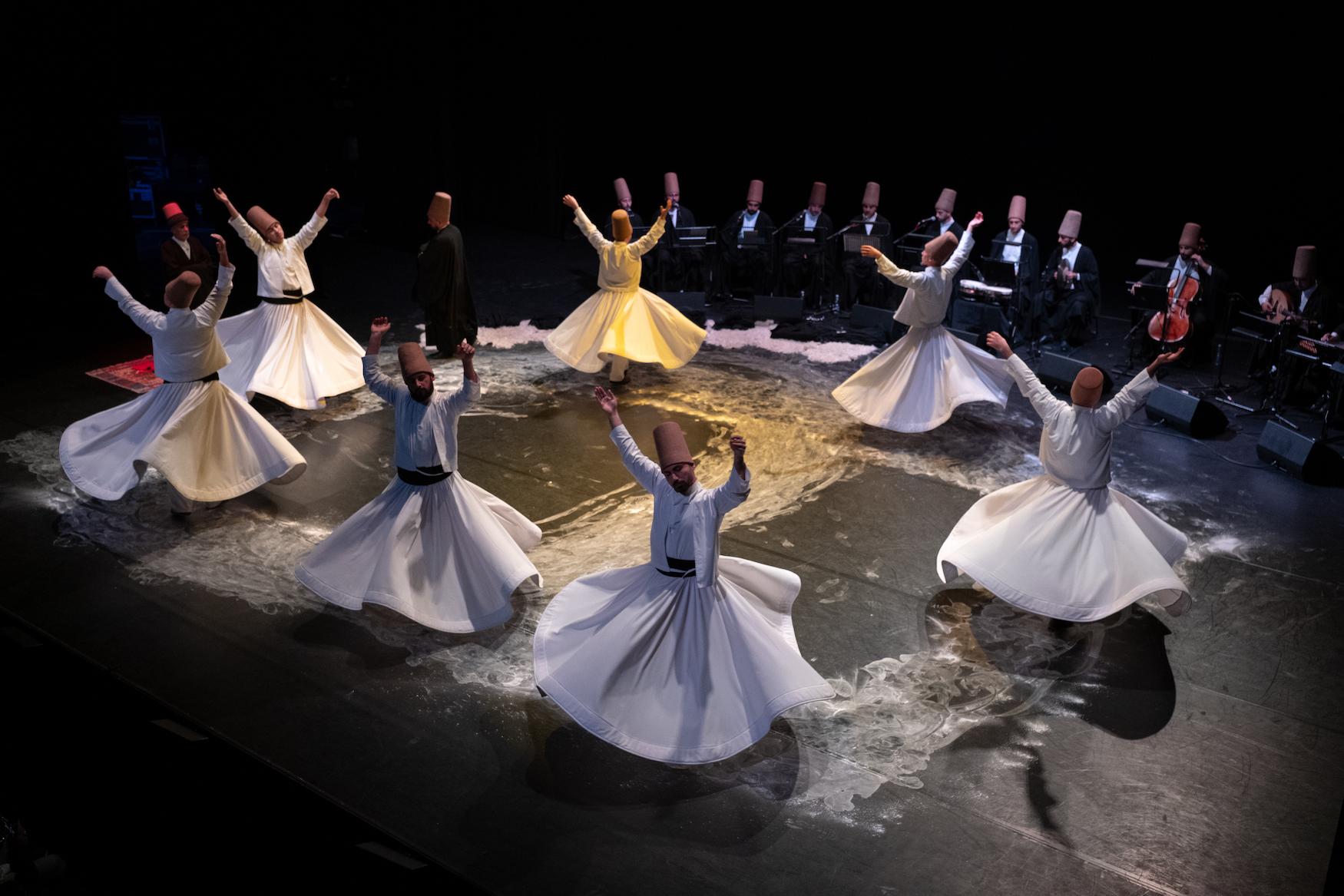
Konya Metropolitan Municipality Turkish Sufi Music and Sema Ensemble, Sadler’s Wells, London, 23 Nov. 26. Photo © Ali Haydar Yesilyurt / Yunus Emre Institute London
Music and movement in the Mevlevi tradition
Each programme unfolded in two parts. The first featured a selection from the Turkish Sufi musical repertoire, performed by the ensemble’s musicians and singers. The second was devoted to the Mevlevi Sema ceremony, with the whirling dervishes, known as semazens, accompanied by live music and recitation.
The distinctive sounds of the ney, a reed flute, and the kudüm, small traditional kettledrums, combined with vocal music to accompany the ceremony. The organisers said the presentations remained faithful to Sema’s traditional form and ritual practices.
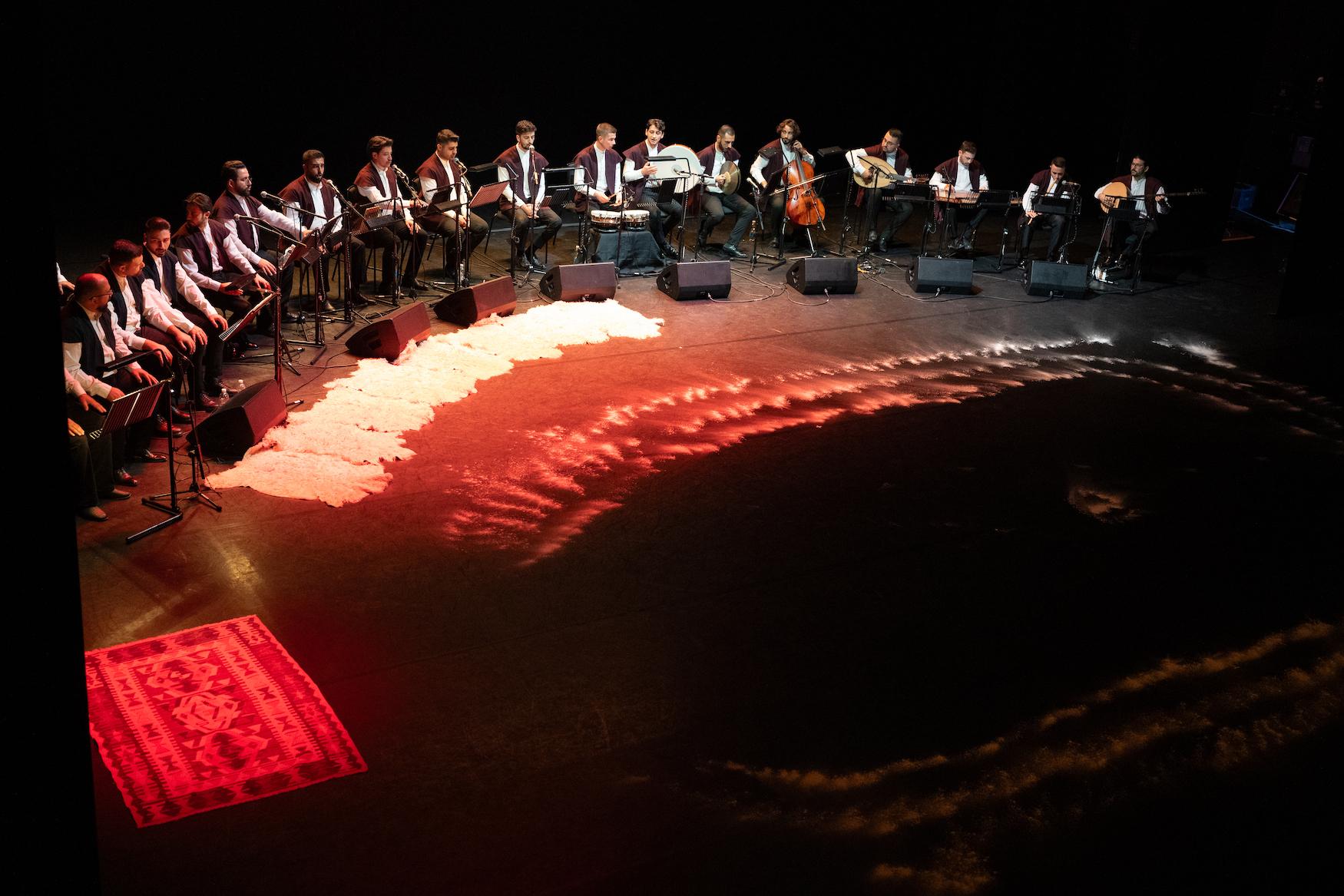
Konya Metropolitan Municipality Turkish Sufi Music and Sema Ensemble, Sadler’s Wells, London, 23 Nov. 26. Photo © Ali Haydar Yesilyurt / Yunus Emre Institute London
Rooted in Rumi’s teachings, Sema brings music, recitation and carefully prescribed movements together as a form of spiritual devotion. Its successive stages and symbolic gestures express remembrance, contemplation and the search for closeness to God. The relationship between the musicians and semazens is integral to the ceremony, with sound and movement unfolding within an established ritual structure.
Konya, where Rumi spent much of his life and where his mausoleum stands, remains a principal centre of the Mevlevi tradition. The visiting ensemble’s musicians, vocalists and semazens work to preserve both its musical repertoire and its ceremonial practices. Sadler’s Wells programme
Cultural figures among London guests
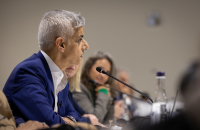
The London evening brought together guests from Britain’s cultural, artistic, academic and media communities. Those attending included historian and documentary presenter Bettany Hughes, ethnomusicologist Professor Martin Stokes, editor and broadcaster Sarah Joseph, arts and culture professional Katie Bone, broadcaster and club promoter DJ Ritu, and photographer Peter Sanders.
Ahmet Çalışır, Head of the Department of Culture, Arts and Social Affairs at Konya Metropolitan Municipality, attended alongside Dr Mehmet Karakuş, Director of Yunus Emre Institute London.
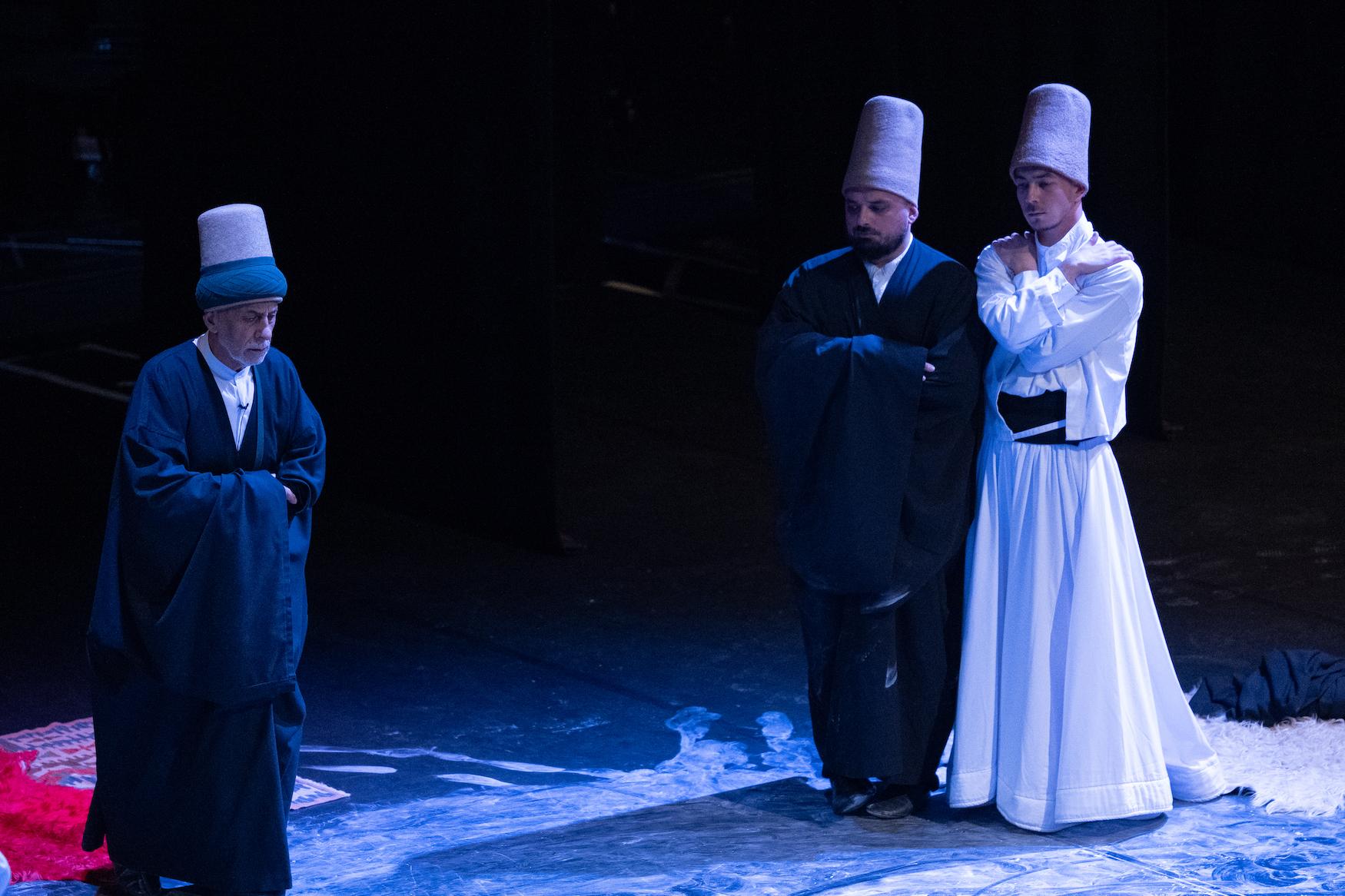
Konya Metropolitan Municipality Turkish Sufi Music and Sema Ensemble, Sadler’s Wells, London, 23 Nov. 26. Photo © Ali Haydar Yesilyurt / Yunus Emre Institute London
The following evening, the ensemble took the same musical and ceremonial traditions to West Road Concert Hall as part of Cambridge’s international festival programme.
A tradition recognised by UNESCO
The Mevlevi tradition has a history stretching back more than seven centuries. UNESCO proclaimed the Mevlevi Sema ceremony a Masterpiece of the Oral and Intangible Heritage of Humanity in 2005, before inscribing it on the Representative List of the Intangible Cultural Heritage of Humanity in 2008. UNESCO
For Yunus Emre Institute London, the two performances formed part of its work to share Türkiye’s arts and cultural heritage internationally. Bringing the ensemble from Konya to two British stages offered audiences an encounter with a living spiritual practice whose music and rituals continue to be passed down through generations.