


The warning signs appeared well before a ball was kicked. At the World Cup draw in Washington in December 2025, FIFA president Gianni Infantino presented US President Donald Trump with the inaugural 'FIFA Peace Prize - Football Unites the World'. The newly created award, and Infantino's very public support for Trump, prompted a formal complaint alleging that he had breached FIFA's rules on political neutrality. For me, it was a strange and troubling sign of what was to come.
After our obligatory four year wait, in June 2026 people worldwide gathered eagerly around their televisions or headed to the host countries to embrace the world’s premier football tournament – if not the premier sporting tournament.
Promoting the World Cup Finals must be one of the easiest jobs for any governing association and host country or countries. However, the 2026 World Cup failed football lovers in almost every category you could name.
1. Visa problems hardly conveyed a warm welcome
The World Cup should be an all-inclusive, non-discriminatory tournament, but supporters from Haiti, Iran, Ivory Coast and Senegal faced full or partial US travel restrictions. Staff and officials were affected too. Most notably, Somalia's Omar Abdulkadir Artan – named Africa's best male referee for 2025 – was refused entry and could not officiate, while Iraq's top striker Aymen Hussein was detained and questioned for nearly seven hours on arrival in Chicago.
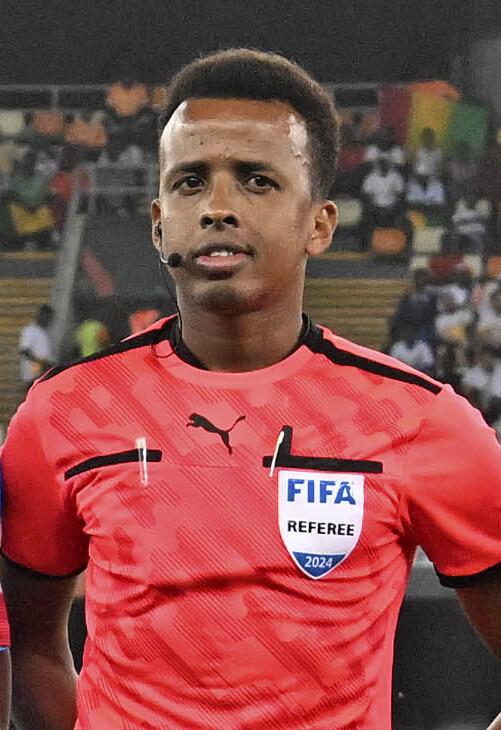
Omar Abdulkadir Artan, pictured here as one of the match officials ahead of the 2023 Africa Cup of Nations quarterfinal match between DR Congo and Guinea at Alassane Ouattara Stadium in Abidjan, Cote d'Ivoire on 2 February 2024. Photo © Ryan Wilkisky/BackpagePix / Public Domain via Flickr.
As for Iran, the team had to be based in Tijuana, Mexico, despite playing all three group matches in the United States due to US visa restrictions on some of their staff and officials. The players repeatedly had to cross the border shortly before their fixtures and return swiftly afterwards. It was an amazing achievement that they remained unbeaten, drawing all three matches. Imagine what the Iranians might have achieved on an even playing field.
Widely circulated footage showed Senegal's national team undergoing bag checks on the airport tarmac before flying to San Antonio, Texas. Senegal's federation later said the screening was part of standard security procedures under a special arrangement that allowed the team to bypass the terminal.
Uzbekistan's players also faced sniffer dogs and metal detectors after arriving in New York. Whatever the explanation, the images hardly conveyed a warm and celebratory welcome.
However, it was not just the USA playing hardball at immigration. Canada refused Ghana midfielder Thomas Partey entry while he awaits trial in Britain on serious criminal charges, to which he has pleaded not guilty. Despite the seriousness of the allegations, whatever happened to innocent until proven guilty? Partey was permitted to play in Ghana's subsequent US-based matches.
2. Outrageous ticket prices
Ticket pricing was as ridiculous and anti-football as we have come to expect, pricing out the genuine grassroots fan and the man or woman in the street.
Even at face value (and most tickets sold for far, far higher through dynamic pricing and on reseller sites), tickets for the Round of 16 ranged from $220 to $890, quarter-finals from $410 to $1,690, semi-finals from $455 to $2,780 and the third-place play-off from $165 to $1,000.
Final tickets were initially listed from $2,030 to $6,370, while dynamic pricing and resale pushed some prices to five figures! The average resale price for the final reportedly topped $11,000. At the upper end, these prices would comfortably buy a season ticket, covering at least 19 games, at many elite Premier League clubs, with some also throwing in hospitality as part of the package.
3. Too much travelling
Travelling to games was also made extremely difficult and arduous, with the tournament spread across three large countries. That raises questions about affordability and the environmental damage caused by an increased number of teams, matches and long-distance flights.
Independent researchers projected that the 2026 World Cup would be the most polluting tournament in history, and this at a time when every part of our planet is experiencing the effects of global warming.
4. Inconsistent sendings-off and suspensions
Sendings-off and suspensions should be black and white. However, the inconsistencies both in the World Cup qualifiers and during the 2026 tournament raised many questions and suspicions. Indeed, many have gone as far as alleging these decisions smack of downright corruption.
Cast your minds back to November 2025, when Cristiano Ronaldo was sent off for elbowing an opponent in Portugal's World Cup qualifier against the Republic of Ireland. He served one match of a three-game ban, but FIFA suspended the remaining two matches for a one-year probationary period, allowing him to play Portugal's opening World Cup game.
Lionel Messi's studs caught Algeria captain Aissa Mandi on the calf and Achilles in Argentina's opening match, yet Messi escaped even a yellow card.
A similar challenge by the USA's Folarin Balogun (pictured above) against Bosnia and Herzegovina in the round of 32 produced a red card. Then Donald Trump lobbied Infantino for a review. FIFA suspended Balogun's automatic one-match ban for a year, allowing him to play against Belgium.
For a head of state to intervene in a disciplinary case should have been treated as a major breach of football's independence, not rewarded. Karmically, it was good to see the USA being well beaten 4-1 by Belgium in the following round.
5. Inglorious VAR
VAR did not cover itself in much glory either, with Argentina among the main beneficiaries. We have already mentioned how Messi escaped punishment. VAR also intervened to disallow a wonderful Egypt goal for a minor foul much earlier in the build-up, after Egypt had broken impressively and scored one of the team goals of the tournament.
Later, when what appeared to be a near-identical scenario occurred before an Argentina goal, the goal stood. The Egyptians were justified in their dissatisfaction with the officiating and were denied a potentially memorable victory.
In the England v Argentina semi-final, Enzo Fernandez caught Elliott Anderson in the back of the neck after just three minutes. Why did VAR not intervene? It looked a clear red card to me, but not against Messi's Argentina.
Just so we are not seen to be picking only on Argentina, Paraguay almost got away with 'murder' against France in the round of 16. It was surreal watching the multiple fouls and dark arts by the South Americans against vastly superior opponents. Paraguay committed 13 fouls and were not shown a single yellow card, while France received three!
The French were fortunate to escape without serious injuries and, on this occasion, grateful that VAR stepped in to award the penalty the referee had somehow missed – the only goal of the game.
6. Unnecessary hydration breaks
I know I am on to a winner with my total disapproval of FIFA's compulsory three-minute hydration breaks in every match at the World Cup, even in air-conditioned stadiums built to protect players and spectators from soaring temperatures. You could not make it up.
On the flip side, hydration breaks at open-air stadiums when temperatures were in the high 30s were entirely understandable. However, the question has to be asked: why on earth were elite athletes made to play during the day in such conditions? I believe this showed a lack of consideration for the players, covered up with a drinks break while their health was treated as a secondary concern.
7. It’s a big NO to shows during a football match
Some will disagree, but football matches should be exactly that. You leave home with your ticket, meet up with family and friends and travel to the stadium. The anticipation builds as you on your journey and as you wait for the game to kick-off. You avidly watch the game experiencing every emotion under the sun, before making your way home furiously analysing the outcome. Some may treat themselves to food and drinks served at the ground. That’s about all the frills we need!
We can all do without pre-match and half-time concerts, and daytime fireworks. They are not what the traditional football fan looks for or takes any interest in.
I would go as far as to say they lower the enjoyment of the day as they pointlessly detract from the football, as experienced by the shenanigans during the World Cup Final's extended half-time break. Wayne Rooney aptly summed it up when he said, 'I thought it was crap.'
8. Back to cost
How much would you expect to spend on a hot dog, a beer and a bottle of water? At some 2026 World Cup venues, the total was reported to be about $47.50 – roughly £35. Not only were supporters paying ridiculous sums for tickets, but they were also made to pay excessively high costs for stadium food and drink prices.
There were local reports that street vendors who traditionally sold food and drink outside stadiums were arrested, put in police vans and had their wagons confiscated. ‘Why?’, you may ask. Because they charged substantially less, and the governing authorities were not having it.
It was another example of how this World Cup was for the few and not the many.
9. 2030 plans – I despair
The next World Cup is in 2030 and I am already holding my head in my hands. With 2030 being the centenary of the World Cup, global body FIFA has decided it’s a good idea to play a single celebration tournament match in three South American countries – Uruguay, Argentina and Paraguay – before the tournament moves to Europe and North Africa where World Cup 2030 co-hosts Morocco, Spain and Portugal stage the remaining fixtures.
Why the entire 2030 World Cup could not be hosted in Uruguay, which hosted for the very first tournament back in 1930, with a separate World Cup held in Europe in 2034 instead, is beyond me.
As things stand, the teams involved in the South American matches will then have to travel across the Atlantic to join the rest of the competition. And this after players have competed in a full season. It yet again highlights that the wellbeing of players and the costs faced by supporters come a poor second to FIFA’s commercial needs and decisions.
10. Will FIFA sellout the World Cup?
The news of the last few days shows FIFA chief Infantino wants to go even further. He is proposing a new commercial company, FIFA Forward Enterprise, where FIFA would sell a minority stake of up to 20 per cent to outside investors. The new company would be valued at around $20 billion. FIFA argues that the scheme could raise as much as $4.2 billion and direct more money to football development and its 211 member associations.
Yet FIFA’s revenue for the 2023-2026 cycle, dominated by this World Cup, is expected to top $15 billion. While revenue is not the same as profit and FIFA has significant costs, that is still an extraordinary sum of money to generate from a single event. With income on that scale, FIFA has ample scope to support every national federation without selling any part of the World Cup's commercial future to private investors.
Let’s hope the initial angry reaction to this FIFA proposal checks it in its stride. But suffice to say the 2026 World Cup was a failure and the signs for the future are not good.
From creating a strange peace prize for Donald Trump, to bowing to political pressure over Balogun, pricing ordinary supporters out and now trying to bring private investors into the crown jewels of world football, the trajectory under Infantino is clear: FIFA is going from bad to worse!
Main picture, top, of Gianni Infantino, President of FIFA, and Donald Trump President of the USA, with the World Cup Trophy after the FIFA World Cup 2026 Final match between Spain and Argentina at New York New Jersey Stadium on July 19, 2026 in East Rutherford, United States. Photo © Allstar Picture Library/Alamy