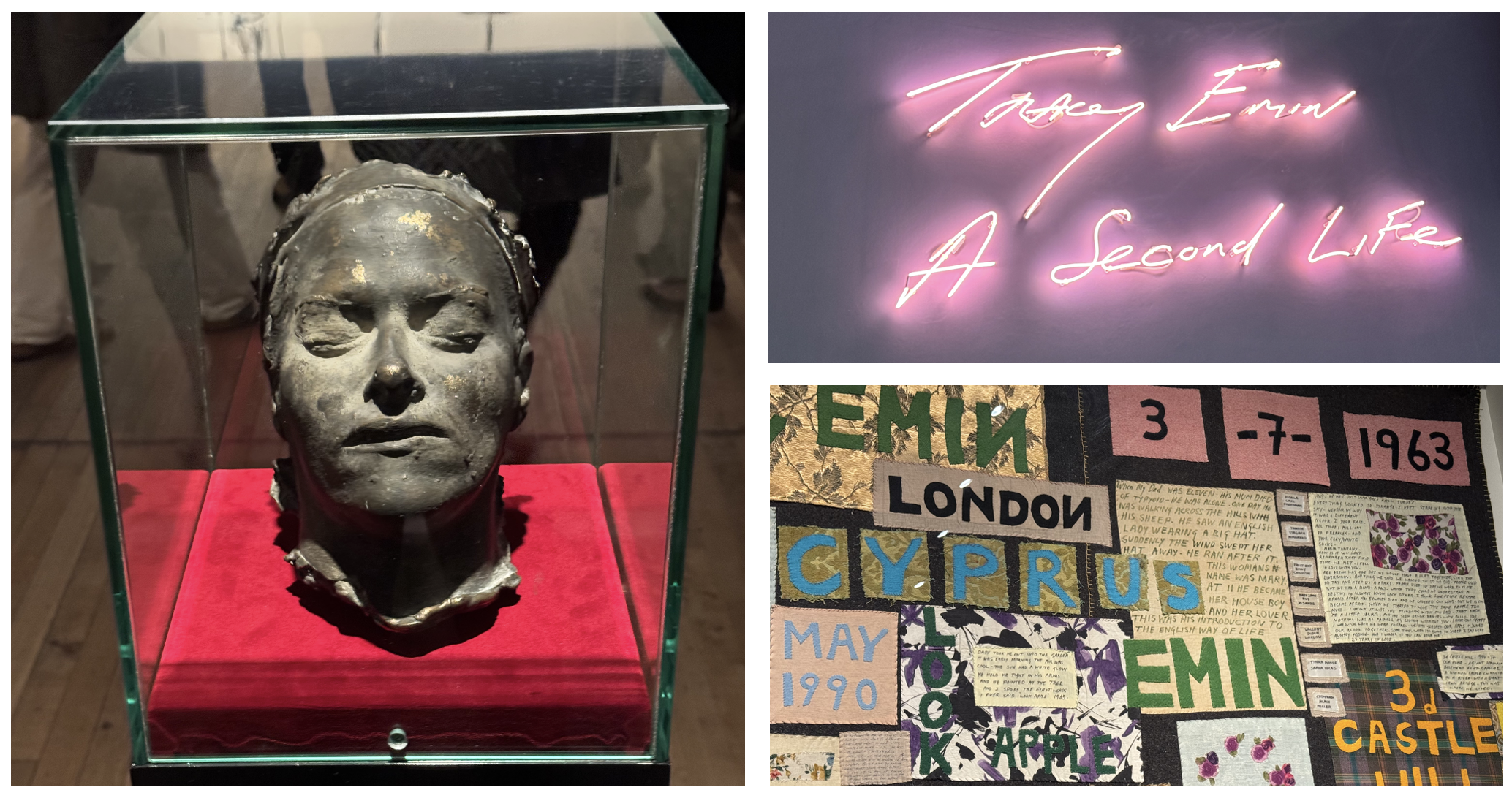
If you have not yet seen Tracey Emin: A Second Life at Tate Modern, make time for it now!
This landmark exhibition, which closes on 31 August, is an absorbing, moving and at times devastating journey through six decades of one of Britain’s most distinctive artists – taking visitors from Emin’s turbulent childhood and the works that made her infamous in the 1990s through to love, loss, illness, survival and an extraordinary creative resurgence later in life.
And for T-VINE readers there is another compelling dimension: Emin’s Turkish Cypriot heritage is threaded throughout the exhibition, sometimes explicitly and at other times through family photographs, textiles, memories, language, Cyprus and the patterns and objects that have formed part of her visual world.
Tate describes ‘A Second Life’ as the largest survey of Emin’s work ever staged, bringing together more than 100 pieces spanning painting, video, photography, textiles, neon, sculpture, writing and installation.
Having seen the exhibition, my advice is simple: go before it closes.
The Turkish Cypriot story running through Emin’s art
Born in Croydon in 1963 and raised mainly in Margate, Tracey Emin is the daughter of English mother Pam and Turkish Cypriot father Enver Emin, whose Hotel International in Margate was home to Tracey and her twin brother Paul during their early childhood. Tate itself highlights her Turkish Cypriot background as an important element of her biography.

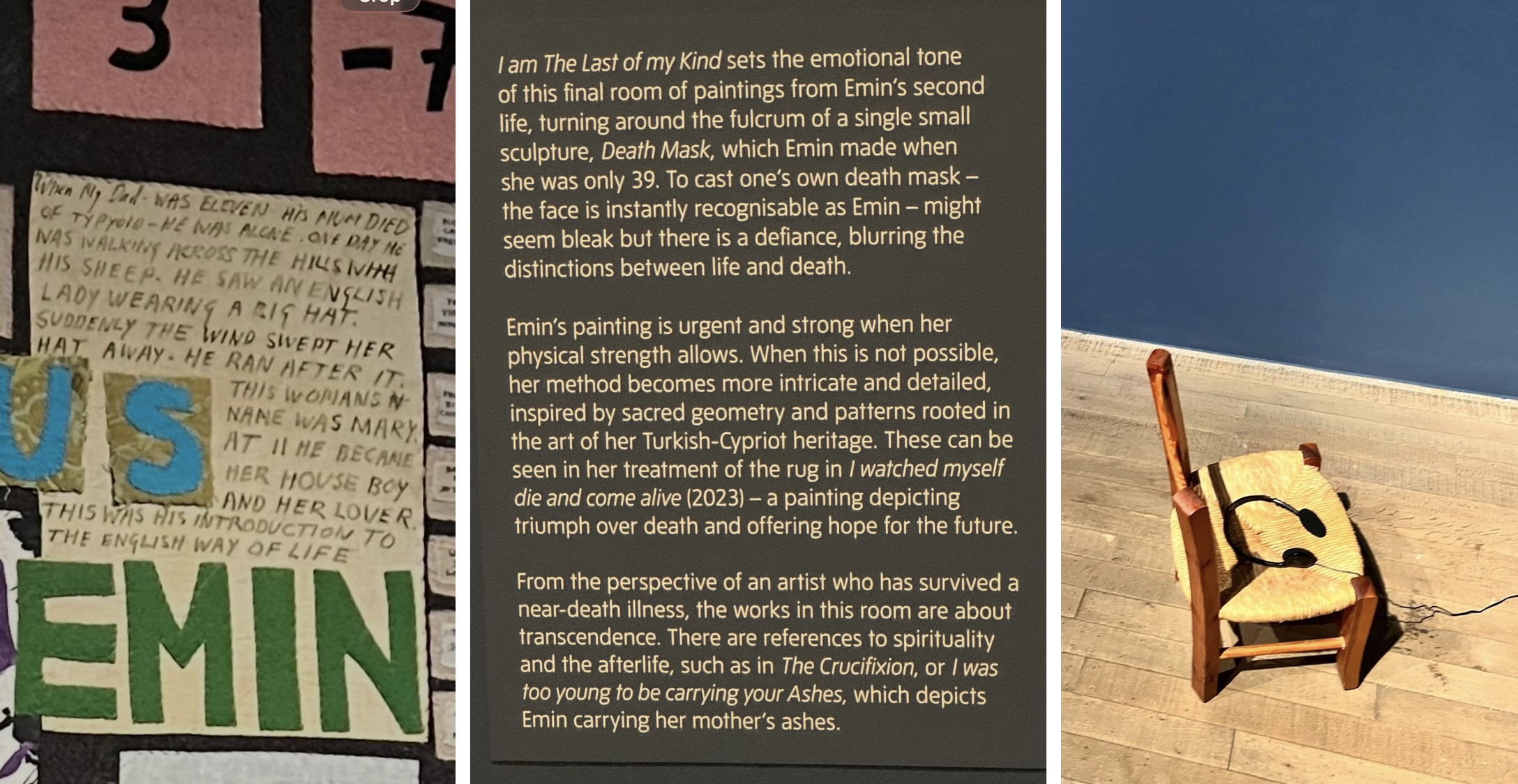
That family story immediately surfaces in one of the exhibition’s wonderful early textile works, Hotel International (1993).
The large appliquéd blanket is effectively a handmade family history: names, places, dates, memories and fragments of Emin’s childhood stitched together, among them references to Cyprus and Istanbul, her father Enver, her mother and brother, alongside Margate and the hotel itself. The Financial Times describes the work as an autobiographical blanket named after her father’s hotel, while other critics have emphasised its role in establishing the storytelling style that became fundamental to Emin’s art.
Her Turkish Cypriot identity acquires a darker resonance in Emin – “it’s more than a name – it’s hereditary” (1963–93). Tate places a content warning beside the work because it reproduces racist language directed at Emin and her family. The photographs and handwritten memories recall the racist abuse suffered by her English mother for having a Turkish Cypriot partner and, later, by Tracey and Paul because of their father’s ethnicity.

It is a striking reminder that questions of race, migration and belonging were present in Emin’s work long before they became fashionable subjects in the contemporary British art world.
Another fascinating exhibit is her handwritten Tracey Emin CV. Among the deliberately informal entries charting her childhood, Emin records travelling by road to Türkiye as a small child, spending time around the Black Sea and north of Ankara before returning to Margate. Later comes the memorable entry that she had “stopped talking Turkish” after starting school.
For British Turks in particular, these little details give a different perspective on an artist usually introduced simply as “Tracey from Margate”. Margate unquestionably shaped her, but hers was also a childhood influenced by a Turkish Cypriot father, two cultures, travel between Britain, Cyprus and Türkiye and the experience of growing up visibly different.
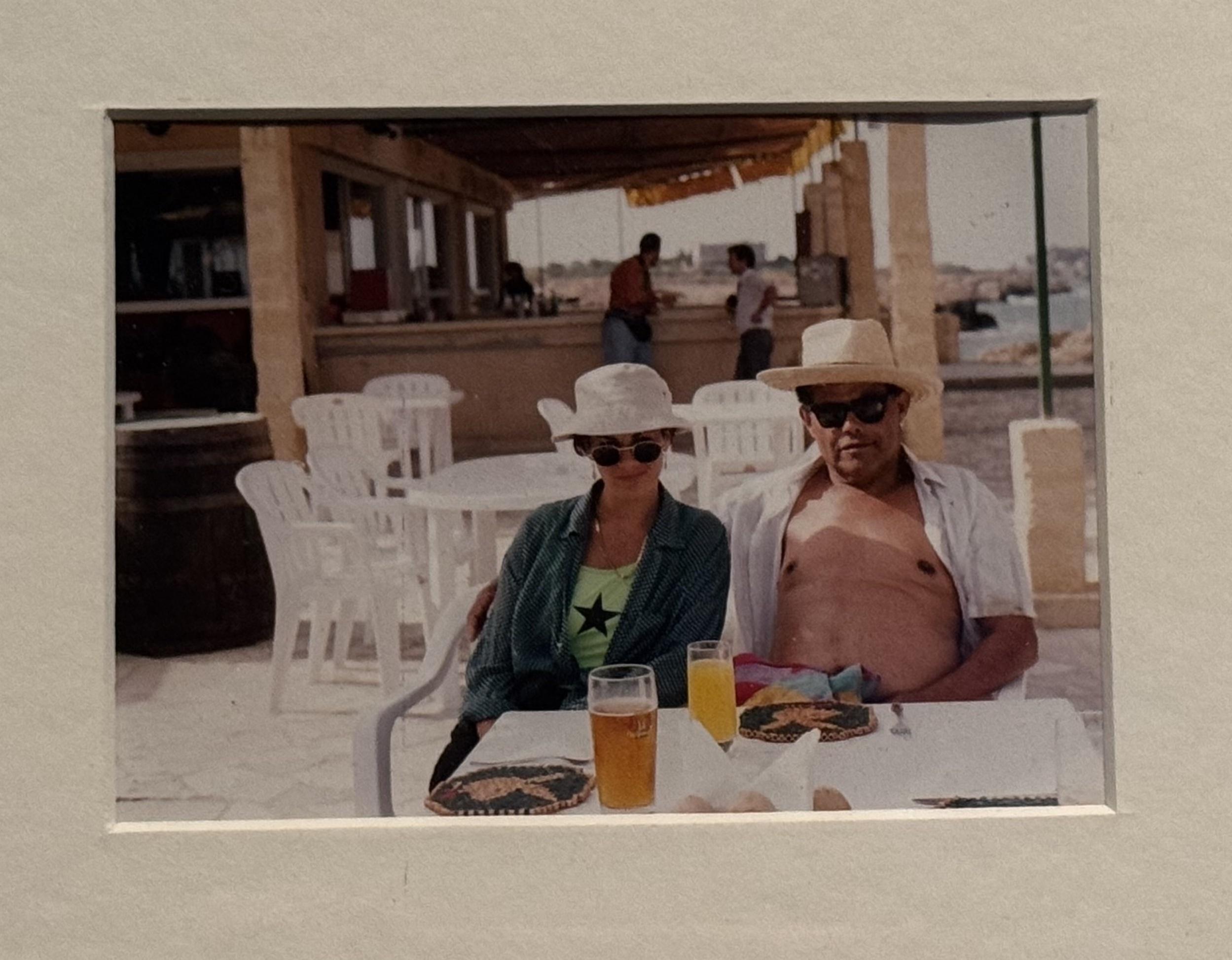
Perhaps the tenderest expression of that relationship comes in the two-minute film ‘Emin & Emin’ (1996).
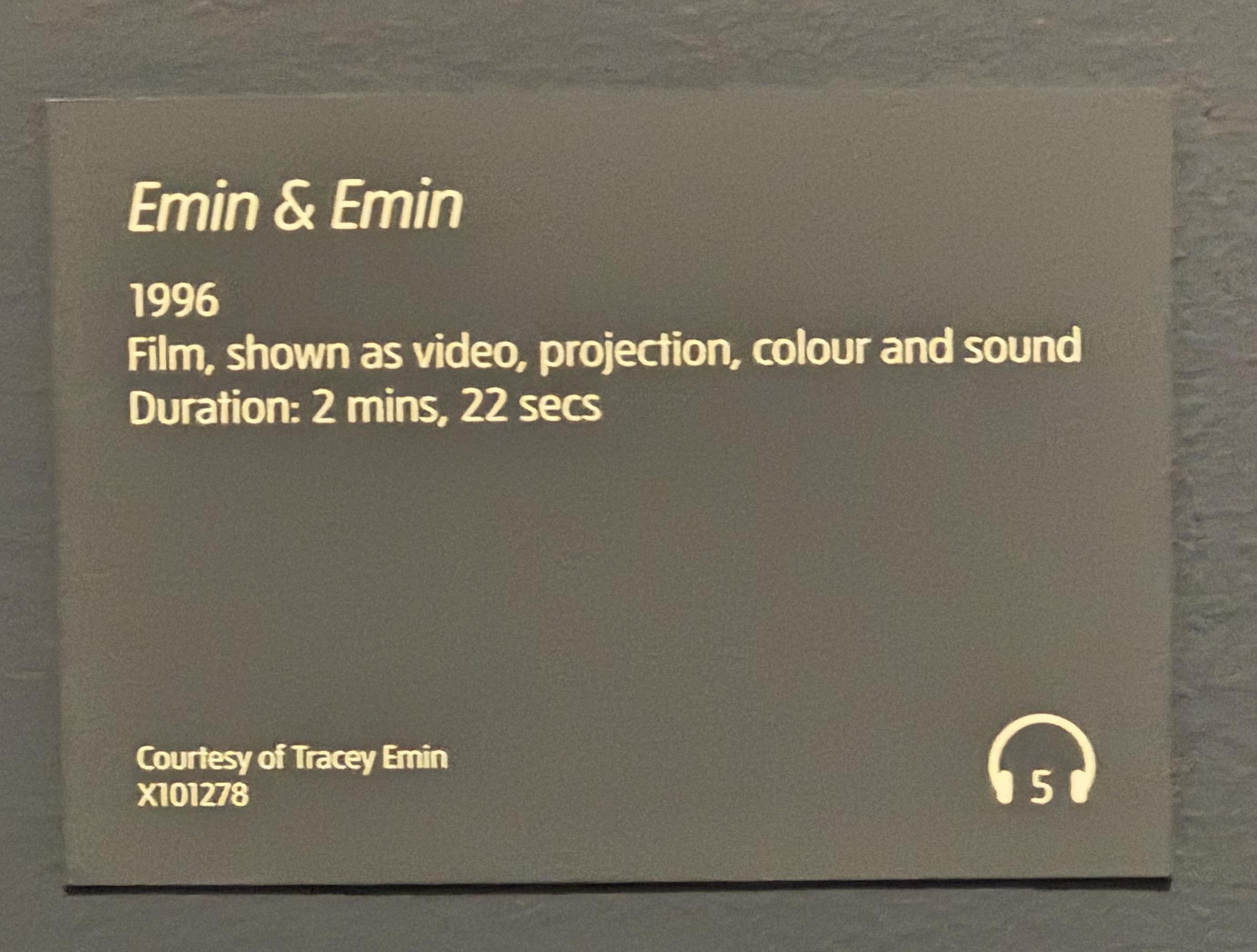

Filmed in Cyprus, it shows Tracey with her father on the beach. Waves break around them as Enver sings softly in Turkish and his daughter recites a short poem about their bond, ending simply: “I love you Daddy.”
The Turkish Cypriot influence is not restricted to Emin’s early autobiographical works either.
In the exhibition’s final section, Tate explains that when illness makes Emin’s normally physical style of painting difficult, she turns towards more intricate forms inspired by sacred geometry and “patterns rooted in the art of her Turkish-Cypriot heritage”. These are visible in the elaborate rug in her haunting 2023 painting ‘I watched Myself die and come alive’.
It creates an important continuity: Cyprus and her heritage are not merely childhood memories being excavated for a retrospective. They remain part of Emin’s visual language today.
The bed – and so much more
Of course, the work many visitors will head towards first is ‘My Bed’ (1998).
The notorious installation – Emin’s own dishevelled bed surrounded by the debris of a period of severe emotional distress – helped propel her to national fame when it was included in her 1999 Turner Prize exhibition. Nearly three decades on, it looks less like the sensational piece portrayed in the tabloids at the time and far more like what it really was: an exceptionally vulnerable self-portrait of depression and despair.
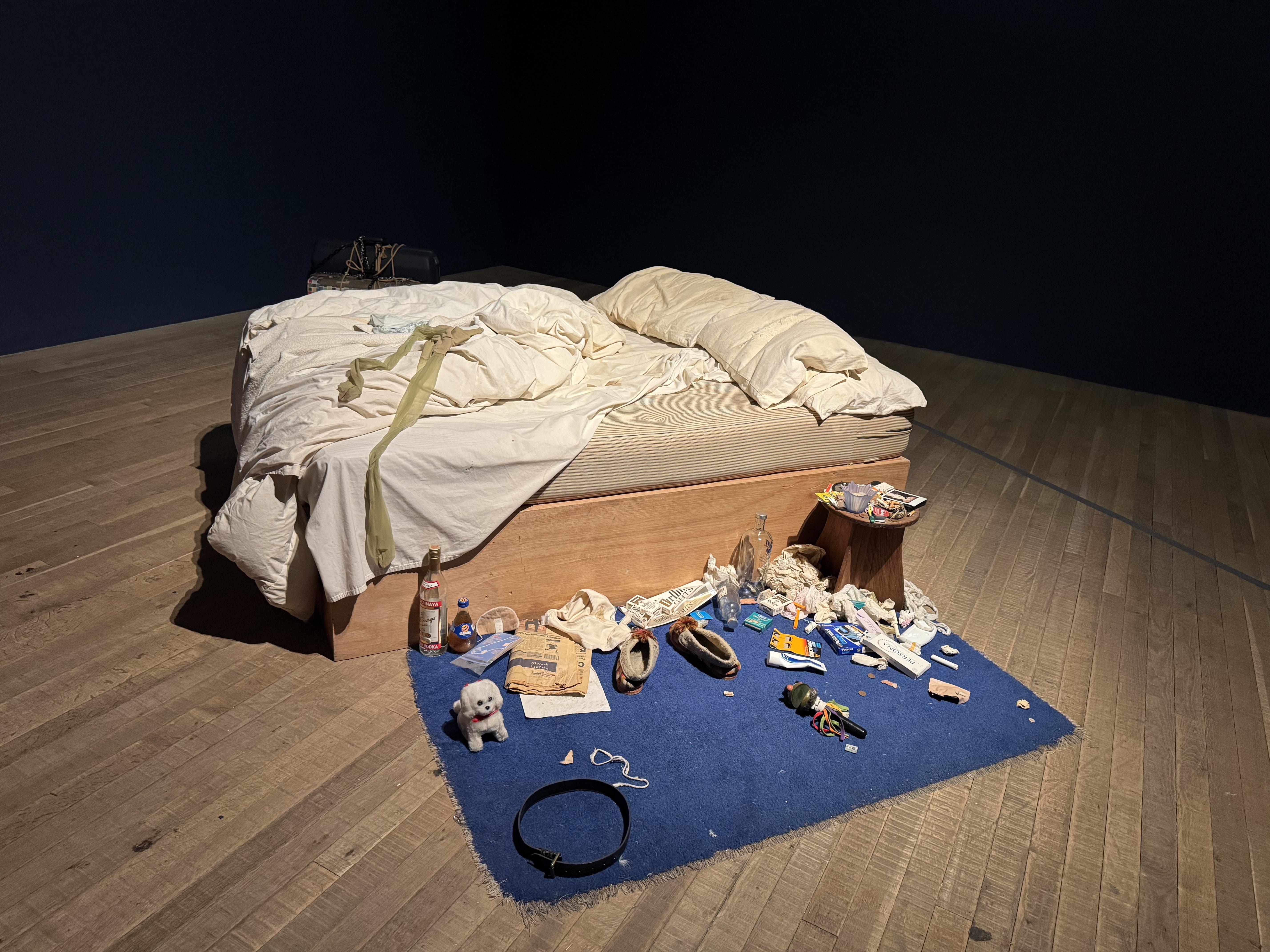
‘My Bed’ (1998) by Tracey Emin, pictured at Tate Modern, March 2026. Photo © Ipek Ozerim
But A Second Life demonstrates just how reductive it is to think of Emin as simply “the woman who did the bed”.
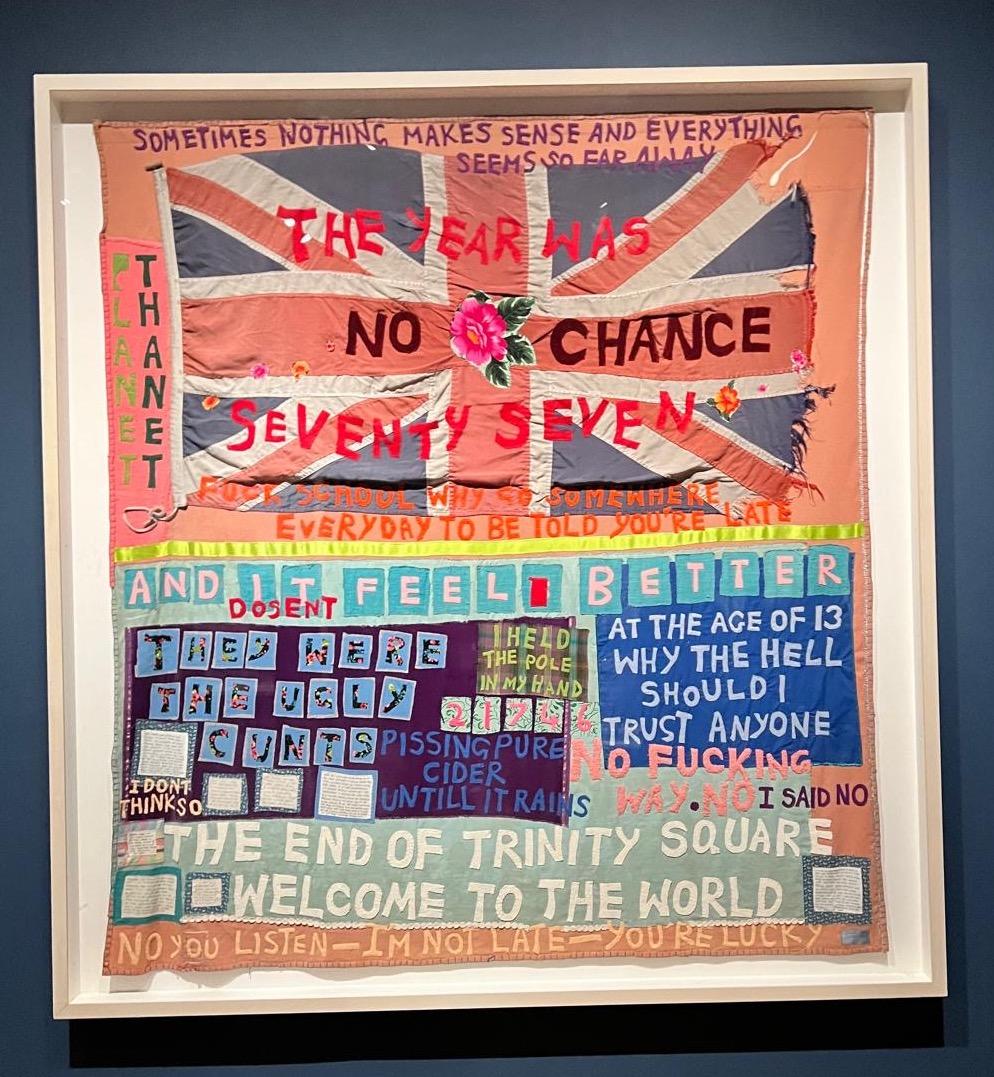
There is the brilliant ‘Why I Never Became a Dancer’ (1995), in which the humiliation and sexual exploitation she experienced as a teenager ultimately gives way to an exhilarating act of defiance; ‘How It Feels’ (1996), her painful account of an abortion and its aftermath; her embroidered blankets and intimate photographs; handwriting transformed into neon; sculpture; huge expressive paintings; and the recreated environment of ‘Exorcism of the Last Painting I Ever Made’. Time Out, which gave the exhibition five stars, praised precisely this extraordinary range of media and Emin’s ability to transform traumatic experience into compelling art.
Then comes the “second life” of the title.
Emin was diagnosed with bladder cancer in 2020 and underwent radical surgery. Her altered body subsequently became another subject for her art, with the exhibition displaying stark photographic self-portraits alongside paintings concerned with mortality, ageing, spirituality, love and survival.
Works including ‘I am The Last of my Kind’, ‘I watched Myself die and come alive’ and ‘The End of Love’ have a very different energy from the young Emin’s work, but the emotional honesty remains unmistakably hers.

The cancer experience gave A Second Life its title. Ahead of the exhibition, Emin described the show as a benchmark between looking backwards and moving forwards – “a true celebration of living.”
Why A Second Life has struck such a chord
The scale of the public response was apparent before the doors even opened.
British Vogue reported at the launch that A Second Life was “the most pre-sold out exhibition in the gallery’s history”, with writer Claire Cohen describing women standing before Emin’s work “totally rapt”.
US Vogue subsequently called it “the most buzzed-about show of the season”, describing the exhibition as a landmark survey of an artist who has spent four decades turning the raw experiences of her body, mind and life into art.
The critical reaction has been similarly enthusiastic.
Studio International called the exhibition an “absolute tour de force”.
The Independent’s verdict was even more emphatic, asking whether Emin is Britain’s greatest living female artist and answering: “Definitely.”
The Guardian’s Eddy Frankel described Emin as a “special, important, era-defining artist”, arguing that the exhibition reveals how she has spent her career turning suffering into sculpture, insults into poetry and agony into art.
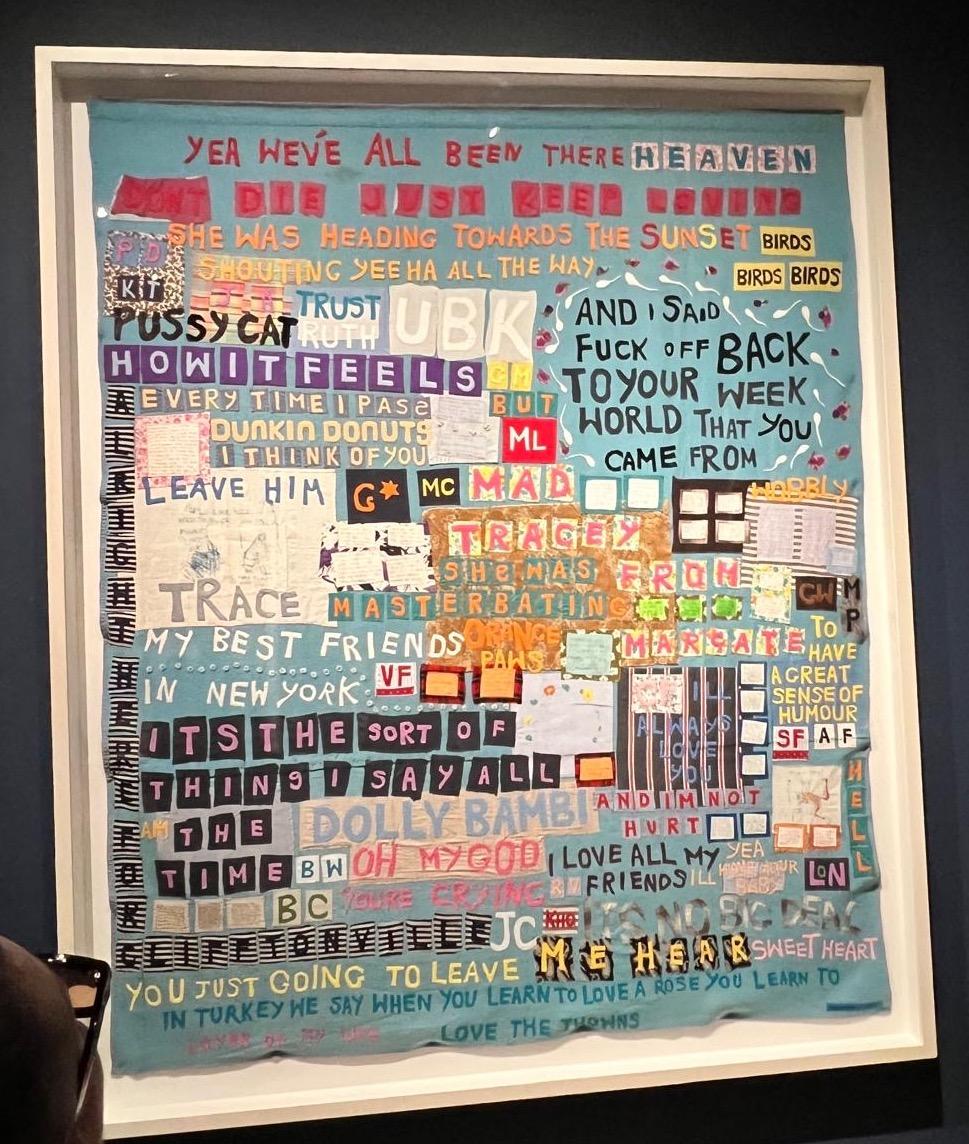
And writing in Frieze, Brian Dillon noted something particularly telling about the public response: even on the exhibition’s second day, visitors were standing or sitting through Emin’s films and paying exceptionally close attention to her written works. His conclusion was that A Second Life may finally allow Emin’s universality to be fully recognised.
That perhaps explains the exhibition’s extraordinary appeal.
You do not have to share Tracey Emin’s life to recognise something of yourself in the emotions she puts before you: being rejected, loving someone who does not love you back, losing a parent, feeling ashamed, being frightened, growing older, surviving illness or simply wondering how much time you have left.
For T-VINE readers, there is the added pleasure of discovering just how prominently her Turkish Cypriot roots sit within that story.
A Second Life is raw, funny, uncomfortable, intimate, occasionally shocking and frequently beautiful. Most importantly, it leaves you thinking about its works long after you have left Tate Modern.
There are now only a few weeks remaining to experience it.
Don’t miss it!
Exhibition details
Title: Tracey Emin: A Second Life
Ends Monday 31 August 2026
Address: Tate Modern, Bankside, London SE1 9TG
Opening hours: Tate Modern is open Sunday to Thursday from 10am–6pm and Friday and Saturday from 10am–9pm.
Tickets: Tickets are currently £22, with concessions available. Tate Members enter free, while 16–25-year-olds who join the free Tate Collective scheme can obtain £5 exhibition tickets. Due to the exhibition’s popularity, advance booking is advisable.