The TRNC civil service and infrastructure were already stretched thin: from the country’s healthcare system to the police, those at the front line of delivering these essential public services were feeling the burden of working for a growing population with insufficient resources.
My fellow international students regularly complained of waiting lines at the hospital getting longer, and being referred to private hospitals and clinics for tests, Many found they had little or no access to public healthcare, despite paying for this service alongside their resident permits, and being charged for it by some universities.
Their needs were mostly ignored, and those students who could afford it, slowly and quietly began to move over to private hospitals for better care.
Logos of 6 TRNC universities
Communication from the government was poor: this was evident in their health notices, only provided in Turkish despite repeated requests for English. While the TRNC authorities were quick to raise the price of resident permits, they failed to explain the rises to those most affected. It was usually half-hearted and poorly done.
International student body VOIS Cyprus eventually decided to fill in the gaps for international students by providing regular updates in English.
But we still don’t know, for example, whether foreign students will be given the Covid-19 vaccination as part of the TRNC government’s efforts to inoculate the country ahead of opening it up to tourism this summer.
Many have come to the conclusion that international students on the island generally endure poor treatment, the consensus being that foreign students are regarded as “cash cows”.
I have previously written before about the dubious role of agents and their enrolment practices for TRNC universities. There has also been a well-publicised case about the tragic murder of a Nigerian student, Kennedy Dede. These all form a growing negative perception about studying in the TRNC.
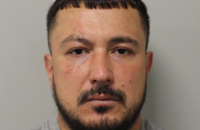
Nigerian student Kennedy Taomwabwa Dede was murdered in North Cyprus over an unpaid drug debt
In August 2020, Honourable Abike Dabiri, the Chairman of the Nigerians in Diaspora Commission (NIDCOM), released a press statement about the treatment of Nigerians in the TRNC, based on news the organisation had received about the harm coming to Nigerian students on the island. Despite containing many errors, and the statement being debunked for its false claims, the damage to the TRNC’s reputation was done.
In December 2020, the TRNC press also reported at least five countries had withdrawn their recognition for higher education degrees obtained from TRNC universities – Egypt, Iran, Iraq, Jordan, and the United Arab Emirates – effectively barring their citizens from schooling here.
Beyond some press statements and photo-ops at the TRNC Ministry of Education, nothing of substance is being done to repair this damage.
A major opportunity was missed to form the proposed committee comprising of representatives from North Cyprus’ large, non-Turkish-speaking international student community (numbering over 41,000) and the Ministry of Education. In short, there was no clear action plan to address the legitimate grievances of international students.
Interestingly, the TRNC press reported similar problems among foreign workers.
There continues to be no admission, let alone an investigation, by the Turkish Cypriot authorities as to why these poor perceptions and mistreatment persists. No one is even asking the question. Yet without these crucial steps, there can be no informed actions or solutions, let alone a reversal of the situation.
Instead, the Prime Minister Ersan Saner and his Education Minister Olgun Amcaoğlu have called for ‘a resumption of face-to-face classes’, in an urgent bid to secure the return of international students, which are vital to the TRNC’s economy.
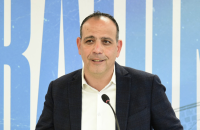
TRNC Minister of National Education and Culture Olgun Amcaoğlu, 19 Jan. 2021
These are merely a few of the pre-existing conditions in the TRNC before and during the pandemic, which have become terribly aggravated and may escalate as we go on if we do not stop to fix these problems from the root source, as opposed to the present method of patching up the problems.
So, what do I propose?
While the country battles Covid-19, the economy and our collective future hangs in the balance. The country must think beyond ‘saving the day’, and plan long-term, so it can not only survive the pandemic, but move forward more confidently. Here are a few ideas:
A National Strategy Conference: beginning this year, and held once every year, this event should be strategically focused, inclusive and representative of all TRNC stakeholders, from citizens, to students and foreign residents and workers alike. It should be an opportunity to discuss issues that affect us all, share ideas and formulate an effective strategy and shape policies we can all buy into.
It is about nation-building with a path to execution and implementation all the way to the national parliament. It starts with a clear path to surviving the challenges of the pandemic and onwards into the future.
Alleviating the healthcare and social infrastructure shortfalls: there is a sizeable number of international students in the TRNC who study medicine, pharmacy, nursing and similar professions. It is unclear why the government has not hired directly from the universities and integrated them into its struggling healthcare system, especially as precious lives are lost and Turkish Cypriot healthcare professionals are overwhelmed.
Narrow, nationalistic mindsets have no place in 2021.
In several countries around the world, there is a policy that allows health professionals to be integrated into the national healthcare system in exchange for work permits and/or permanent residence permits. The TRNC government could look into existing policies and adapt them for use here in North Cyprus.
The TRNC can also borrow and adapt international best practice to solve the government’s poor local and international communications, and performance in other sectors.
Funding the Turkish Cypriot government and public sector: The 2021 budget is worrying as it shows it is nearly impossible for the TRNC to meet its own public expenditures, with a shortfall reported annually for some time. The bloated public sector and huge pensions bill would be unaffordable for most governments.


 Dr Ali Pilli, the TRNC Health Minister, Feb. 2021. Photo © Facebook. / Sağlık Bakanlığı
 Logos of 6 TRNC universities
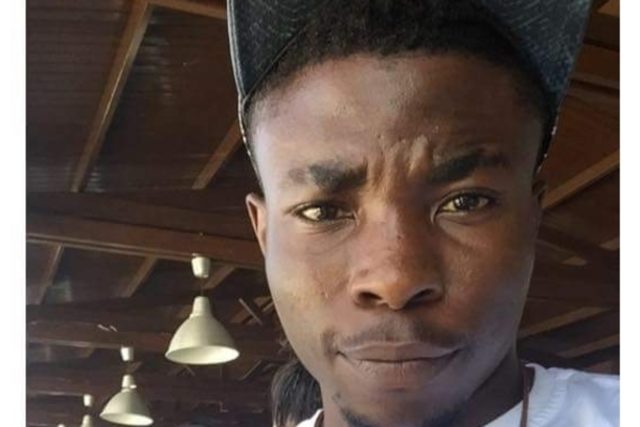 Nigerian student Kennedy Taomwabwa Dede was murdered in North Cyprus over an unpaid drug debt
 TRNC Minister of National Education and Culture Olgun Amcaoğlu, 19 Jan. 2021
 VOIS Cyprus student gathering, 02 Nov. 2020. Photo © Facebook / VOIS Cyprus
 Student visas in the TRNC are straightforward to obtain online, but securing permanent residency or licences to operate businesses in the TRNC is far harder for foreigners