
The Victoria and Albert’s new exhibition, Constantinople to Istanbul: One City, Two Empires, opened on 7 November. An exploration of 1,600 years of art, design and architecture in a single city ruled by two vast empires was an ambitious undertaking, and I couldn’t wait to see it.
Few museums tell a story and bring its historical context to life quite like the V&A. Marie Antoinette Style, which closed in March, was a masterclass. Through fashion, textiles and objects from her court, it showed how the French queen shaped the tastes of her age and took us all the way to her rather more morbid end. I wanted to see how the V&A would bring that same eye for storytelling to Istanbul, a city so strategically placed that Napoleon, according to the Comte de Las Cases’s account of their conversation in 1816, thought it could become the ‘centre and seat of universal domination’.
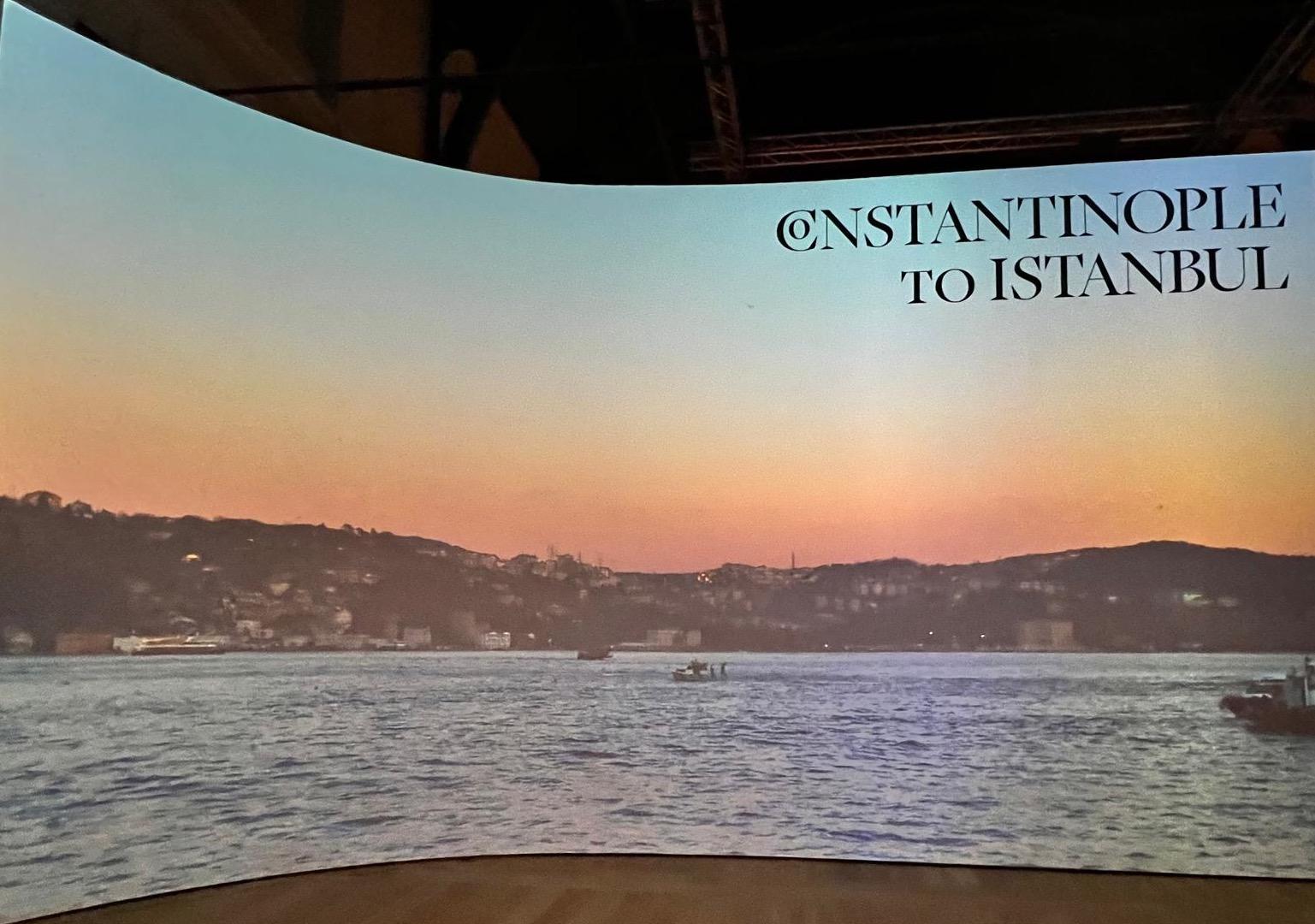
Constantinople to Istanbul: One City, Two Empires exhibition panoramic, 2026. Photo © Sonya Karafistan / T-VINE
The exhibition opens with a vast curved screen and a view familiar to anyone who has had the pleasure of taking a boat across the Bosphorus. It’s mesmerising. From the water, with the city rising along the shore, you get a sense of its scale. I took that opening panorama as a promise that we’d see how Constantinople became the sprawling Ottoman capital, expanding the city’s geographic footprint to make it four to five times larger than Byzantine Constantinople. I’ll come back to that.
The exhibition’s first section, ‘Roman Beginnings’, takes us back to AD 330, when Constantine made the city his imperial capital. A fragment of the Great Palace floor mosaic is displayed upright, bringing its winding acanthus leaves and the face among them up to eye level. There are also objects associated with the Hippodrome, including a bronze goose that may once have been a fountain spout. The famous bronze horses were carried off to Venice after the Fourth Crusade sacked Constantinople in 1204.
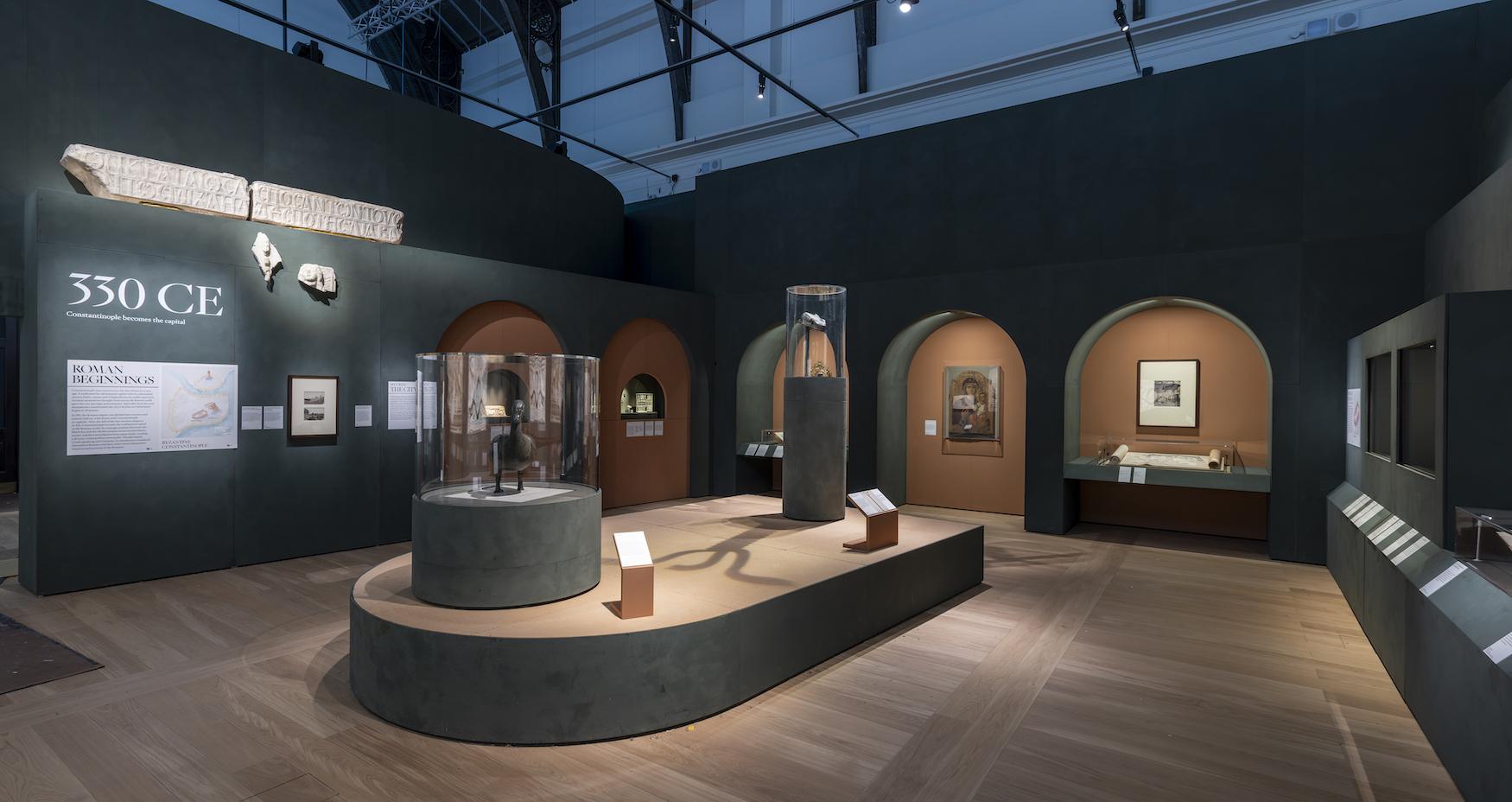
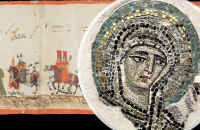
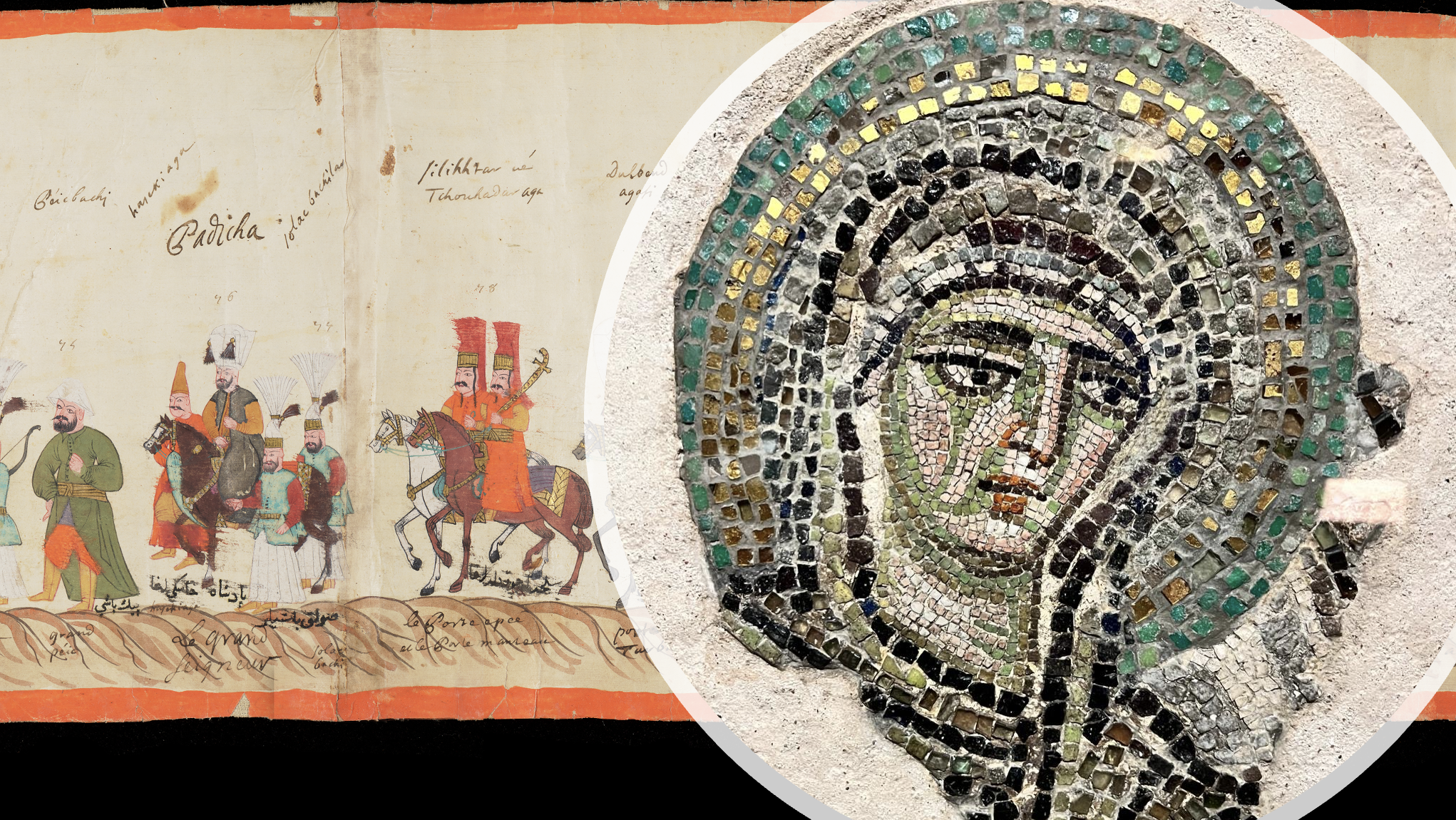
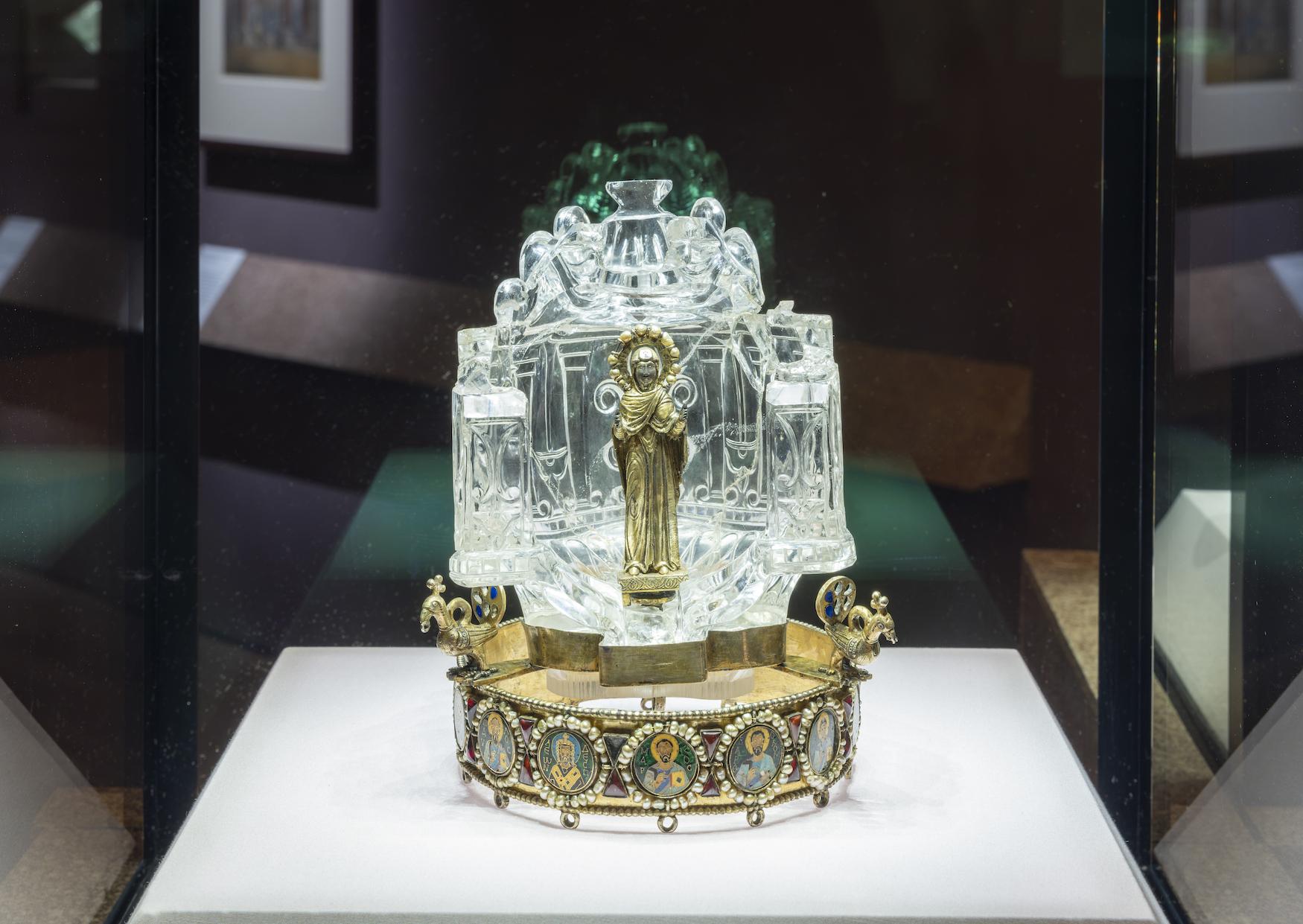
In ‘Heaven and Earth’, the section on Byzantine Christianity, there’s an exquisite fragment of the Virgin’s face, all that survives of the mosaics from the monastery of Stoudios. Then there’s the tiny 11th-century gold devotional pendant, a triptych whose two outer panels fold inwards. The amount of detail packed into something small enough to wear around the neck is a testament to Byzantine craftsmanship.
The marble relief of Christ, from the sixth-century church of St Polyeuktos, has a face that appears to have been hacked away. It may be a rare surviving example of Byzantine iconoclasm. In the eighth and ninth centuries, Constantinople was divided over whether venerating sacred images amounted to idol worship, and for a time the use of icons was banned.
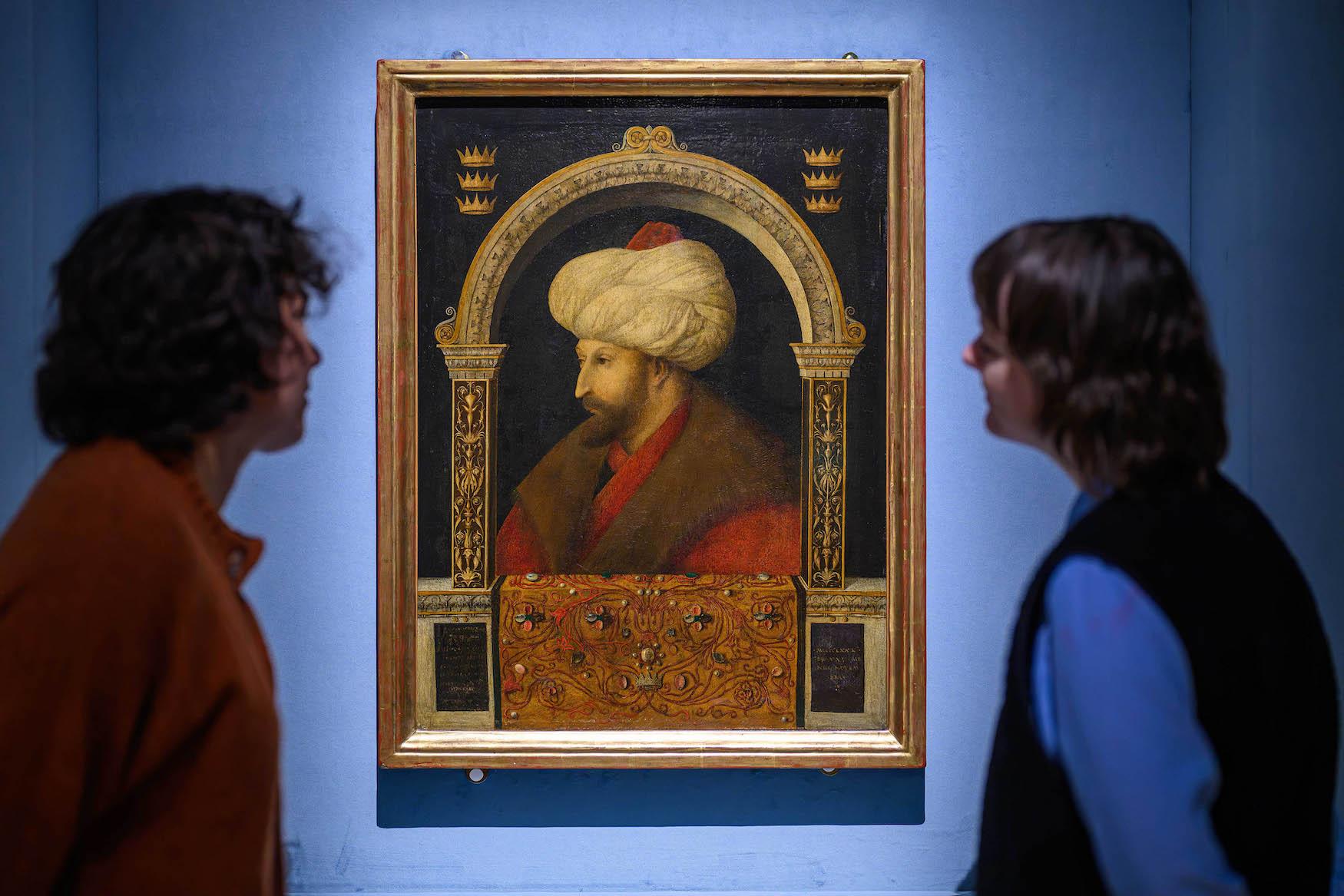
Constantinople to Istanbul: One City, Two Empires exhibition. Photo © Jas Lehal Assignments Press Association
The third section, ‘Power and Reach’, takes us to the Ottoman court. There’s Gentile Bellini’s three-quarter portrait of Mehmed II, who conquered Constantinople in 1453, as well as calligraphy and loans from the Topkapı Palace Museum. A mother-of-pearl-inlaid cradle recalls a court tradition. Cradles were carried through the streets in procession to mark the birth of a child in the Ottoman dynasty.
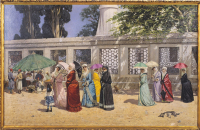
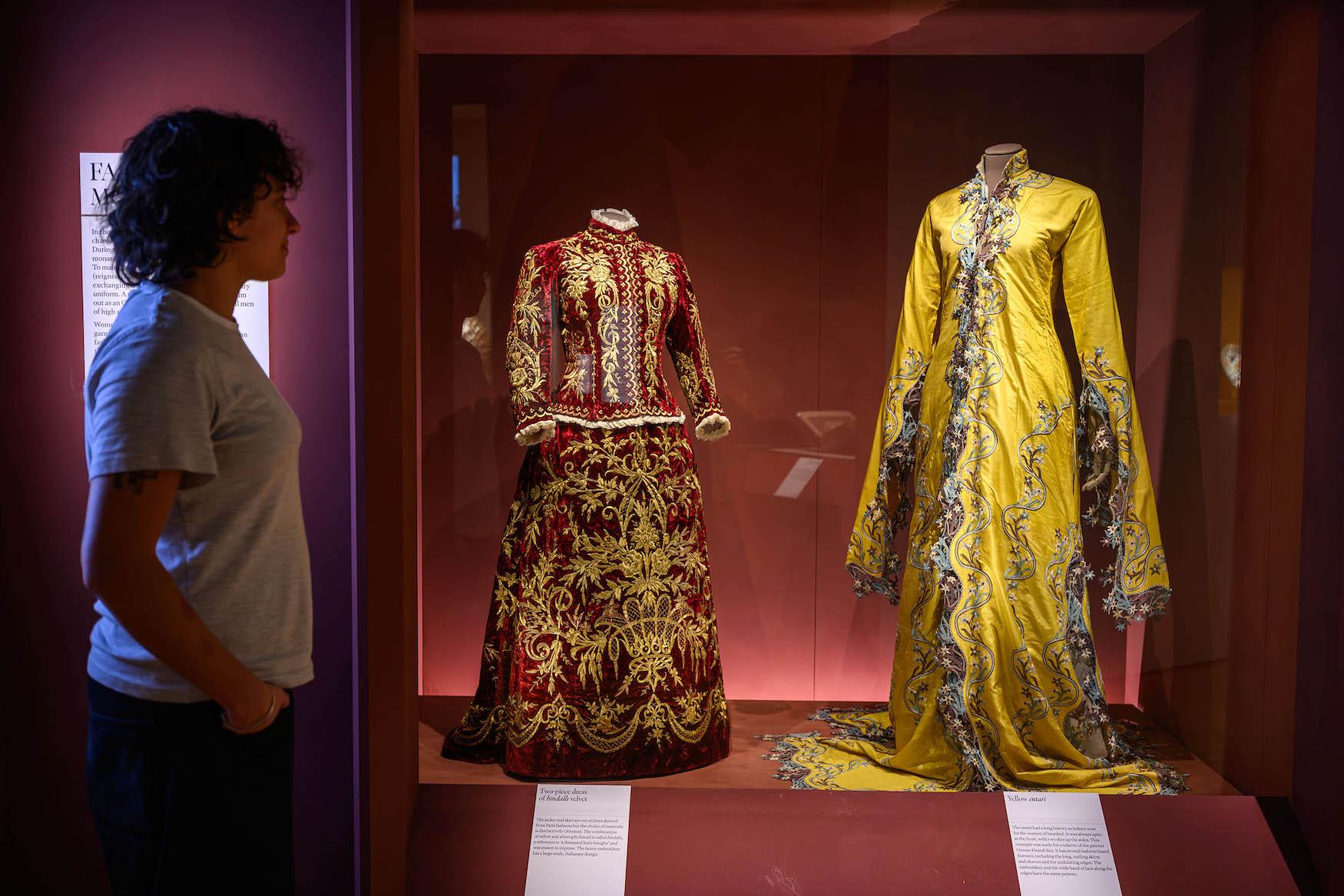
In ‘Life in the City’, two outfits on loan from Istanbul’s Sadberk Hanım Museum reward a closer look. Blue and purple flowers trail down the yellow silk entari, which was made for a relative of the painter Osman Hamdi Bey. Beside it is a richly embroidered two-piece bindallı, with a Parisian cut and Ottoman embroidery. Hamdi Bey’s Women Out Walking (1887) gives us a glimpse of how well-to-do Ottoman women dressed in public, as they pass the Sultan Ahmed Mosque.
Constantinople to Istanbul: One City, Two Empires exhibition. Photo © Jas Lehal Assignments Press Association
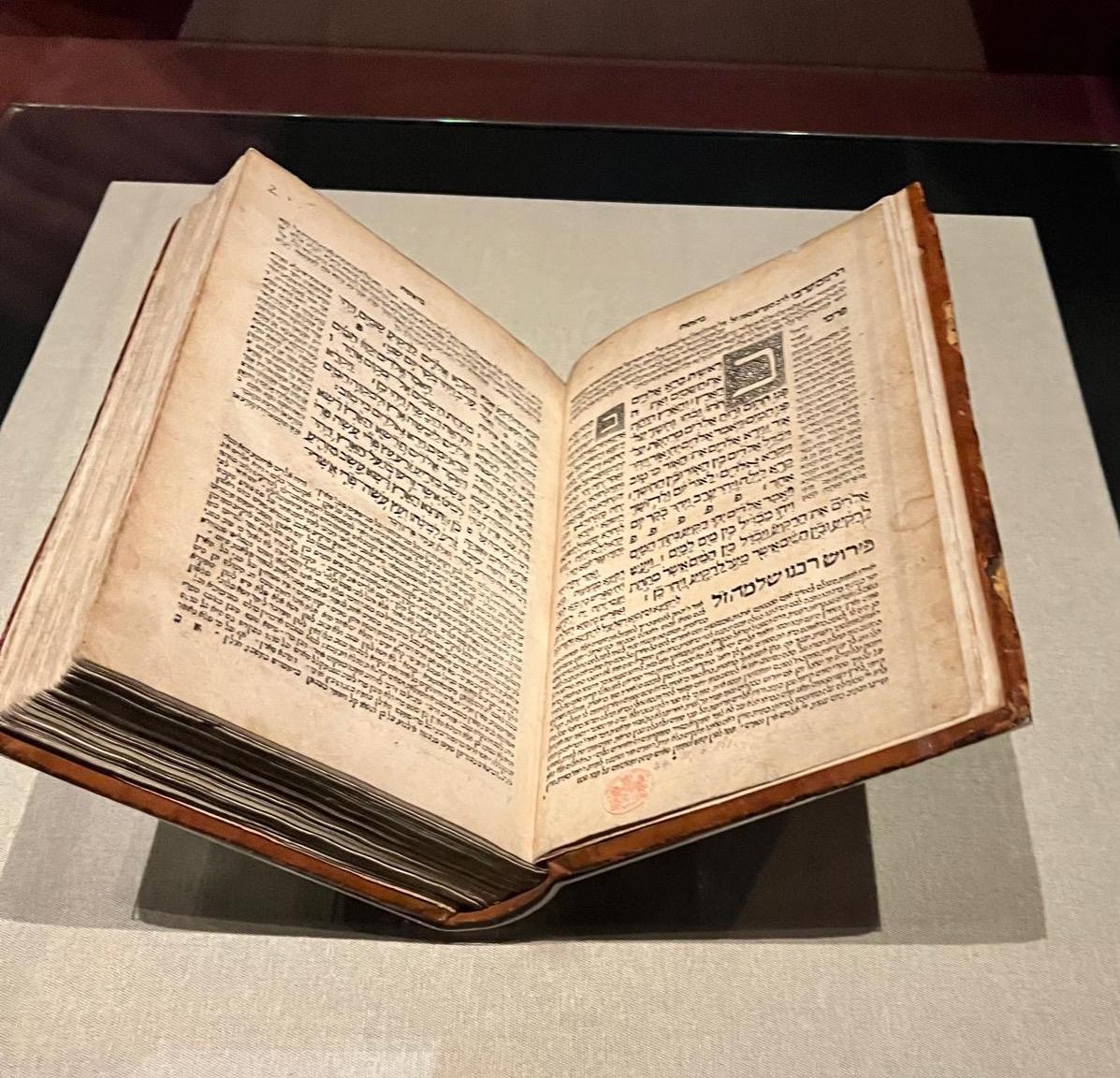
There are glimpses, too, of the lives of the city’s non-Muslim residents. A Torah printed in Istanbul by Eliezer ben Gershom Soncino carries translations and commentaries in Aramaic, Judeo-Arabic and Judeo-Persian in its margins. The label tells a story that could have had more room of its own. Jewish printers from Spain and Portugal produced Istanbul’s first printed books, in Hebrew, and were joined in the trade by printers from Italy.
Constantinople to Istanbul: One City, Two Empires exhibition panoramic, 2026. Photo © Sonya Karafistan / T-VINE
The exhibition ends with a brief look at how Byzantine and Ottoman design influenced 19th-century Europe, taking in the scrolling plant motifs of William Morris.
It’s worth going for the chance to see Byzantine and Ottoman treasures together. But I kept thinking about that view from the water. The exhibition touches on the architecture, and I wanted to see much more of how it changed the city.
What did Sinan’s Süleymaniye Mosque do to the skyline? What might the move from Topkapı to Dolmabahçe, with its glittering collection of Bohemian and Baccarat Crystal chandeliers on the Bosphorus, tell us about the changing tastes of the Ottoman court?
Constantinople to Istanbul: One City, Two Empires exhibition. Photo © V&A
I came away with a much fuller sense of the craftsmanship, artistry and cultural richness of Byzantine Constantinople than of Ottoman Istanbul. The city’s history is written into its buildings and its skyline, and the opening panorama tantalisingly suggests that we’re about to learn how to read them. That story remains largely untold.
For a museum so good at bringing history to life through art and design, it feels like a missed opportunity. There’s much here to admire, but I left wishing the V&A had spent more time on the city that made these objects possible. For those of us who know Istanbul and its Ottoman history, that’s an especially frustrating omission.
Exhibition details
Constantinople to Istanbul: One City, Two Empires runs until Sunday 9 May 2027 at the V&A South Kensington, Cromwell Road, London SW7 2RL. Tickets are £25 on weekdays and £27 at weekends, with concessions available. Exhibition information and booking
Main images, top, of 17th Century Ottoman processional scroll. Image provided by The John Rylands Research Institute and Library, The University of Manchester, photo © V&A, and fragment of a mosaic of the Virgin from the monastery of Stoudios, photo © Sonya Karafistan