

I recently watched new documentary The Divided Island. In fact, I saw it twice in one month. The highly acclaimed film has attracted a lot of interest from diverse media, including The Guardian, The Morning Star, and even The Church Times.
Why has this film generated so much interest? One reason was the expert marketing of the film. The other is the people behind the making of The Divided Island: two young Cypriots who were born and brought up in the UK. They too were affected by the tragedy of Cyprus, like all Cypriots regardless of where they were born.
Yet, instead of being captured by the traditional one-sided narratives around the Cyprus conflict that they grew up with, they instead opted to look at the issue with an unaccustomed fresh perspective. The filmmakers went out of their way to present an honest and even-handed account of the island’s recent history. In fact, it was the most balanced film on Cyprus that I have ever seen.
The film’s director Cey Sesigüzel and his co-producer Andreas (Andy) Tokkallos (the pair are pictured below), respectively a Turkish Cypriot and a Greek Cypriot, said in a Q&A session after one screening: “We decided that we were desperately curious to explore this story, and hopefully, explore it in a way that creates a bit more empathy around this shared trauma that Cypriots have been through.”

I believe strongly that the pair successfully achieved their aim, as “empathy” was the centre point of the film.
Cey stressed repeatedly that the film did not have a political aim or a political message. He proved this by not giving a platform to politicians throughout his 90-minute film. Instead, by including experts in history, political science and trauma, he covered the human suffering both Cypriot communities have endured since the late 1950s.
It is funny how sometimes, like the second reading of a book, the second watching of a film leaves a much deeper impact on one. This is exactly what happened to me.
In the compact, packed ArtHouse cinema in Crouch End on that Saturday afternoon when I watched the film for a second time, I grasped much better how significant it was. The profound impact it made on me was reinforced by frequent, audible sobs from the audience.
Like most island people, we Cypriots look at world issues from very narrow perspectives. There is a saying that Turkish Cypriots think that the centre of the universe is Sarayönü. I have not heard a similar saying for Greek Cypriots, but I think they see the centre of the world as Eleftheria Square – the two main squares of the capital Nicosia, one in the Turkish quarter, the other in the Greek.
International relations expert Professor James Ker-Lindsay explained the wider world context of the Cyprus tragedy, trying to challenge this myth. I am not sure how effective his attempts will be on Cypriots, but for non-Cypriots, who comprised the majority of the audience on that Saturday afternoon, it could have been an eyeopener.
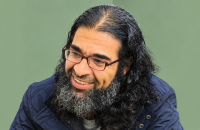
A few Cypriots were given the chance to talk about their personal trauma. Yaşar İsmailoğlu (pictured top), who is a prolific writer on Cyprus, has done more than any Cypriot I know in shedding light on how the seeds of enmity were planted by the British between Cyprus’ two main communities. When he spoke about his brother Orhan’s plight, his complaints were about the army commandant who sent his brother to a certain death. His words did not contain a word of enmity about the other side.
Similarly, when Christina explained that her father was taken away from their village and killed, she talked fondly about the good times when the two communities got on well together. She said, “Hatred breeds hatred.”
For years, Turkish Cypriot journalist Sevgül Uludağ has helped families of missing persons in Cyprus to identify where their loved ones’ remains were buried. Her incredible endeavours have ensured that many families had closure. In The Divided Island, Sevgül talked about her and the Committee of Missing Persons’ efforts in this field, homing in on the perpetrators of war crimes from both communities and stating, “Those who deny war crimes protect war criminals”.
Immensely powerful, true words, because one of the biggest problems in Cyprus is denial. There are those in both communities that deny that they are guilty of any misdeeds, including war crimes. For this reason, Andromahi Sofokleus and Kemal Baykallı, who were featured in the film, were like a breath of fresh air. The two Cypriots, and many other activists who fight for a permanent peace on the island, are reasons for Cypriots to be hopeful for the future.
The London School of Economics professor James Ker-Lindsay, Professor Andrekos Varnava from Australia Flinders University, trauma therapist Tom Fortes Mayer, T-VINE Magazine Editor-in-Chief İpek Özerim and others I mentioned in this article, plus other Cypriots who gave first hand testimony in The Divided Island, have all played a huge part in making this documentary film a success.
There are many examples of growing rapprochement between the Island’s two communities. At the same time, there are many examples of actions by people who are unable or unwilling to move on. Noone expects communities to forget the past. However, for the sake of the future generations of Cypriots, things must change.
The Divided Island is a great inspiration for Cypriots who long for peace, mutual understanding and respect. We must be grateful to these young Cypriots, Cey and Andy, for presenting such a powerful example to us.
About the author
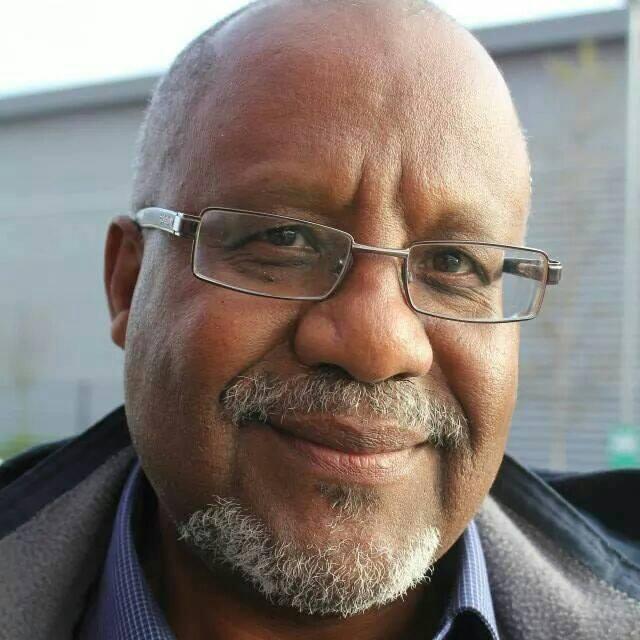
T-VINE columnist Ertanch Hidayettin is a Cypriot Turk of African heritage who came to the UK in 1970. A qualified teacher he chose to pursue a career in local government, working for local authorities in a variety of posts including as an Equality Officer for Islington Council, before retiring in 2007. Since then he has worked with the National Resource Centre for Supplementary Education (NRCSE). He is a community activist and a commentator in Turkish and Cypriot media.