
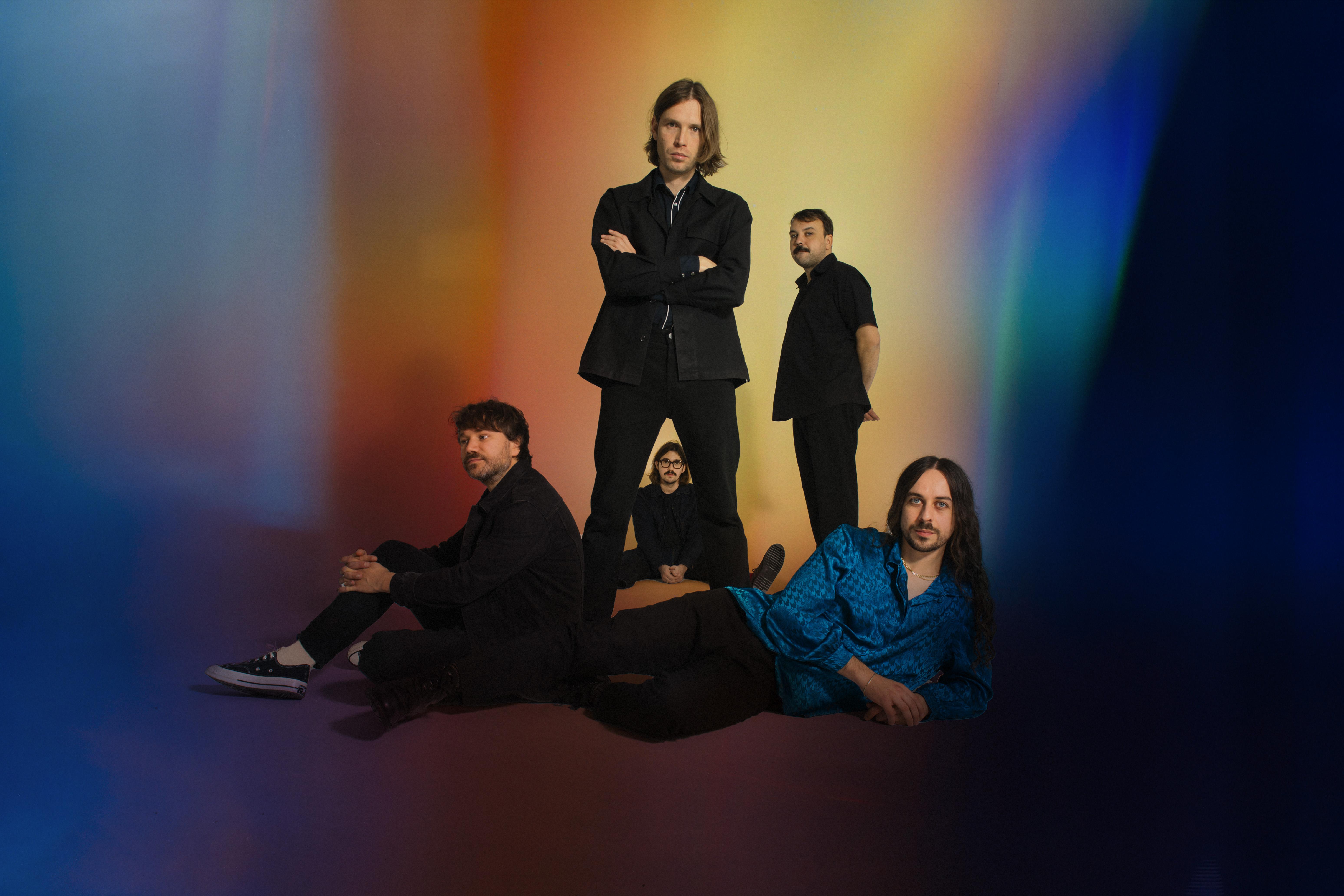
One of the coolest bands to take Turkish music onto the international stage is heading somewhere rather grand this month, as Altın Gün make their BBC Proms debut at London’s Royal Albert Hall.
The Grammy-nominated Dutch-Turkish band will appear on Friday, 28 August, joining forces with conductor Jules Buckley and the BBC Symphony Orchestra, with acclaimed singer and musician Derya Yıldırım appearing as special guest.
It promises to be a fascinating meeting of musical worlds. Altın Gün’s hypnotic mix of Turkish folk, Anatolian rock, psychedelia, funk and electronica will be expanded into full orchestral colour for the Proms, drawing heavily on the group’s latest album, Garip, their tribute to one of Türkiye’s most revered folk musicians, Neşet Ertaş.
Turkish musicians have graced the Proms before, but few have arrived with quite this much fuzz guitar, funk bass and psychedelic swagger.
From Amsterdam to the world
Altın Gün — Turkish for “Golden Day” — emerged from Amsterdam in 2016, the brainchild of Dutch bassist and avid record collector Jasper Verhulst, whose fascination with Türkiye’s extraordinary 1960s and ’70s psychedelic and folk-rock scene prompted him to look for musicians with whom he could revive and reinvent its sounds.
Among those who responded to advertisements Verhulst placed on Facebook and in Turkish grocery stores were Turkish-origin musicians Erdinç Eçevit and Merve Daşdemir. The band released its first music in 2017, followed by debut album On the following year.
The starting point was the music of artists such as Barış Manço, Erkin Koray, Selda Bağcan and Neşet Ertaş, but Altın Gün were never interested in simply recreating vintage Anatolian rock.
Instead, bağlama and Turkish folk melodies collided with wah-wah guitar, analogue organs, synths, throbbing basslines, disco, funk and psychedelic rock. Later records pushed further into electronic and ’80s-influenced synth-pop territory. As Grammy.com neatly observed, the group have proved unusually difficult to categorise while continuing to draw deeply from Anatolian and Turkish folk traditions.
Their breakthrough second album, Gece (2019), brought Altın Gün a Grammy nomination for Best World Music Album, accelerating their transformation from an Amsterdam curiosity into an international touring act with a huge following far beyond Turkish communities.
Songs such as Goca Dünya, Ordunun Dereleri, Yüce Dağ Başında, Leylim Ley, Vay Dünya and Yali Yali have become live favourites. When T-VINE reviewed their sold-out EartH concert in 2022, the crowd enthusiastically embraced these reworked Turkish classics; two years later, Altın Gün packed the 3,000-capacity Troxy with an audience that was again strikingly diverse and largely non-Turkish.
That ability to make listeners dance to songs whose words many of them cannot understand is perhaps the simplest explanation of Altın Gün’s international success. The source material may be deeply rooted in Türkiye, but the band dress it in musical languages — psych-rock, funk, disco, synth-pop and groove — that travel remarkably easily.
A new Altın Gün after Merve
The group has undergone several personnel changes during its rise, but none bigger than the departure of charismatic co-vocalist Merve Daşdemir in 2024 after almost eight years with Altın Gün.
T-VINE reported from what was expected to be her final London concert with the group at the Troxy that Daşdemir’s distinctive voice and energetic stage presence had become such an integral part of Altın Gün that it was difficult at the time to imagine the band without her. Guitarist Thijs Elzinga and percussionist Chris Bruining had already replaced earlier members Ben Rider and Gino Groeneveld respectively.
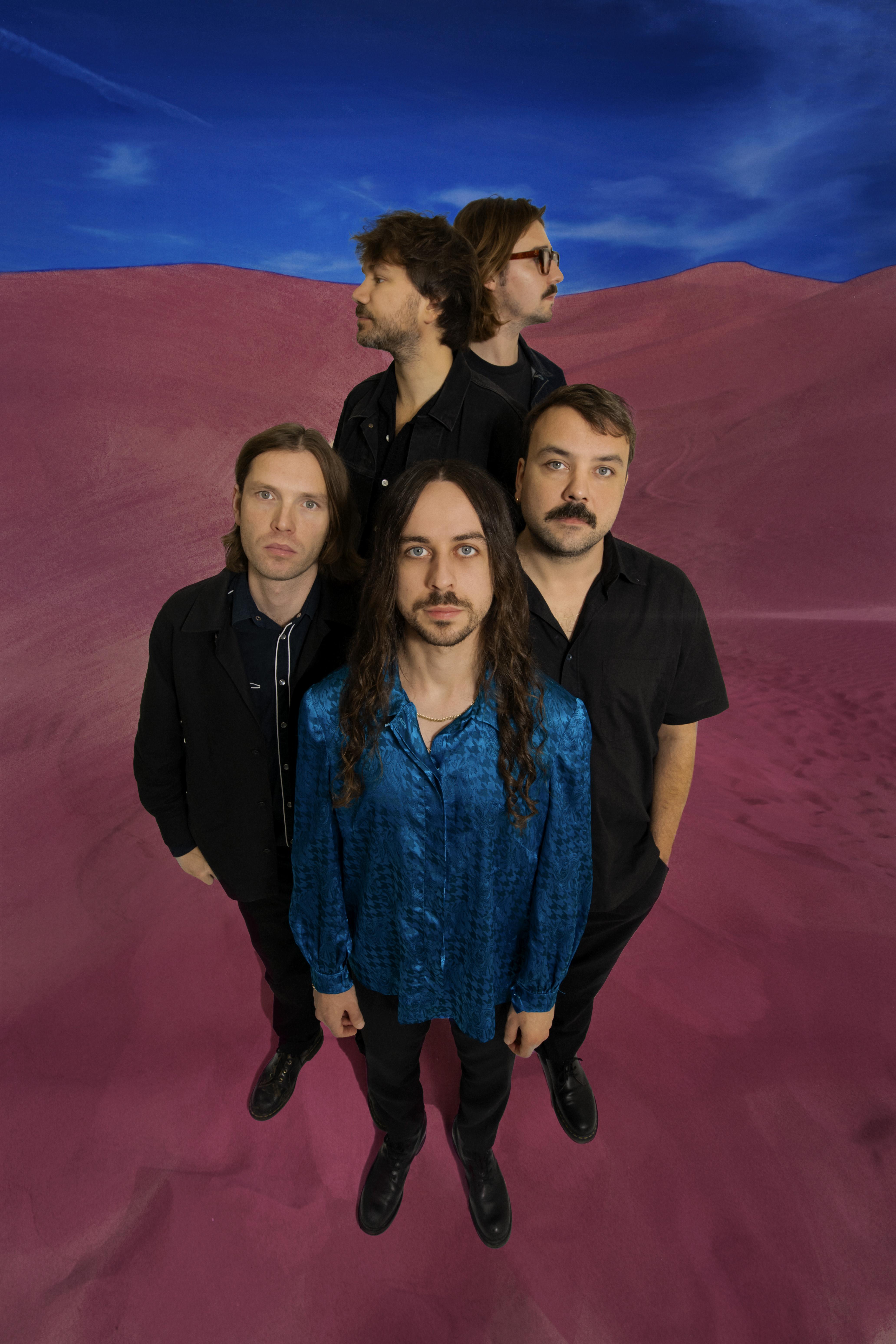
Altın Gün are now a five-piece comprising Verhulst on bass; Eçevit on vocals, bağlama and keyboards; Daniel Smienk on drums; Bruining on percussion; and Elzinga on guitars.
Rather than attempt a like-for-like replacement for Daşdemir, their first album without her has taken the band deeper into the musical roots from which Altın Gün originally grew.
Garip: going back to Neşet Ertaş
Released in February, sixth studio album Garip is devoted to ten compositions by Neşet Ertaş, the singer, songwriter and bağlama virtuoso who became one of the greatest modern representatives of Türkiye’s centuries-old aşık, or folk-bard, tradition.
It is hardly a sudden fascination. T-VINE’s first Altın Gün preview back in 2019 described Ertaş as a foremost inspiration for the group, noting how dramatically they could transform his songs while retaining their lyrical and emotional foundations.
For Eçevit, however, Garip is also intensely personal. His parents come from the same part of Türkiye as Ertaş and, as a young child, he remembers his grandfather constantly playing the folk legend’s cassettes.
Now old enough to understand the yearning, heartbreak and everyday human stories contained within the lyrics, Eçevit has described their emotional function beautifully: “The Turkish traditional music is the blues of the Turkish people.” — Erdinç Eçevit
One of the best examples is Gönül Dağı, among Ertaş’s most cherished songs, which Altın Gün turn into a slow-burning funk-rock groove coloured by watery guitar, bass and lavish strings. Eçevit describes the song as dealing with love, longing and “the storms of the heart”, with love simultaneously sacred and sorrowful.
“The Turkish traditional music is the blues of the Turkish people.” — Erdinç Eçevit
And Garip is far from a conventional folk tribute album. Its arrangements take in Arabesque strings, saxophone, synths, rock ’n’ roll and influences ranging from Egyptian popular music and Bollywood to French and Italian orchestration. The opening Neredesin Sen has an almost early-1980s indie pulse, while Bir Nazar Eyledim closes the record in shimmering synth-ballad territory.
Verhulst calls it the band’s “most eclectic album”, deliberately moving towards something “less poppy” and less obviously psychedelic rock.
Music critics have broadly welcomed the evolution. MOJO praised Eçevit’s vocals and the record’s contrasting styles as making for “a thoroughly enjoyable ride”, while Record Collector concluded: “These are more than covers, more bold reworkings.”
Anatolian folk meets the BBC Symphony Orchestra
All of which makes Garip unusually well suited to the Proms treatment.
The record already thinks on a larger sonic scale than much of Altın Gün’s earlier material, with orchestral strings woven through several tracks. At the Royal Albert Hall, those ideas can be taken considerably further as Jules Buckley, a conductor known for projects that bring contemporary popular music into an orchestral setting, leads the BBC Symphony Orchestra alongside the band. Special guest Derya Yıldırım adds another distinctive voice from contemporary Anatolian music.
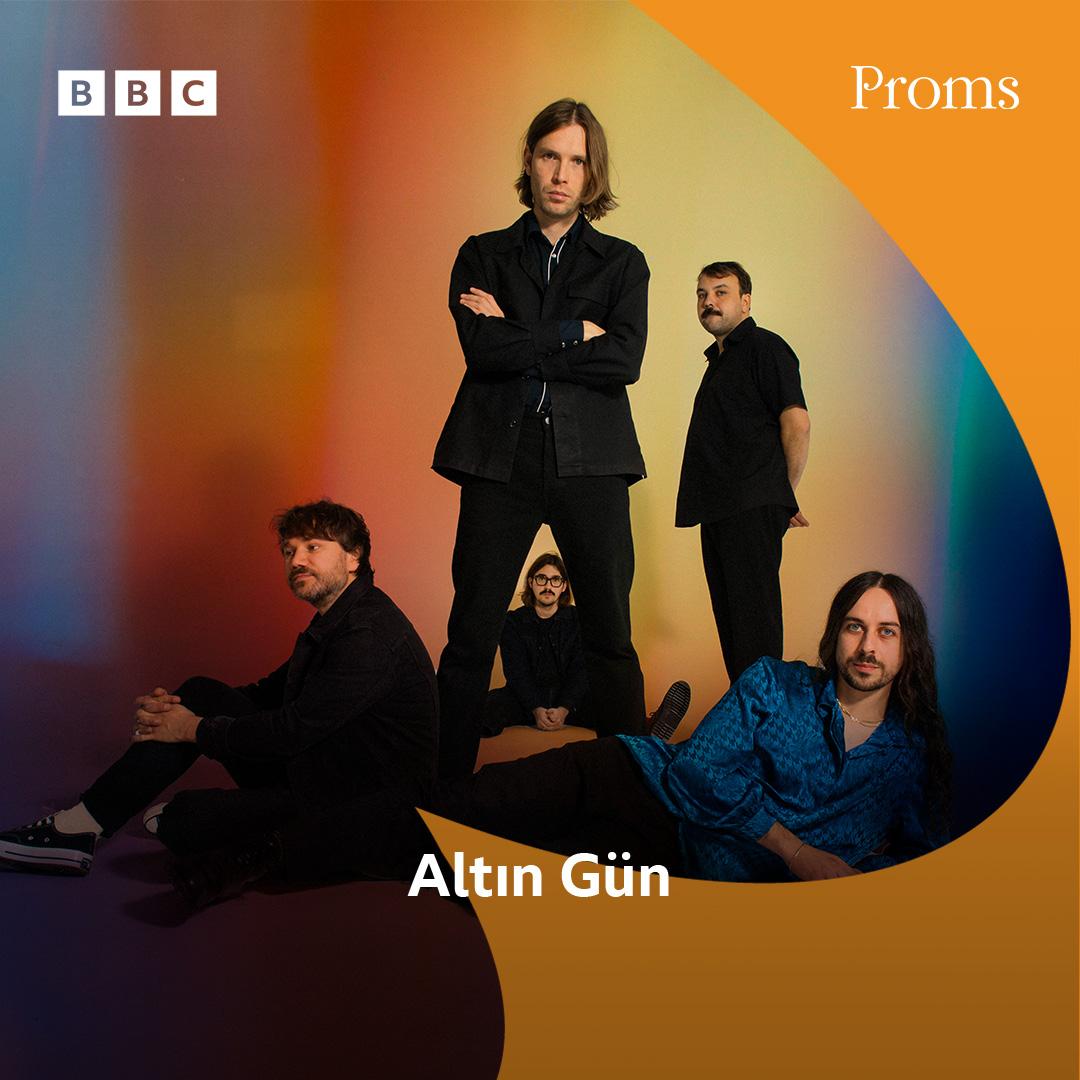
The detailed running order has not been published, so it would be unwise to predict a precise setlist, but the BBC describes the programme as drawing on Garip and promises to transform Altın Gün’s riffs and Anatolian folk textures into “rich orchestral colours”.
Songs such as Gönül Dağı, with its sweeping string arrangement, would seem tailor-made for the setting. So too could the smoky, bağlama-led Niğde Bağları, the propulsive Neredesin Sen and the spacious Bir Nazar Eyledim. What is certain is that hearing music associated with the Anatolian countryside, the bağlama and the aşık tradition filling one of Britain’s most celebrated concert halls — backed by one of its foremost orchestras — should be quite an occasion.
And perhaps that is the real attraction of this Prom: Neşet Ertaş is not being placed behind glass as a piece of musical heritage. His songs are being allowed to travel again — through Amsterdam psychedelia, funk and electronics and now into the sound of a symphony orchestra.
Turkish footsteps at the Proms
Altın Gün are by no means Türkiye’s first representatives at Britain’s famous summer music festival.
In 2014, the Borusan Istanbul Philharmonic Orchestra became the first Turkish orchestra to perform at the BBC Proms, making its debut at the Royal Albert Hall under conductor Sascha Goetzel in a programme that ranged from Mozart and Holst to Ulvi Cemal Erkin. The performance earned enthusiastic notices in the British press.
Azerbaijani cellist Jamal Aliyev, another prominent musician from the Turkic world, made his solo Proms debut in 2017, performing with the BBC Concert Orchestra at the Royal Albert Hall during a celebration of film composer John Williams’ 85th birthday.
Turkish music continued to feature at the Proms in 2025, when Avi Avital’s Between Worlds programme included Turkish folk music and a composition by celebrated Turkish pianist-composer Fazıl Say, although Say himself did not perform at the concert.
Altın Gün’s debut, however, represents a very different strand of Türkiye’s musical heritage — one where the bağlama meets psychedelic rock, funk and the dancefloor.
For a group that began by digging through old Turkish records and reinventing the music of Ertaş, Manço, Koray and their contemporaries in Amsterdam, performing those sounds with the BBC Symphony Orchestra at the Royal Albert Hall feels like another remarkable milestone in their journey.
Performance details
Title: BBC Proms: Altın Gün
Date: Friday 28 August 2026
Time: Doors 6.30pm; concert 7.30pm. There is no interval
Venue: Royal Albert Hall, Kensington Gore, London SW7 2AP
Performers: Altın Gün; Derya Yıldırım, vocals; BBC Symphony Orchestra; Jules Buckley, conductor.
Tickets: Advance seated tickets are currently priced from £16.28 to £59.12, including booking fees.
A limited number of £8 standing ‘Promming’ tickets are available on the day, with the Royal Albert Hall stating that day Promming tickets go on sale from 9.30am.
Tickets & information: Visit the Royal Albert Hall / BBC Proms. For more information about the band, visit altingunband.com