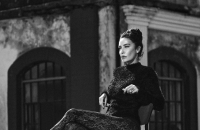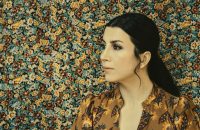


History could be in the making after a Turkish-origin mayoral candidate came out on top in recent state elections. Elif Eralp and her party Die Linke (‘The Left’) made unprecedent gains, taking first place at the ballot box and garnering over a quarter of the overall vote.
Her party’s performance has put Ms Eralp within a whisker of the mayoralty, but Die Linke will need to build a coalition to sure up a majority in Berlin’s state parliament and with it the top job.
A lawyer by trade, the Munich-born politician is today one of Germany’s most high profile new left-wing politicians.
As the daughter of trade unionist and socialist political refugees who fled Türkiye’s military government after the 1980 coup, it is perhaps no surprise that Ms Eralp has been politically active from a young age. At age 10, she is said to have organised her friends to make hand-painted posters calling for environmental protection.
Fast forward to the present day and the 45-year-old is widely touted as “Berlin’s Zohran Mamdani” owing to her resemblance to New York’s popular democratic socialist mayor.
The comparison comes in part from her strong focus on affordability, housing, and rent controls, as well as her stances against growing anti-migrant sentiments and Islamophobia. The mayoral hopeful’s campaign also resembled Mr Mamdani’s in her use of slick and sometimes multilingual social media content.
Ms Eralp who is Berlin’s state parliament member for Kreuzberg, which is home to a large Turkish-origin community, made a splash by campaigning in her mother tongue. Her Instagram post titled “Berlin için değişim vakti!” or “Time to change for Berlin” alone garnered 100,000 likes and was well-received by local Turkish-origin voters.
One traditionally right-leaning German Turk commented “I will vote for the Left Party for the first time in my life” while another commenter wrote in Turkish “Gönülden destekliyoruz Elif’cim” or “We support you from the heart my dear Elif.”
Ms Eralp’s campaigning in her parents’ mother tongue makes a powerful statement in the face of Germany’s rising far right, whose anti-migrant and anti-Muslim Alternative for Germany (AfD) party came out on top last month in Saxony-Anhalt in the country’s east, just short of a majority in the state parliament.
If the AfD forms a government it would be the first time a far-right party has controlled a German state since the Second World War.
This is all the more important to Ms Eralp’s story, as she first joined Die Linke back in 2017 when the AfD took seats in Germany’s national parliament the Bundestag for the first time.
Turkish-origin people remain Germany’s largest ethnic minority and make up an estimated 7% of Berlin’s population alone. Berlin’s Turks are the largest Turkish diaspora community outside of Türkiye.