

It is a grossly overlooked fact that Europe has a deep and lengthy Islamic history, one that stretches as far back as the seventh century and to the companions of the Prophet Muhammad known as the sahaba (sahabe in Turkish). And according to East London-based travel writer, historian, and author, Tharik Hussain, Cyprus and Turkish Cypriots are central to that story.
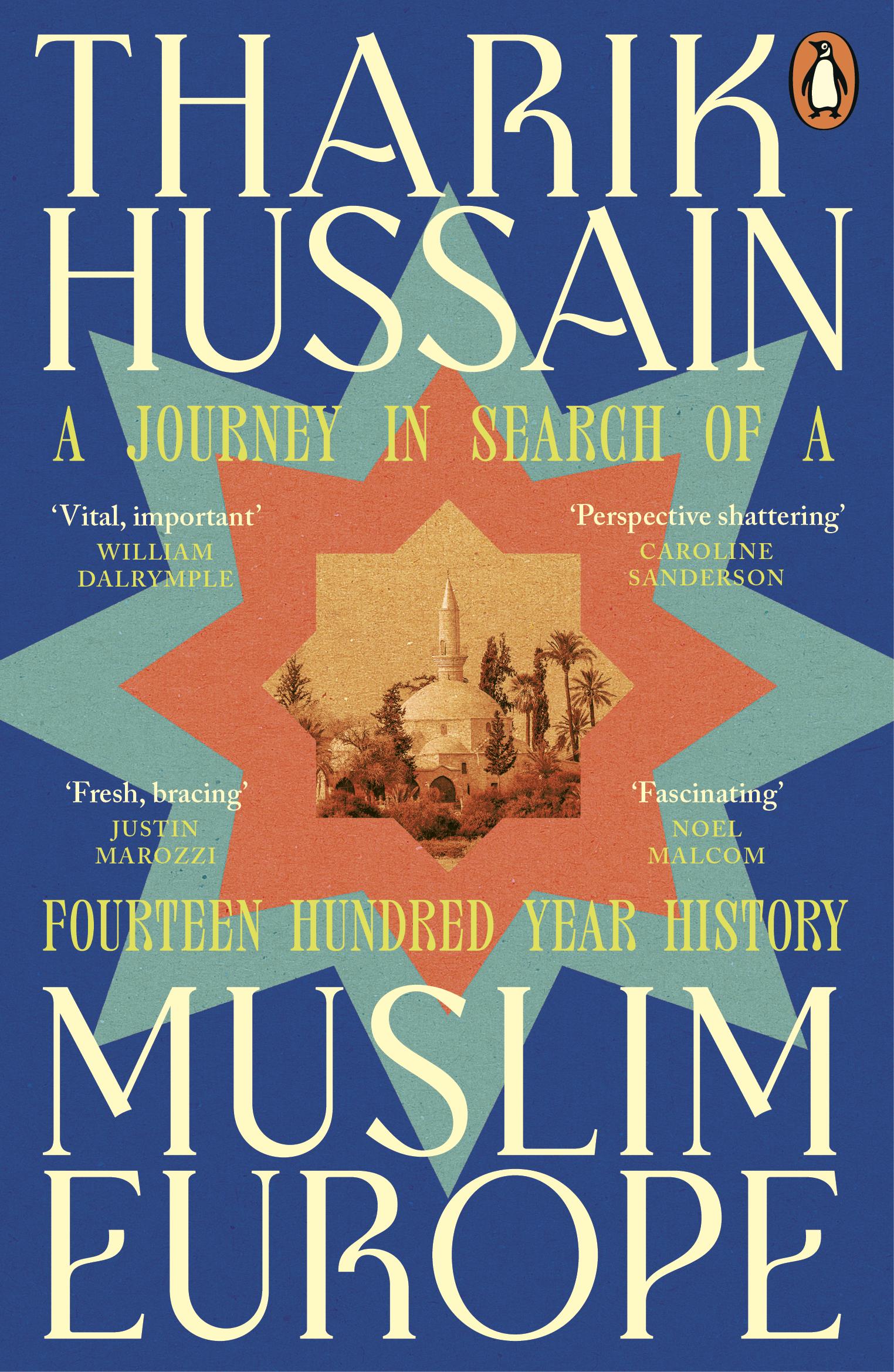
In his book Muslim Europe: A Journey in Search of a Fourteen Hundred Year History, released in paperback on November 5th, he unearths many of Europe’s historical Islamic treasures, starting with stories of early Muslims landing on Cyprus, and ending in the streets of Madrid, the only Western capital with Islamic origins. There are also fascinating stops in Sicily, Malta and Portugal along the way, building on Tharik’s earlier book, Minarets in the Mountains which explores the Islamic heritage of the Balkans.
Eager to find out more about Muslim Europe and its relevance to Cyprus and Turkish Cypriots, T-VINE spoke to Tharik in an interview about his experiences on the island; its key Islamic historical sites like the Hala Sultan Tekke, and why he believes a book like this is not only important in today’s climate of growing Islamophobia but a necessary corrective to the histories we have inherited.
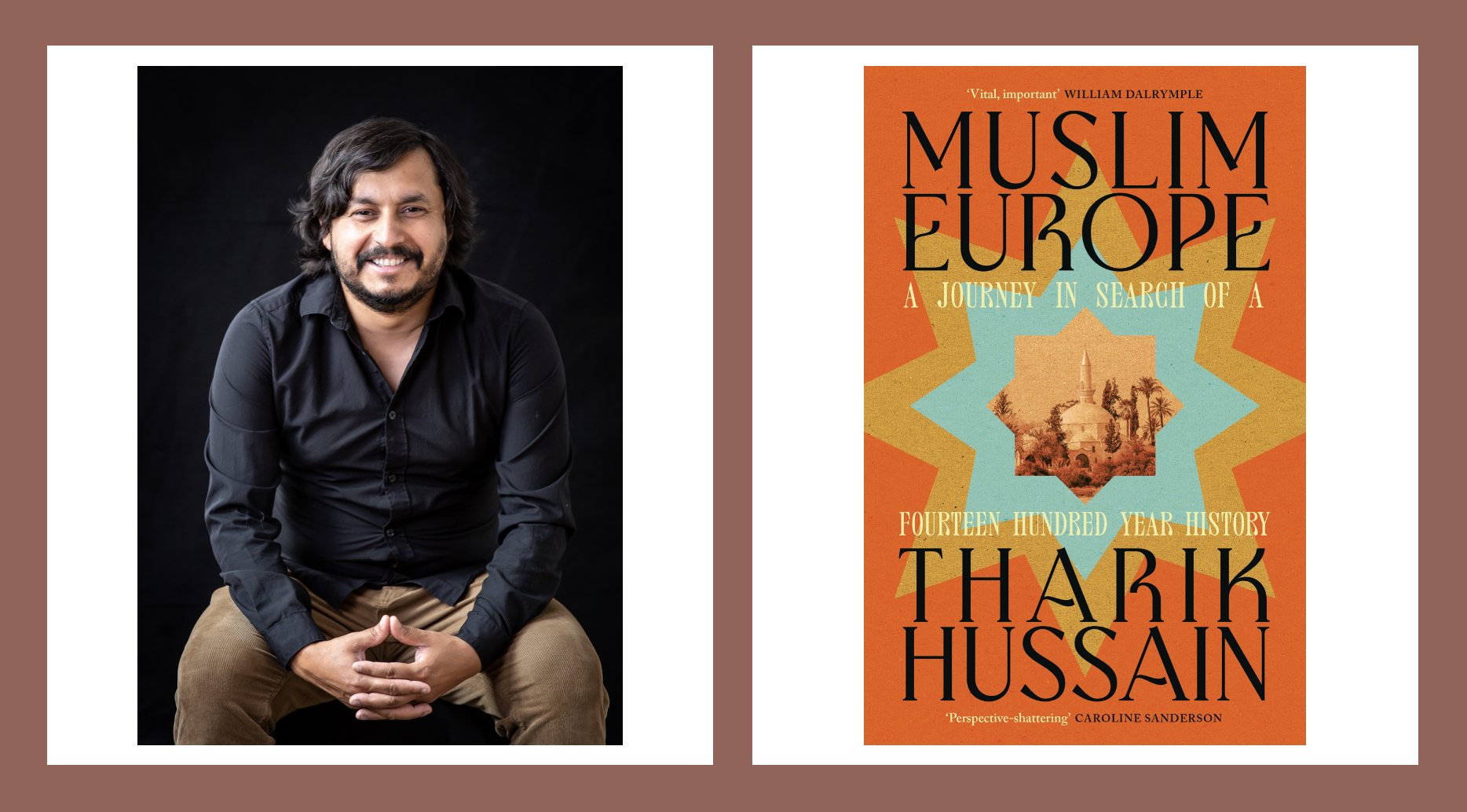
Edward Rowe (ER): Tharik, thank you for speaking to T-VINE. I notice Larnaka’s Hala Sultan Tekke is on the front cover of your book. Why is that?
Tharik: I chose the Hala Sultan Tekke for the cover because it represents the book's entry point. It is a site of immense spiritual and historical significance - being the reported final resting place of Umm Haram bint Milhan, a maternal aunt of the Prophet Muhammad and a sahaba.
Thus, Hala Sultan makes clear that Islam has been a part of the European story since the very first generation of Muslims in the 7th century. Also, it is where my own journey in search of Europe's Muslim heritage began more than two decades ago in the summer of 2003, when I came upon the mosque during a stopover en route to Jeddah.
I was headed to the Kingdom of Saudi Arabia to become an English teacher there in part because the post 911 world had left me feeling like I didn't belong in Europe and one of the key reasons for that - beyond the outpouring of anti-Muslim hate and Islamophobia - was the popular perception that Muslims are new to Europe and do not belong there.
Hala Sultan completely flipped that on its head and inspired the travels for the next two decades that would eventually lead to both my books, Minarets in the Mountains and Muslim Europe.
ER: Without giving too much away, can you tell us about your favourite discoveries on the island?
Tharik: My favourite discoveries - beyond the physical monuments linked to sahaba - was finding deep, intangible threads that connect the island to the wider European Muslim story in ways we often overlook, challenging our perceptions of what 'European heritage' looks like.
For example, the Cyprus episode was only possible with the inception of a Muslim navy, the very first ever built. This is a huge moment not just for the story of Islam in Europe but general Muslim history. Without a navy the Muslims could not have gone on to become the medieval superpowers they did and it was the establishment of this navy that allowed them to gradually take control of what they called the Bahr ar Rum or Sea of the Romans, the Mediterranean, and it is this control that allows them to become European Muslims.
ER: The Turkish Republic of Northern Cyprus is sometimes called Europe’s forgotten Muslim-majority country how was your experience of the TRNC and how does it relate to your message in the book?
Tharik: The TRNC is a fascinating and often underrepresented part of this history. My experience there was incredibly rich; it serves as a microcosm for the argument I make throughout the book: that Europe's Muslims are not 'outsiders' to the continent’s story, but active, integral participants. The evidence lies in the fact that there are indigenous European Muslims all over Europe as well as Muslim-majority European countries.
Alongside the TRNC, there is Bosnia & Herzegovina, Albania and Kosovo. The fact that Cyprus is home to evidence of the very start of the European Muslim presence and its living indigenous continuation makes it particularly special.
ER: How do you view the role of Turkish Cypriots in Europe’s Muslim story?
Tharik: I see Turkish Cypriots as holding a crucial place in this narrative; both as indigenous European Muslims that offer undeniable proof that Europe has been Muslim since the start of Islam, and as the guardians of some of the most significant sites linked to the very first generation of 'European' Muslims.
The island, sadly split by a border, in many ways represents a microcosm of the challenges modern Europe and European Muslims face whilst reinforcing the reality that the Islamic and European worlds have never been separate; any separation, like the manmade border there, has always been inserted by those wishing to divide us.
About Tharik Hussain
Tharik Hussain is an award-winning author, historian and travel writer whose latest book, Muslim Europe: A Journey in Search of a Fourteen Hundred Year History, has been praised as “perspective-shattering” by The Bookseller and “vital” by historian William Dalrymple. His previous book, Minarets in the Mountains, was longlisted for the Baillie Gifford Prize, shortlisted for Stanford Travel Book of the Year and won the British Guild of Travel Writers’ Adele Evans Award.
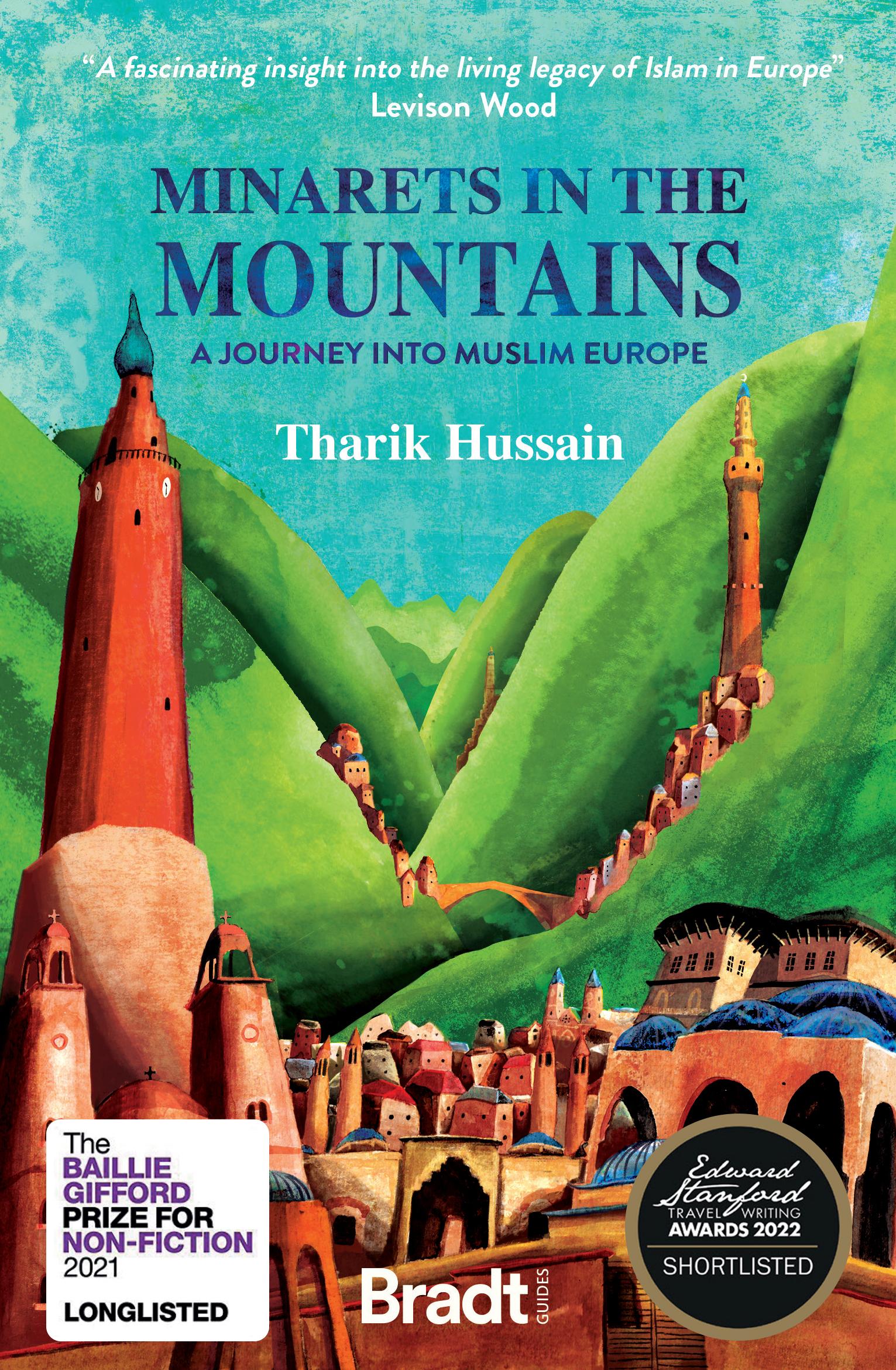
He is also the author of Muslim Britain & Ireland: A Travel Guide to Sites of Islamic Heritage and Culture (Bradt Guides, October 2026), the first guidebook dedicated to the Islamic heritage of the British Isles. His work has appeared in The Times, The Guardian, The Telegraph and National Geographic Traveler, and he has produced award-winning BBC radio programmes about America’s mosques. He has contributed to more than 15 Lonely Planet guides and publications and developed the UK’s first Muslim heritage trails in Woking, Surrey.
Tharik is a fellow at the University of Groningen’s Centre for Religion and Heritage in the Netherlands and advises religious and cultural institutions worldwide. His books have been translated into several languages, including Chinese, German, Turkish, Italian and Arabic.
His latest book Muslim Europe: A Journey in Search of a Fourteen Hundred Year History, is released by Penguin Viking as a paperback on 5 November 2026.