
As happens every year, the European Union publishes their budget and the Greek Cypriots balk at what, in budgetary terms, is a pittance.
The headline is that the Turkish Cypriots will receive €37 million in aid in 2027. The money forms part of the EU’s commitment to facilitating the reunification of Cyprus by ‘encouraging North Cyprus’ economic development, supporting infrastructure and civil society, strengthening contacts between communities and the EU, and preparing for the application of EU law.’
No one seems to ask, ‘Why is the aid needed?’ or ‘What’s the point of giving aid while simultaneously crippling Turkish Cypriot trade with embargoes? Isn’t that counterproductive?’.
The gulf between the economies of North and South Cyprus illustrates the heavy burden of the embargoes imposed on Turkish Cypriots. In 2024, the Turkish Republic of North Cyprus recorded a gross domestic product (GDP) of $7.14 billion, compared with $32.84 billion in the Greek Cypriot-administered Republic of Cyprus. Europe accounts for a third of South Cyprus’s trade, while Turkish Cypriot businesses remain excluded from comparable access.
The EU has largely fallen into line with Greek Cypriot demands to maintain North Cyprus’s isolation. Despite its 2004 pledge to enable direct trade with Turkish Cypriots, it continues to restrict access to its market for goods and services from North Cyprus. Even goods permitted under the Green Line Regulation must pass through South Cyprus, adding costs, delays and bureaucracy for Turkish Cypriot businesses.
The precise cost of these embargoes to the TRNC economy is difficult to quantify. What is clear, however, is that Turkish Cypriots continue to pay a heavy price for their international isolation—a price far exceeding €37 million.
So, should the Turkish Cypriot people be grateful for the EU aid package? Or should they be angry that they’re put in a position in which they require aid by the very people who discriminate against them?
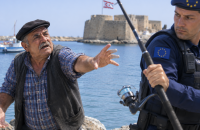
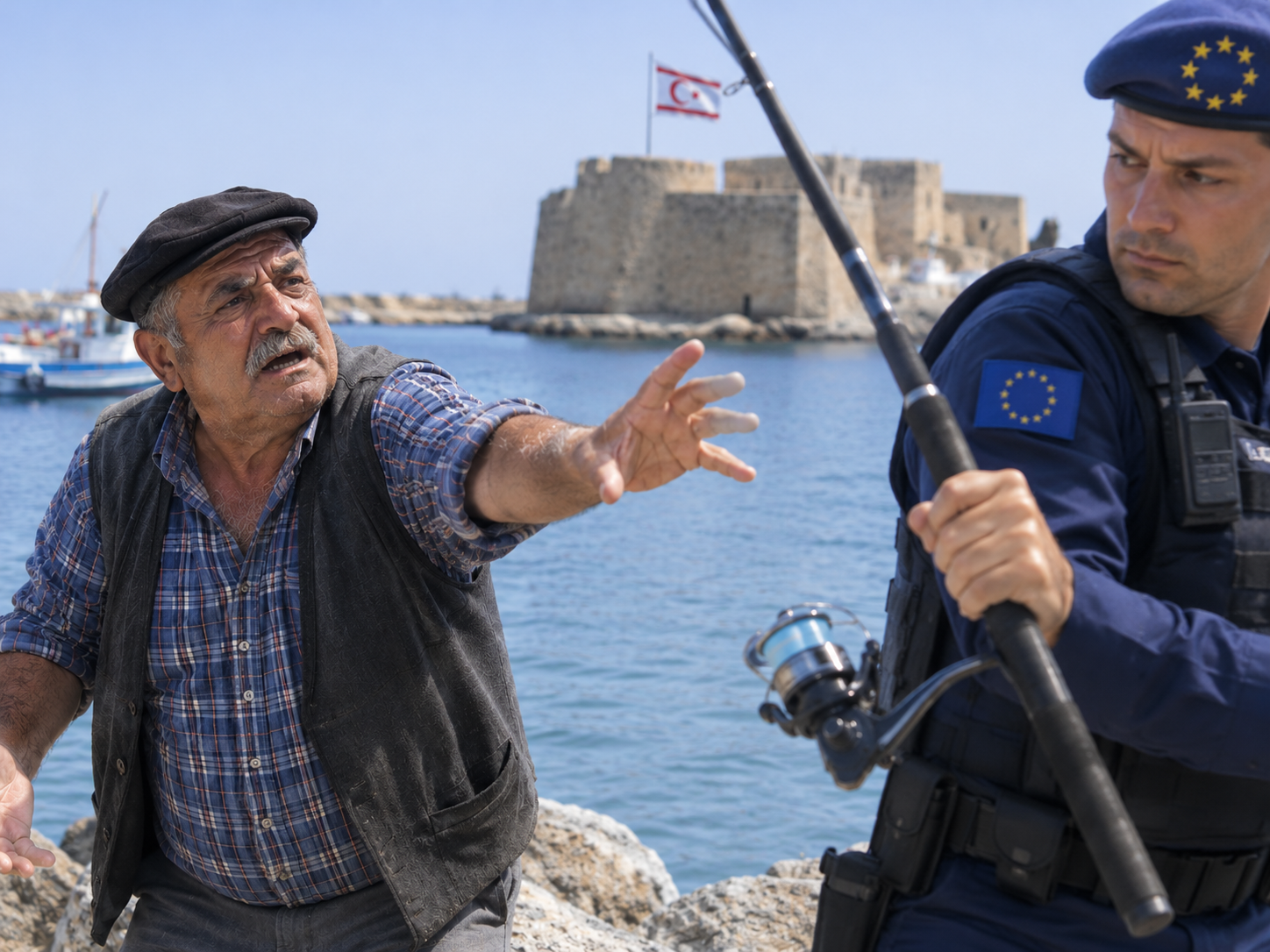
The saying goes that if you give a man a fish he’ll eat for a day, but if you teach him how to fish he’ll eat forever. In other words, it’s far better to enable someone than to constantly bail them out. Unless of course, you prefer that person to be in your debt.
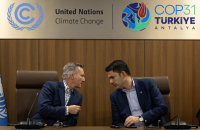
In Cyprus, the United Nations and EU – at the behest of Greek Cyprus – prefers to withhold the fishing rods from the Turkish Cypriot community. It prefers to have Turkish Cypriots in a state of need. Where they are more likely to be bent to their will.
The Turkish Cypriots are already perfectly capable of fishing for themselves. Of supporting themselves. Of speaking for themselves. And of competing with their peers. They could and should be able to prosper. At the very least, they should be given the opportunity to try.
But instead of allowing them to join other nations at the table, the EU prefers to remove their seat and then throw some crumbs from their table. And to add insult to embargoes, they then ask us to explain how we intend to spend each cent. And apparently we should be grateful.
That’s not the act of a benevolent organisation giving aid. It’s an exercise in political control: keeping Turkish Cypriots dependent while buying influence over their future.
Taskin Ismet is the chair of Turkish Cypriot human rights group Embargoed!, which campaigns for the immediate and unconditional ending of the international isolation of Turkish Cypriots and their North Cyprus homeland.
The main image is AI generated.