

Türkiye has brought another leading opposition broadcaster under state control, prompting warnings that successive media takeovers are stripping voters of access to independent news and weakening scrutiny of President Recep Tayyip Erdoğan’s government.
Police raided Sözcü TV’s Istanbul headquarters before dawn on Tuesday 17 November, detaining four executives and installing state-appointed management over the channel and its news website, sozcu.com.tr. The operation follows the takeover of Halk TV last month and TELE1 in October 2025.
The court-ordered intervention places Sözcü TV and its website under the control of Türkiye’s Savings Deposit Insurance Fund, known by its Turkish initials TMSF. The group’s print newspapers — Sözcü, Korkusuz and Tavır — have not been placed under trusteeship.
Although broadcasting resumed around midday, press freedom organisations say the transfer of management to a state body threatens the editorial independence that made the channel an important platform for criticism of the authorities.

“By placing independent broadcasters under state control one by one, Turkish authorities are restricting the public’s access to critical reporting,” said Özgür Öğret, Türkiye representative of the Committee to Protect Journalists (CPJ).
The organisation has called for the trusteeships at Sözcü TV, Halk TV and TELE1 to be reversed.
Dawn raid and terrorism allegations
Counterterrorism officers searched Sözcü’s premises in the Maslak district, with police closing the surrounding street. Live news programming was replaced by recorded material during the operation.
Those detained were board chair Funda Tuncer Sıdalı, former general manager Mustafa Asım Akgül, İsmail Öz and Yonca Yücekaleli. On Friday morning, 20 November, all four were taken to Istanbul’s Çağlayan courthouse after police processing, according to Anadolu Agency.
The Istanbul Chief Public Prosecutor’s Office linked the operation to allegations against Sözcü owner Burak Akbay concerning the Gülen movement and terrorism financing.
Prosecutors said reports from the Financial Crimes Investigation Board, MASAK, raised strong suspicions that Akbay had financed Estetik Yayıncılık and Mega Ajans through overseas bank accounts and continued alleged organisational activity through those companies.
Istanbul’s Fourth Criminal Judgeship of Peace appointed TMSF as trustee to Mega Ajans ve Reklamcılık Ticaret AŞ. The allegations form part of proceedings with roots in an investigation opened in 2016.
Türkiye designates the Gülen network a terrorist organisation, referring to it as FETÖ/PDY, and holds it responsible for the failed July 2016 coup.
Sözcü’s lawyer, Ersan Barkın, challenged the operation’s legal basis, pointing to earlier proceedings and the Court of Cassation’s findings in the underlying case. He said the search relied on a file in which the higher court had previously found no criminal wrongdoing.
The government maintains that action against media outlets follows ordinary judicial procedures and that Türkiye’s judiciary is independent.
Sözcü disputes the authorities’ explanation. Its newspaper’s 18 November front page argued that the group had been targeted for continuing to investigate an investment fund fraud scandal. It defended its coverage as journalism serving the public’s right to information.
Anger over shrinking space for dissent
The takeover drew condemnation from opposition politicians, journalists’ organisations and lawyers.
Main opposition leader Özgür Özel accused the government of having no tolerance for even the smallest criticism. DEM Party co-leader Tülay Hatimoğulları said trusteeship was becoming a routine means of silencing opposition media and called for the decision to be withdrawn.
The Journalists’ Union of Türkiye, TGS, warned that successive interventions at TELE1, Halk TV and Sözcü TV were preventing news from reaching the public. The Contemporary Journalists Association similarly condemned attempts to control newsrooms through appointed administrators.
All three independent TV channels that main opposition leader Özgür Özel praised in March 2025 have now been taken over by the Turkish government
MHP leader Devlet Bahçeli, whose party is allied with Erdoğan’s AKP, responded to questions about the operation by directing them towards Sözcü’s managers and those speaking on its evening programmes.
The impact on programming has also become a point of contention. Opposition politician Ali Mahir Başarır alleged that, despite Sözcü TV returning to air, discussion programmes and guest appearances were being blocked. His criticism highlights the distinction between a channel continuing to broadcast and its journalists retaining control over what viewers hear.
A threat to democratic accountability
The concern extends beyond the fate of one newsroom. Successive takeovers reduce the platforms through which opposition parties can challenge the government and journalists can scrutinise those in power.
Reuters reported that the interventions at Halk TV and Sözcü TV had brought the last two mainstream channels giving prominence to opposition views under government oversight since October.
Opposition print newspapers in Türkiye continue to operate, but have a considerably smaller reach than television and online news.
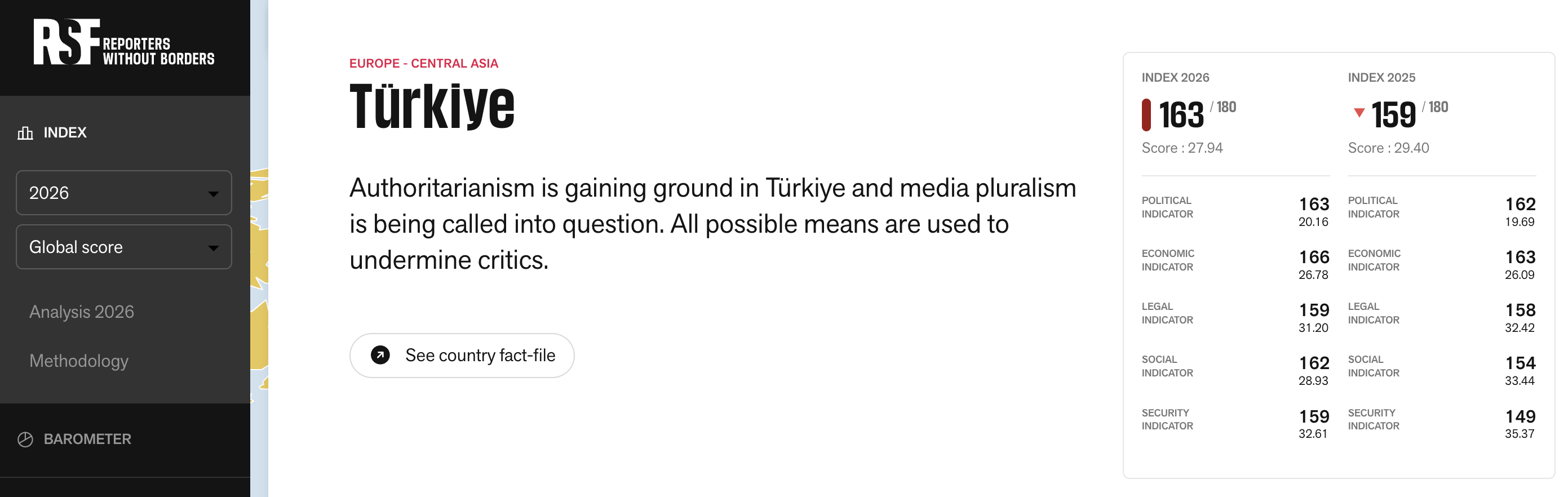
Türkiye ranks 163rd out of 180 countries and territories in Reporters Without Borders’ 2026 World Press Freedom Index, down from 159th in 2025. The organisation estimates that 90 per cent of national media outlets are under government control and describes regulatory fines, financial pressure and prosecutions as further threats to critical journalism.
Ankara Bar Association president Elçin Özge Şimşek Çağlayan warned that interventions in editorial independence threatened the press’s ability to scrutinise public power.
The European Federation of Journalists (EFJ) and its Media Freedom Rapid Response partners have called for the Sözcü trusteeship to be reversed and independent editorial management restored. They warned that transferring control to a state body puts editorial decisions, journalists’ employment and the continuity of independent reporting at risk.
“Coming just weeks after the takeover of Halk TV, this intervention is part of a growing trend of media capture. Criminal investigations into media owners must not become a means of controlling newsrooms,” the EFJ posted on its Bluesky account.
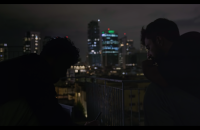
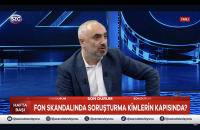
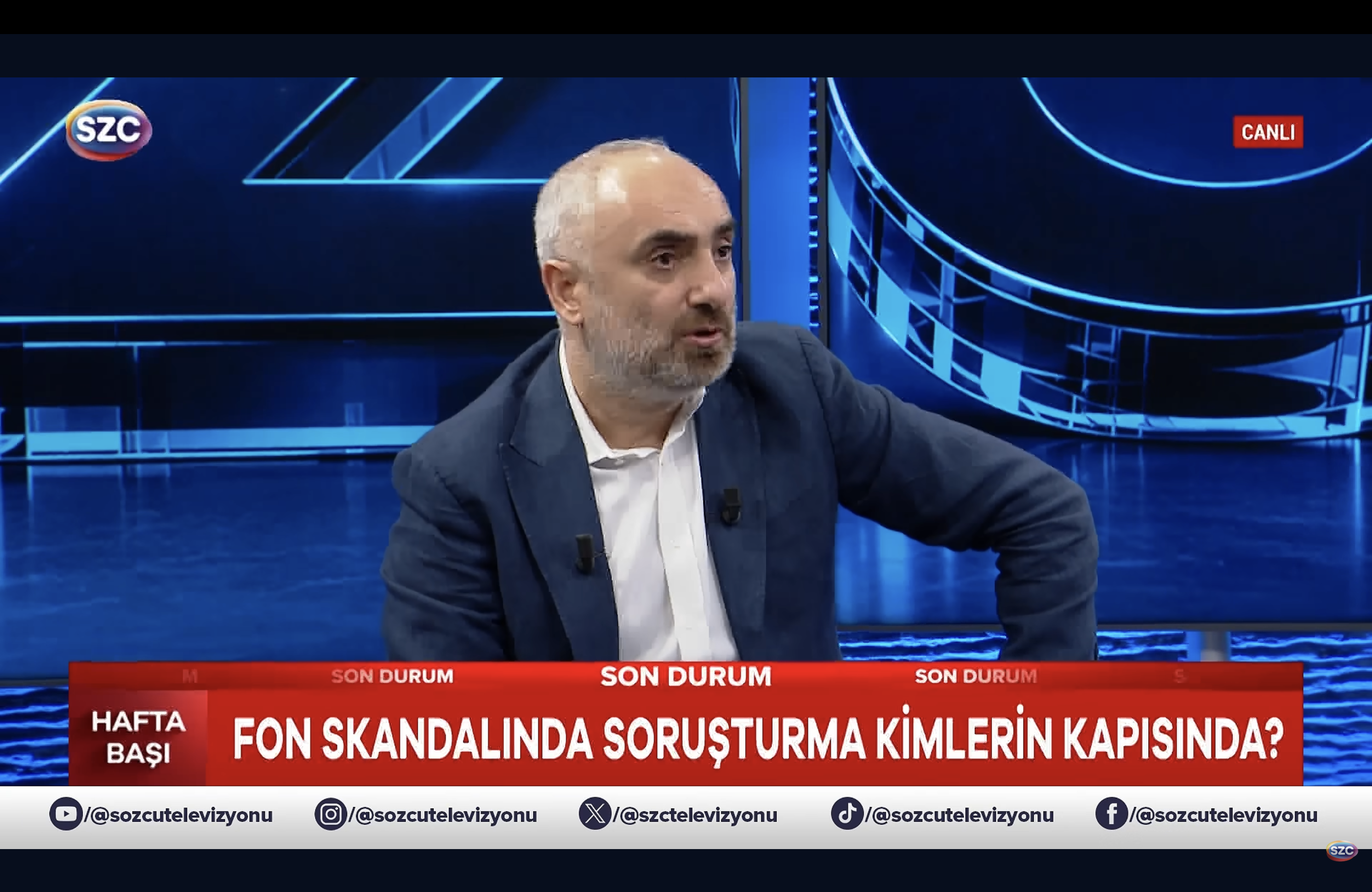
Main picture, top, still from live Sözcü TV programme where Turkish investigative journalist and writer for Sözcü daily newspaper, İsmail Saymaz, talks about the investment fund scandal prior to the channel's government takeover on 17 Nov. 2026.
READ MORE
Halk TV silenced in dawn raid as state takeover sparks alarm for Turkish democracy, 15 Oct. 2026