
Britain has updated its official travel advice for LGBT+ visitors to Türkiye following the country’s sweeping raids on LGBT organisations and activists, as protests against the crackdown spread to more than 50 cities worldwide and over 450 civil society groups issued a joint condemnation.
The Foreign, Commonwealth and Development Office (FCDO) amended its Türkiye travel guidance on 21 September, specifically citing recent developments affecting LGBT+ people.
The updated advice stresses that same-sex sexual activity remains legal in Türkiye, but warns that anti-LGBT+ statements by senior public figures have increased, restrictions on LGBT+ organisations have grown, and that Turkish authorities have now “carried out operations against LGBT+ organisations and activists across the country”.
The change comes less than a week after Türkiye-born Enfield North MP Feryal Clark led a cross-party group of 52 British parliamentarians in writing to Foreign Secretary Ed Miliband over the crackdown.
Among their four requests was for the UK Government to review the safety of British nationals and British-Turkish dual nationals and consider updating its travel advice. It’s not clear if the FCDO amendment on 21 September was influenced by the MPs’ letter; to date there has been no published government response to the parliamentarians.
Protests spread to more than 50 cities
The British intervention comes amid a growing international backlash to the operation, which began on 12 September with widespread restrictions on LGBT and human rights websites and social media accounts, followed by police raids across Türkiye.
Amnesty International said on Monday that at least 116 people had been arrested across 15 provinces, with 83 placed in pre-trial detention and criminal investigations launched against more than 160 people. Hundreds of social media accounts and several websites have also been blocked or restricted.
Solidarity protests have since taken place in more than 50 cities worldwide, according to Amnesty.
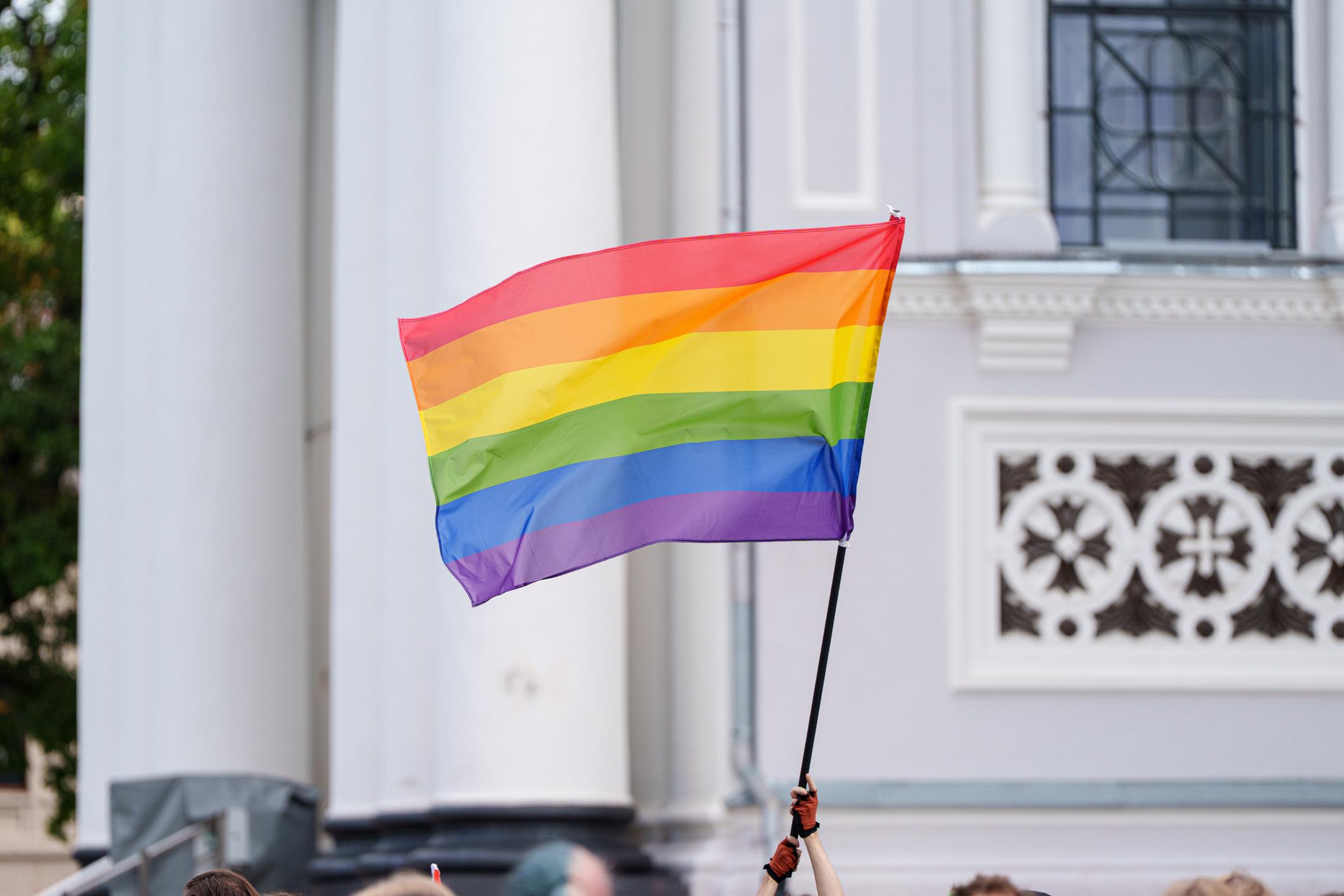
On 18 September demonstrators gathered outside Turkish diplomatic missions and other locations in cities including London, Berlin, Brussels, Belgrade, Madrid, Warsaw and Washington DC. In London, protesters gathered at the Turkish Embassy in Belgrave Square and later in Trafalgar Square.
The Washington protest was organised by Amnesty International USA, the Council for Global Equality, Outright International and Health GAP.
Further protests have continued this week. On Wednesday, 23 September, demonstrators gathered outside the Turkish Embassy in Dublin, where Irish Labour Party leader Ivana Bacik called on the Irish Government to condemn the raids.
Bacik said the operations had targeted LGBT venues, organisations and private homes, arguing that LGBT people in Türkiye should be able “to organise and to protest peacefully”.
More than 450 organisations issue joint appeal
International civil society has also mounted a significant collective response.
More than 450 organisations from over 65 countries have signed a statement calling on the Turkish authorities to end what they describe as the criminalisation of the country’s LGBT movement.
The signatories include LGBT, women’s rights, human rights and civil society organisations from across Europe, the Americas, Africa and Asia, among them CIVICUS and the Association for Women’s Rights in Development (AWID).
Their statement expresses particular concern that ordinary civil society activities — including advocacy, publications, membership, donations and lawful domestic or international funding — could be treated as evidence of organised criminal activity.
It calls for people detained solely for exercising rights to expression, association or legitimate human rights work to be released, digital restrictions lifted and LGBT organisations allowed to operate without intimidation.
Erdoğan takes ‘family values’ message to UN
There appears, however, to be little sign that the Turkish government intends to change course.
Addressing the United Nations General Assembly in New York on Tuesday, 22 September, President Recep Tayyip Erdoğan criticised what he called global “gender-neutralisation policies”, arguing that they threatened children and the institution of the family.
He defended a definition of the family based on a woman and a man and said Türkiye would continue initiatives intended to protect families and children.
The comments closely echoed the language surrounding the government’s “Ailem Güvende” (“My Family Is Safe”) operation under which the recent raids were launched.
Justice Minister Akın Gürlek has said the authorities are acting to protect children, families and social order, and that investigations include allegations involving obscenity, prostitution and drugs. Turkish officials therefore reject the characterisation that people are simply being prosecuted because of their sexual orientation.
Rights groups dispute that explanation, arguing that established LGBT and HIV organisations, human rights defenders and journalists have been swept into the investigations alongside people accused of unrelated offences.
Human Rights Watch said the crackdown threatens fundamental rights and the rule of law, while Amnesty has described the developments as part of an escalating human rights crisis.
READ MORE
Enfield North MP Feryal Clark leads UK parliamentarians demanding action over Türkiye’s LGBT crackdown, 16 Sept. 2026
Dozens detained as Türkiye launches sweeping raids on LGBT groups, 14 Sept. 2026 14 Sep. 2026