
A cross-party group of 52 British parliamentarians has urged the UK Government to intervene over Türkiye’s escalating crackdown on LGBT people and organisations, calling on Foreign Secretary Ed Miliband to condemn the detentions, raise the issue directly with Ankara and consider summoning the Turkish Ambassador.
The intervention comes just days after Turkish police launched sweeping raids against LGBT organisations, activists and businesses across the country, accompanied by widespread online censorship.
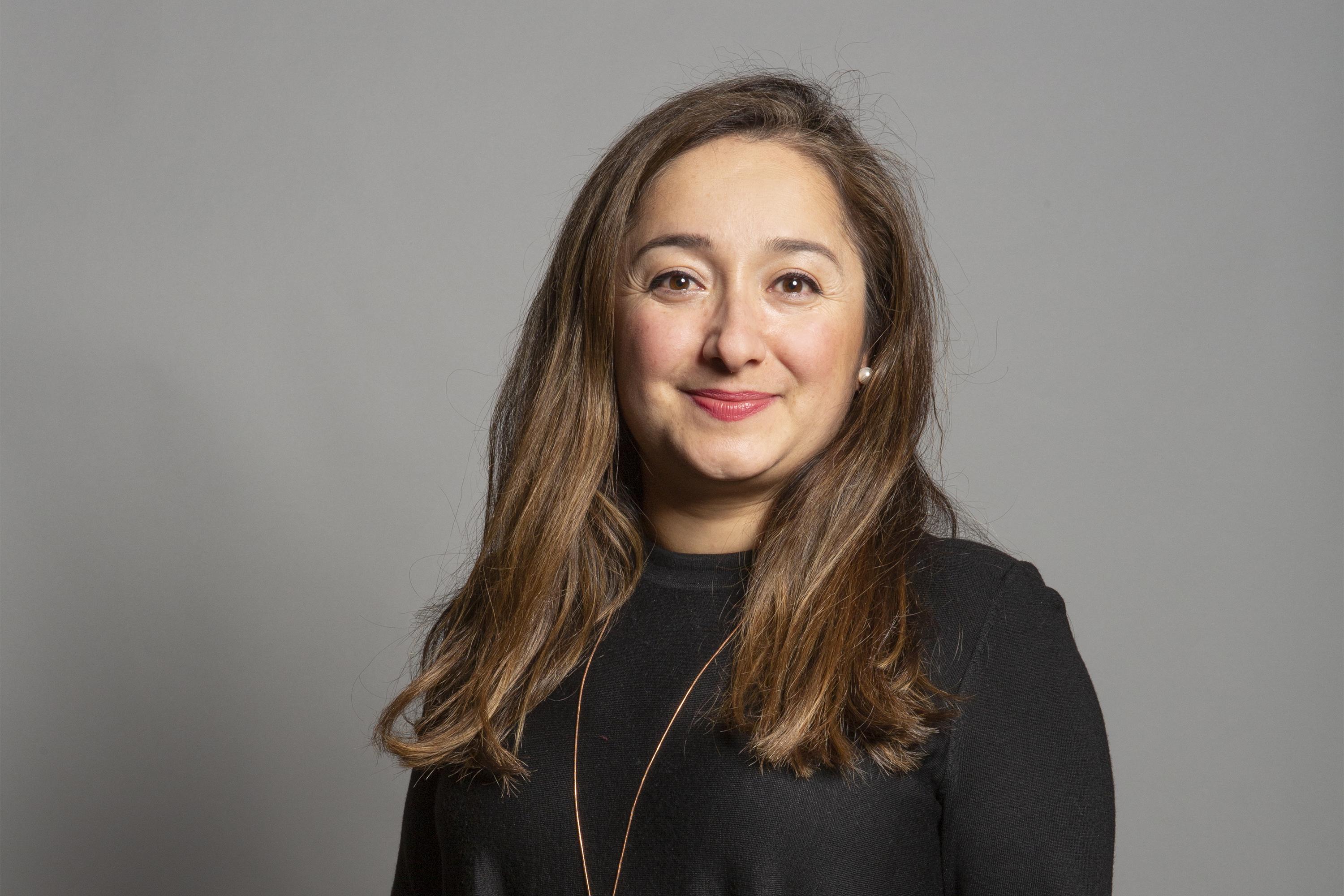
Türkiye-born Enfield North Labour MP Feryal Clark, who is of Kurdish descent and chairs Parliament’s All-Party Parliamentary Group on Kurds, heads the list of signatories to the three-page letter dated 15 September.
She is joined by 49 other MPs and two members of the House of Lords.
The overwhelmingly Labour group includes prominent MPs such as Jess Phillips, Stella Creasy, Dawn Butler, Nadia Whittome, Kim Leadbeater, Catherine West, Steve Reed and Dame Nia Griffith, alongside Labour peers Lord Nick Forbes and Baroness Debbie Wilcox.
Significantly, the letter also has cross-party backing. Stuart Andrew, the Conservative MP for Daventry and a former Minister for Equalities, and Liberal Democrat MP Josh Babarinde, the party’s current President, have both signed.
MPs call for Turkish Ambassador to be summoned
Addressed to Foreign Secretary Ed Miliband, the letter expresses “grave concern” at the recent actions reportedly taken against LGBT people, organisations, human rights defenders and activists across Türkiye.
It says the latest crackdown began on 12 September with court-ordered restrictions on websites and social media accounts, followed by police operations in numerous provinces targeting association executives, members and activists and involving raids on offices and private homes.
The parliamentarians are particularly concerned by reports that Article 220 of the Turkish Criminal Code, dealing with the establishment of an organisation for the purpose of committing crimes, is being invoked in some investigations.
LGBT organisations fear the use of organised-crime provisions could effectively criminalise legitimate human rights work.
The British parliamentarians ask Miliband and the UK Government to take four specific steps: publicly condemn any arbitrary detention or criminalisation of LGBT people and human rights defenders; make urgent representations to Ankara and seek the release of anyone held solely for exercising fundamental rights; summon the Turkish Ambassador to explain the legal basis and scope of the operations; and review the safety of British and British-Turkish dual nationals, including whether FCDO travel advice for Türkiye should be updated.
“The United Kingdom should be unequivocal in defending the fundamental rights of LGBT+ people and the freedoms of expression and association,” the letter states, asking the Foreign Secretary for a substantive account of what action Britain has taken or intends to take.
Crackdown widens
The letter follows the major nationwide police action reported by T-VINE on Sunday.
Justice Minister Akın Gürlek (pictured below) has said investigations under the operation, dubbed “My Family is Safe”, concern 162 suspects, nine associations and 13 businesses across 15 provinces, coordinated by prosecutors in Istanbul, Ankara, İzmir, Aydın and Mersin.
Authorities have cited allegations including obscenity, prostitution and drugs, as well as claims that children were being exposed to inappropriate material concerning sexual orientation and gender identity.
No verified nationwide detention total has yet been published. Reuters reported at least 26 people detained in Istanbul and 21 in Ankara, while 18 suspects were detained in İzmir. Sixteen of the latter were subsequently remanded in custody pending trial. Turkish reports say another five people were jailed pending trial in Kuşadası, taking the reported number remanded over the crackdown to at least 21.
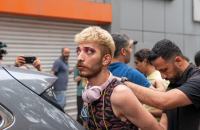
The situation escalated further on Tuesday, 15 September, when Turkish police detained at least 150 people outside Istanbul’s Çağlayan courthouse, where demonstrators had gathered to protest against the LGBT arrests. Police prevented the group from issuing a planned press statement before moving in to detain protesters.
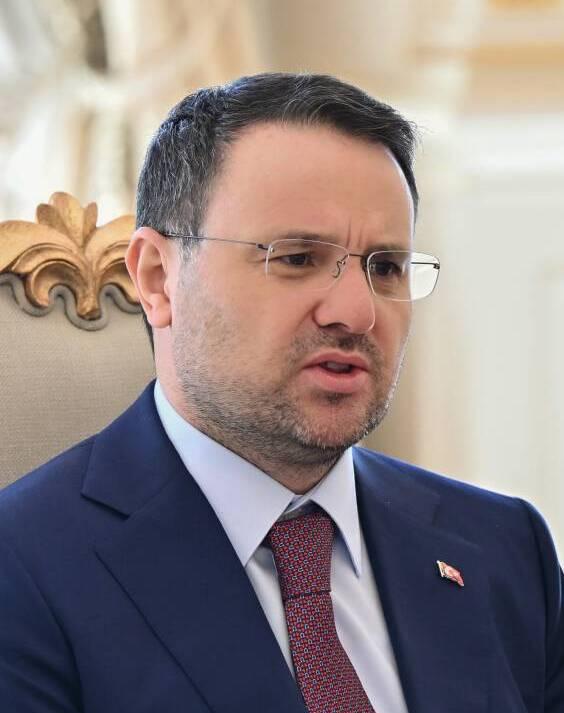
Justice Minister Akın Gürlek meeting President Aliyev in Baku, Azerbaijan, 02 July 2026. Photo © Azerbaijan Presidency, CC by 4.0
Türkiye’s Justice Ministry has also reportedly issued instructions to prosecutors throughout all 81 provinces, calling for complaints involving material alleged to expose children to obscenity or encourage them to become “genderless” to be examined urgently and for further online restrictions to be sought where prosecutors deem them necessary.
Hundreds of LGBT and human rights social media accounts blocked
The scale of the accompanying censorship has also become clearer.
According to the Human Rights Foundation of Türkiye (TİHV), court orders on 12 September blocked the websites of 11 LGBT organisations and seven other LGBT-related websites — 18 sites in total.
The same decisions restricted 155 social media accounts: 44 on X, 68 on Instagram, 22 on Facebook, 13 YouTube channels, four TikTok accounts and four LinkedIn pages. A further 32 LGBT-related social media accounts were reported blocked the following day.
That means at least 187 LGBT-linked social media accounts, in addition to 18 websites, were documented as restricted in the first two days alone.
On 14 September, another court order affected 75 further accounts belonging to media organisations, human rights bodies, journalists and activists, including the X account of Amnesty International Türkiye, newspaper Evrensel, Academics for Peace and the Media and Law Studies Association.
EU and Council of Europe condemn crackdown
International criticism has grown alongside the police operations.
The European Commission said it was concerned about arrests and legal proceedings against LGBT activists, human rights associations and businesses, as well as the blocking of websites and investigations into the funding of civil society organisations. Commission spokesperson Christian Wigand said discrimination and stigmatisation were contrary to European Union values.
European Parliament rapporteur for Türkiye Nacho Sánchez Amor described the raids as a “shocking escalation” of repression and warned that imposing a particular moral agenda violated fundamental rights and Türkiye’s international commitments.
On Tuesday, Council of Europe Commissioner for Human Rights Michael O’Flaherty also intervened, stressing that references to “family values” or protecting children could not in themselves justify restrictions on fundamental rights.
He called for the release of anyone detained for legitimate human rights or civil society activity and raised concerns about reports of restrictions on detainees’ access to lawyers and case files.
Separately, Council of Europe LGBTI rights rapporteur Helen Belcher said peaceful activists and organisations should not face “intimidation, discrimination or criminalisation”, reminding Ankara that freedoms of expression, assembly and association are protected under the European Convention on Human Rights.
A large coalition of international organisations including ILGA-Europe, Front Line Defenders, ILGA World, EuroMed Rights, Trans Europe and Central Asia, and the International Planned Parenthood Federation European Network has similarly condemned the raids and demanded the release of people detained for legitimate human rights work.
The groups warned that the seizure of computers and other electronic equipment from LGBT organisations was particularly serious because such organisations can hold sensitive information about activists, people living with HIV, survivors of violence, lawyers and other vulnerable individuals.
The operation has also attracted criticism from the United States. Democratic Senator Jeanne Shaheen, a senior member of the US Senate Foreign Relations Committee, said she was alarmed by the detentions and legal action and called for legislation enabling sanctions against those responsible for serious abuses of LGBT rights.
UN special rapporteurs on human rights defenders and freedom of assembly have also criticised the developments.
Government says operation is about crime, not LGBT identity
The Turkish government rejects claims that the operation is simply targeting people for being LGBT.
Officials say the investigations concern specific allegations of criminal activity and form part of President Recep Tayyip Erdoğan’s wider “Decade of Family and Population” programme, with Justice Minister Gürlek stating that the state has a constitutional responsibility to protect children, families and public order.
Same-sex relations are legal in Türkiye. However, rights groups say LGBT people and organisations have faced steadily increasing political rhetoric, restrictions on Pride events, prosecutions and censorship in recent years.
The latest raids — and the speed with which they have expanded from organisations and activists to online platforms and people protesting against the arrests — have intensified international concerns that the authorities are moving beyond individual criminal investigations towards a broader suppression of LGBT civil society.
RELATED ARTICLES
Dozens detained as Türkiye launches sweeping raids on LGBT groups, 14 Sep. 2026










.jpg)