There was little middle ground among those who saw Turkish actor Mehmet Ali Nuroğlu perform Dünyada at London’s Cockpit Theatre: audiences seemed either captivated by its originality or frustrated by its apparent randomness.
Staged as part of the 2026 Camden Fringe, Dünyada was no conventional one-man play. Nuroğlu’s 70-minute multimedia performance reimagines American playwright Will Eno’s 2012 monologue Title and Deed, whose displaced protagonist begins from the premise of being somewhere he does not belong. Nuroğlu takes that foundation and builds something altogether more experimental, combining improvisation, live camerawork, projections, sound and direct interaction with the audience.
For its admirers, the result was bold, intelligent and highly inventive.
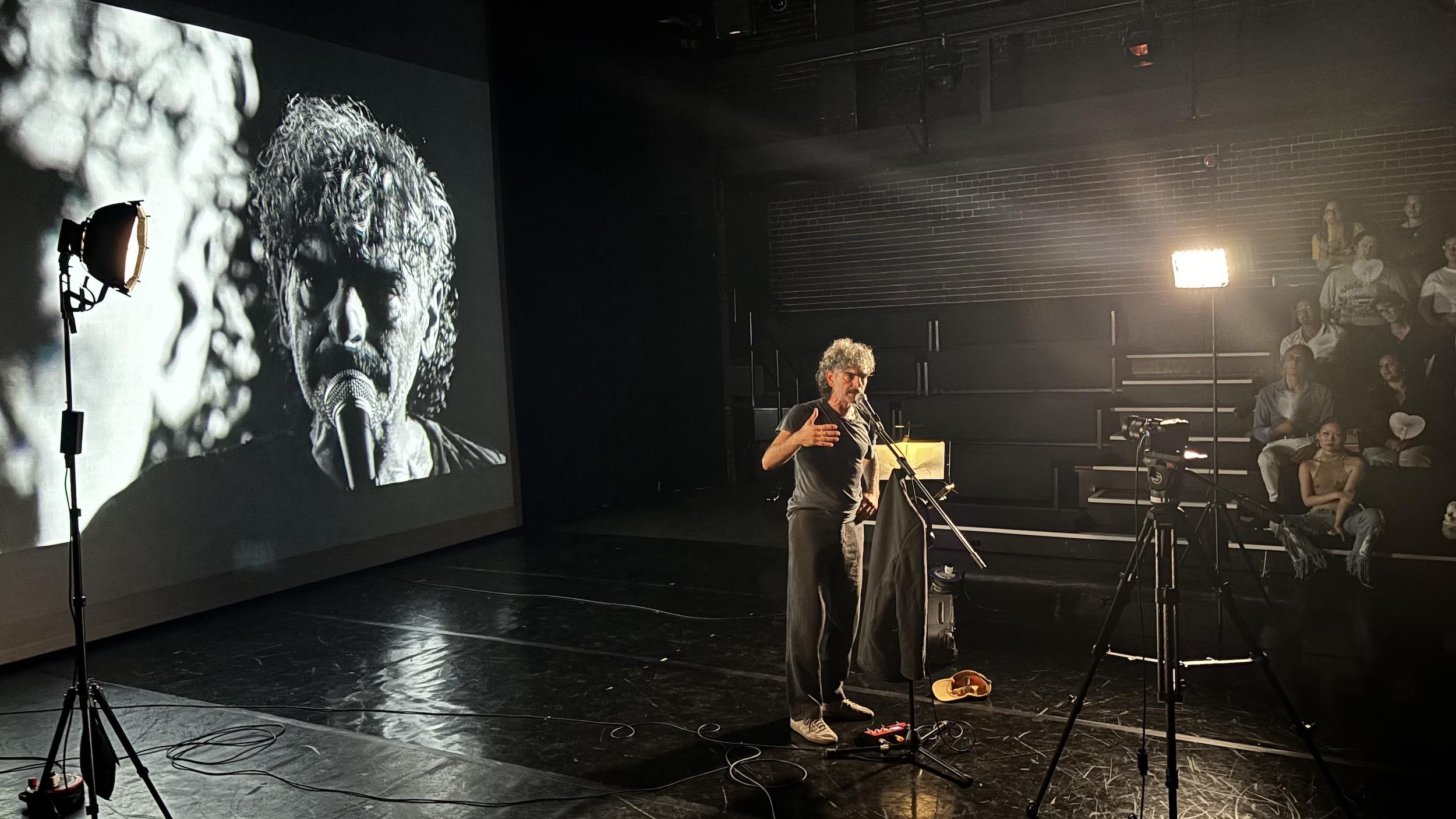
Nuroğlu is not simply acting. He is simultaneously cameraman, sound-maker and master of ceremonies, manipulating what appears on the large screen behind him and using everyday objects, lighting and sound effects to alter the atmosphere around him. At one point, dust caught in the projector light resembles falling snow; elsewhere paper and ambient sound help conjure a storm.
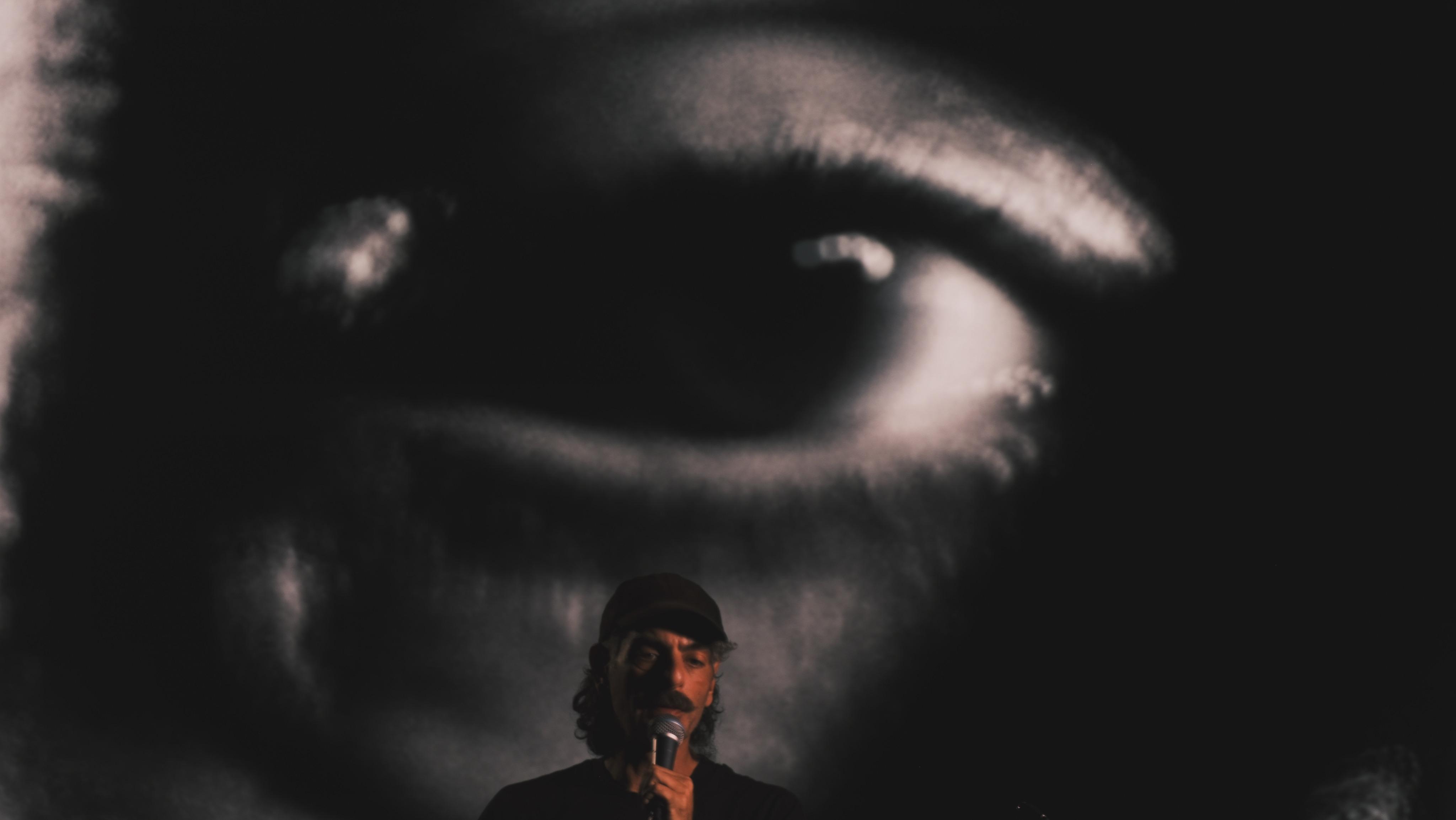
Mehmet Ali Nuroğlu perform Dünyada at London’s Cockpit Theatre, Aug. 2026. Photo © Joy Li
It is undoubtedly clever theatre, with Nuroğlu demonstrating impressive control of both his performance and the technology surrounding it.
Yet this was also where Dünyada became distinctly Marmite.
For some T-VINE readers in the audience, the loose, improvisational style felt less like an exploration of alienation and identity and more like a succession of rambling thoughts. Without a conventional narrative to follow, they struggled to understand where the performance was heading or what precisely it wanted to say.
Even more divisive was Nuroğlu’s decision to turn his camera away from himself and directly onto the audience.
Individual spectators suddenly found their faces filling the giant screen, sometimes becoming stand-ins for characters such as the protagonist’s “mother” or “father”. For those happy to surrender themselves to the experience, it was mischievous, immediate and brilliantly disruptive: the boundary between actor and audience disappeared and the spectators themselves became part of Dünyada.
Others found the experience intrusive.
Not everyone appeared to realise beforehand just how prominently they might feature in the performance, and with the camera lingering on particular faces, some were visibly uncomfortable. It was a concern also raised by other London reviewers, who admired the idea while questioning the absence of a meaningful way for spectators to opt out.
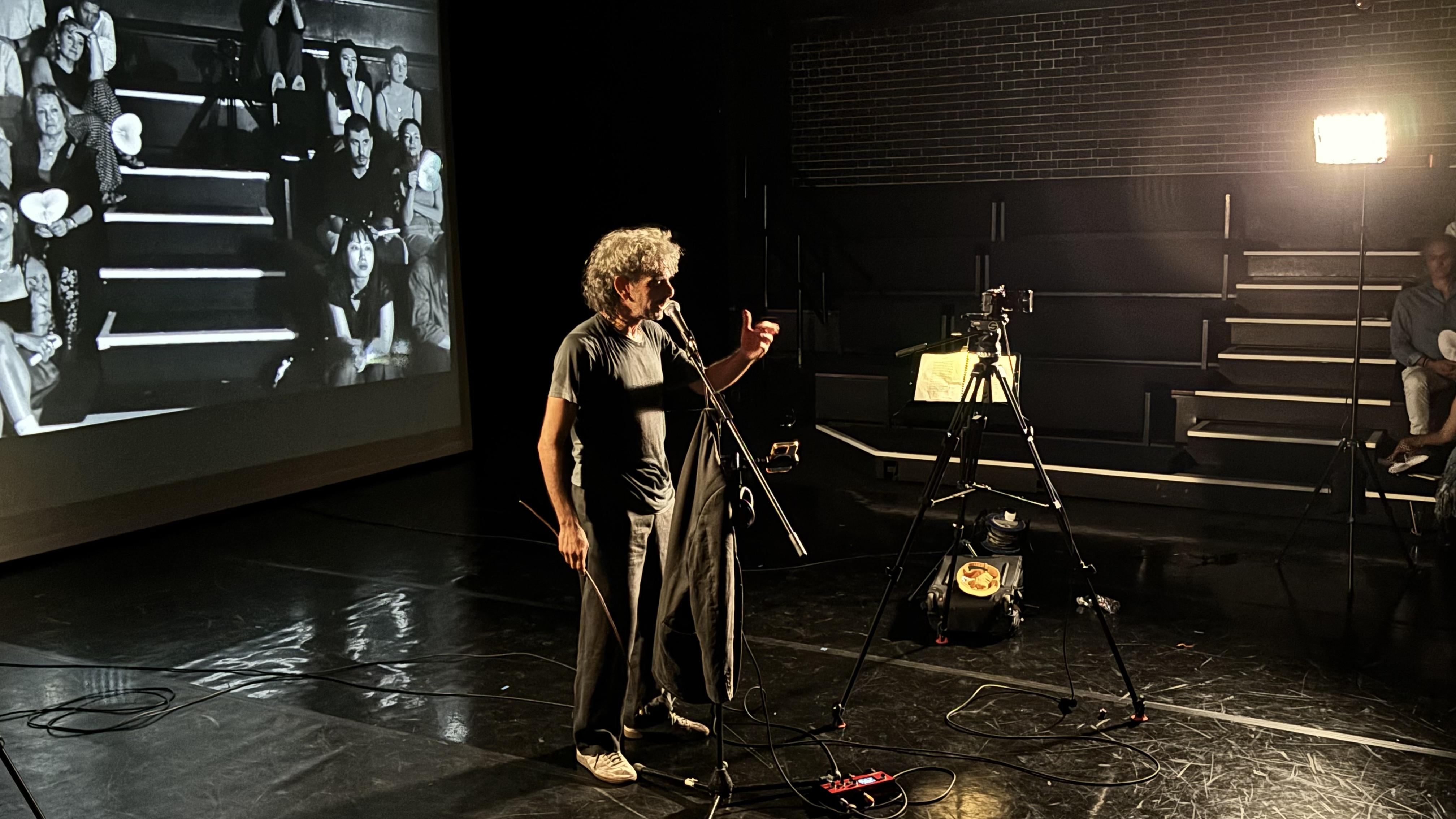
And perhaps that divide gets to the heart of Dünyada. This is theatre that refuses to allow its audience to remain comfortably anonymous in the dark. Nuroğlu watches us as much as we watch him, turning cameras, screens and spectators into part of a fragmented meditation on identity, belonging, memory and being an outsider.
Whether that feels exhilarating or exasperating will depend heavily on the viewer.
For those wanting a neatly structured story with a clear beginning, middle and end, Dünyada may prove frustratingly elusive. For audiences who enjoy experimental theatre, improvisation and being made active participants in what unfolds before them, Nuroğlu offers something genuinely unusual.
Either way, indifference seems unlikely.
And for a Fringe production, perhaps provoking such sharply opposing reactions is an achievement in itself.